-
When Two Kings Claim the Throne: Consistency in Distributed Systems
Truth becomes complicated when the kingdom keeps more than one copy of it. When One Truth Becomes Many: Distributed Systems The Kingdom Keeps Copies for a Reason: Distributed Data and Replication In a small application, truth appears simple. A user changes an email address, the application saves it, and the next request retrieves the same value. One database, one authoritative record, and usually one short path between the person making the change and the system storing it. Distributed systems complicate that arrangement. Data may be copied across regions, databases, caches, queues, search indexes, and services. Replication improves availability and performance, but it also creates a difficult question: when several systems…
-
Roads Through the Sky: Connecting Cloud-Native Services
A distributed kingdom survives only when its distant cities know how to speak. A single castle can rely on hallways. The kitchen knows where the pantry is, guards can walk directly to the armory, and a steward who needs an answer can cross the courtyard and ask for it. Once the kingdom spreads across distant cities, those assumptions disappear. The treasury may live in one region, the guild registry in another, and the market serving the public somewhere else entirely. Each city can function perfectly on its own and still leave the kingdom paralyzed if the roads between them are unreliable or poorly governed. Cloud-native systems inherit the same problem.…
-
The Keeper of a Thousand Castles: Understanding Kubernetes
When the kingdom grows beyond a few castles, someone must decide where every banner flies. A single container is easy to understand. You package an application, start it, expose a port, and watch it run. Add a database, cache, and supporting service, and Docker Compose can organize the small caravan well enough for development and modest deployments. The trouble begins when that caravan becomes a kingdom. Once dozens or hundreds of containers must remain available across multiple machines, the difficult question is no longer how to start them. The difficult question becomes who keeps track of everything after you stop watching. Imagine a kingdom dotted with castles. Each needs guards,…
-
The Caravan of Services: Composing Containerized Applications
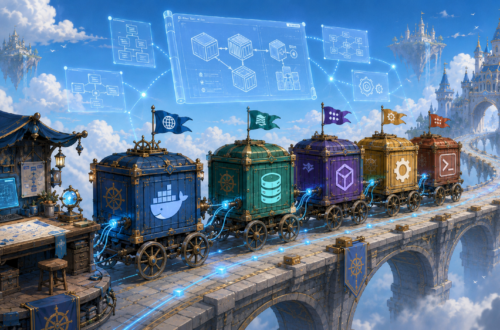
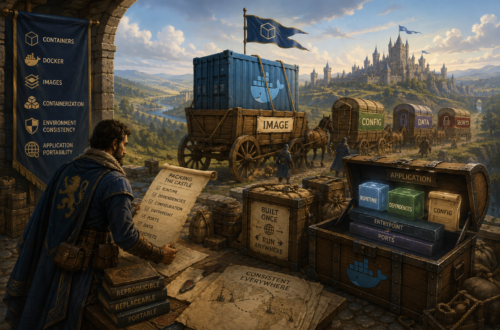
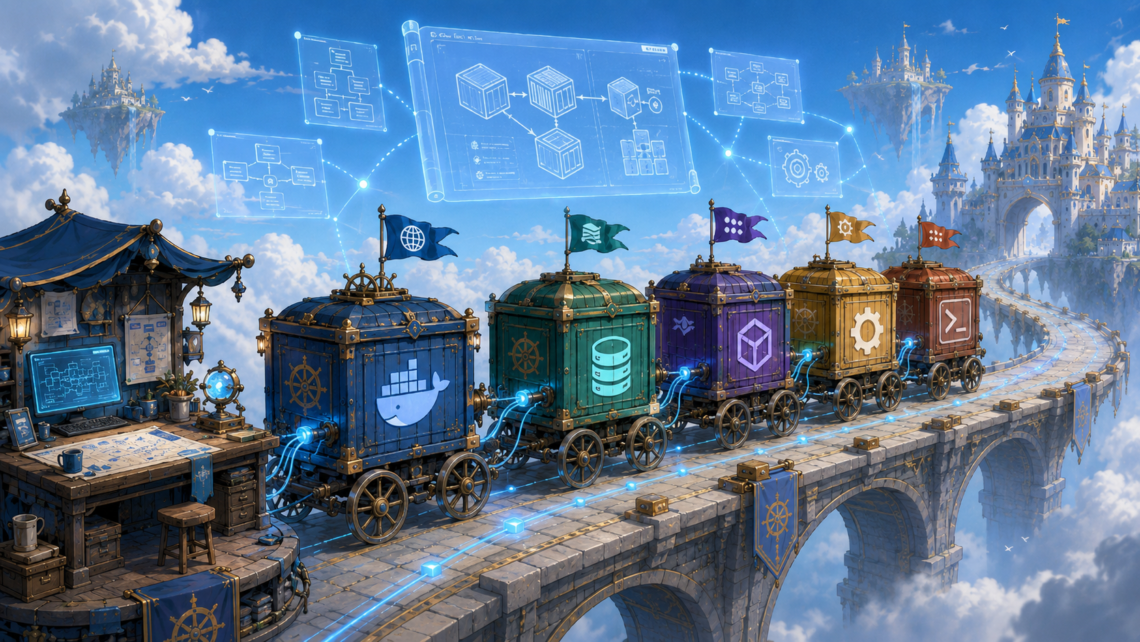
One wagon may travel alone, but a kingdom moves as a caravan. Beyond the Castle Gate: From Containers to Applications Packing a workshop into a container solves an important problem, but it does not solve the entire journey. In the previous chapter of The Kingdom in the Clouds, we explored how containers package an application together with the runtime, libraries, and dependencies it needs to operate consistently. That gives engineers a portable unit that can travel from a development machine to a test environment and eventually into production with far fewer surprises. Yet most modern applications are not single workshops sealed inside single wagons. They are collections of services, databases,…
-
The Kingdom in the Clouds: When Software Leaves the Castle
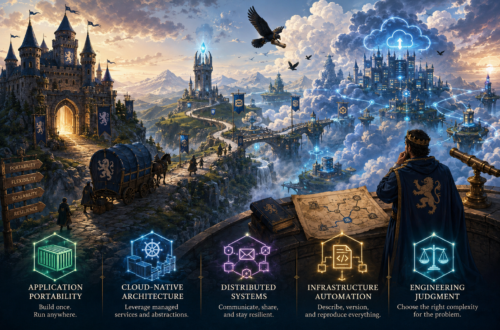
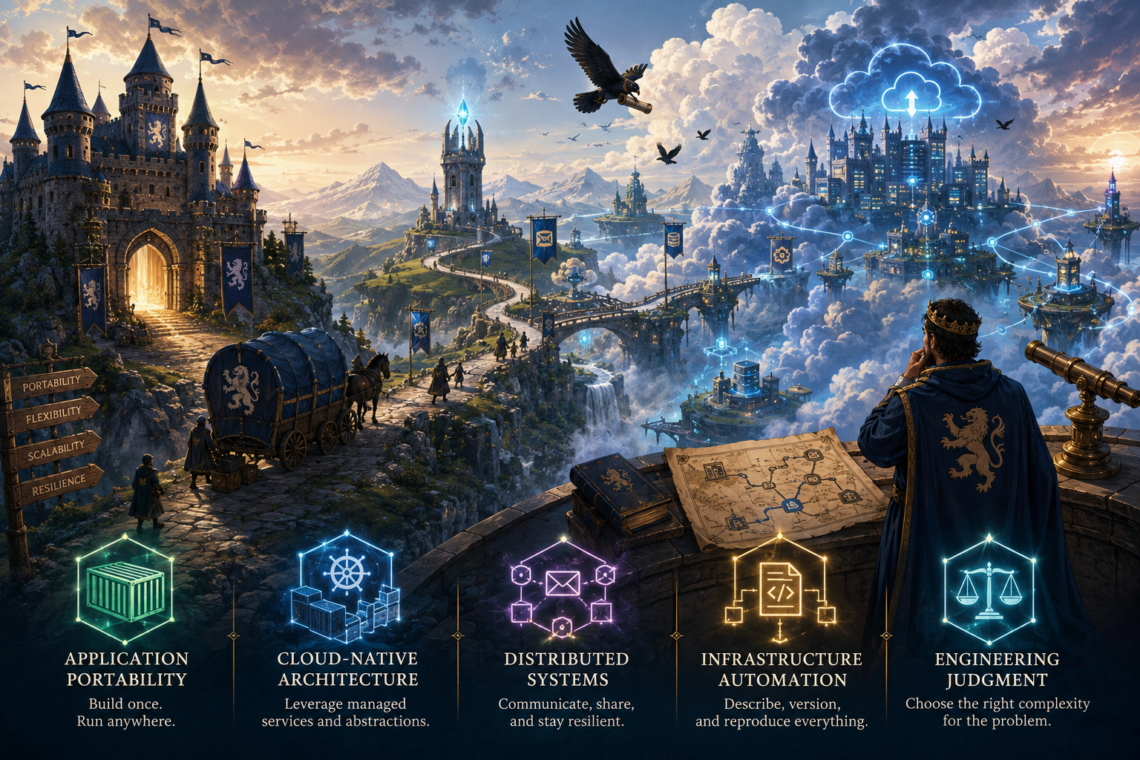
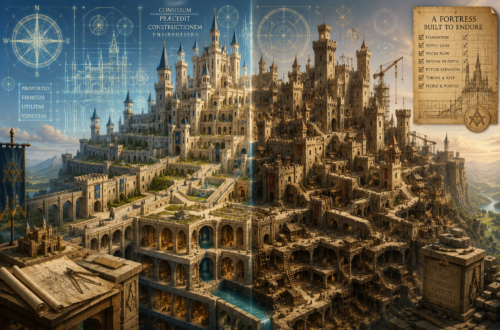
The strongest kingdoms are not bound to a single castle, but built to endure wherever their people must go. For much of software history, we built applications as though we were building castles. The walls gave us boundaries. We knew where the application lived, where its data lived, and which machines carried the work. Even complicated systems offered a comforting sense of geography because their important pieces occupied places engineers could identify and understand. When something failed, there was usually a server, process, database, or network connection somewhere that could be examined. Modern software has been steadily dismantling that certainty. Applications move between environments, workloads appear and disappear, and infrastructure…
-
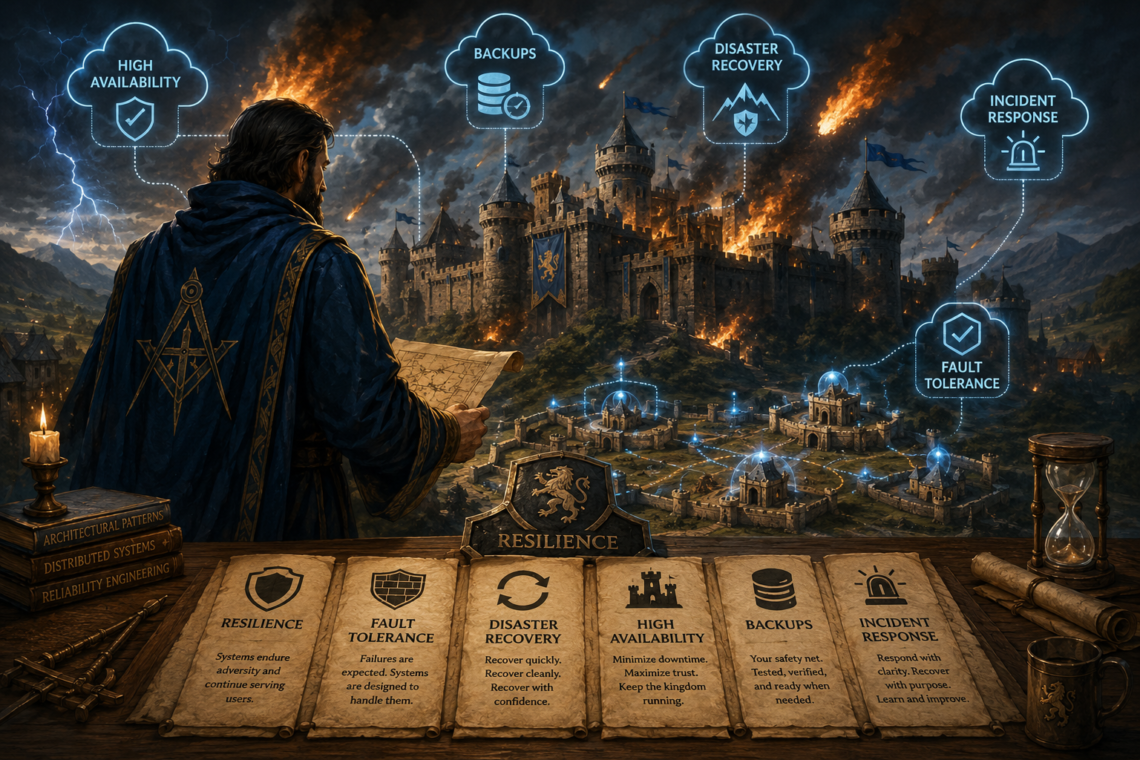
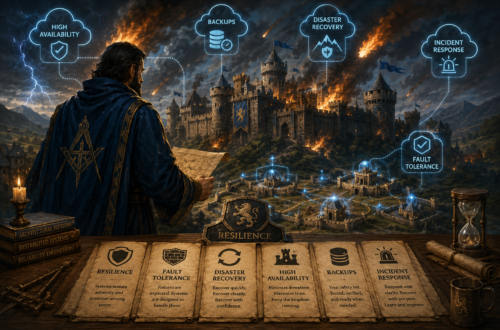
When the Kingdom Burns: Designing for Failure Before Disaster Strikes
Hope is a poor evacuation plan. There is a quiet confidence that settles over every engineering team after enough successful deployments. Systems remain stable for months. Monitoring dashboards glow green. Customers continue using the software without incident, and the last major outage slowly fades into memory. Over time, it becomes easy to mistake reliability for a permanent characteristic of the software instead of recognizing it as the product of thousands of careful engineering decisions. That confidence is understandable, but it is also one of the greatest risks a software organization can face. Software rarely fails because developers expect it to fail. More often, it fails because teams gradually stop imagining…
-
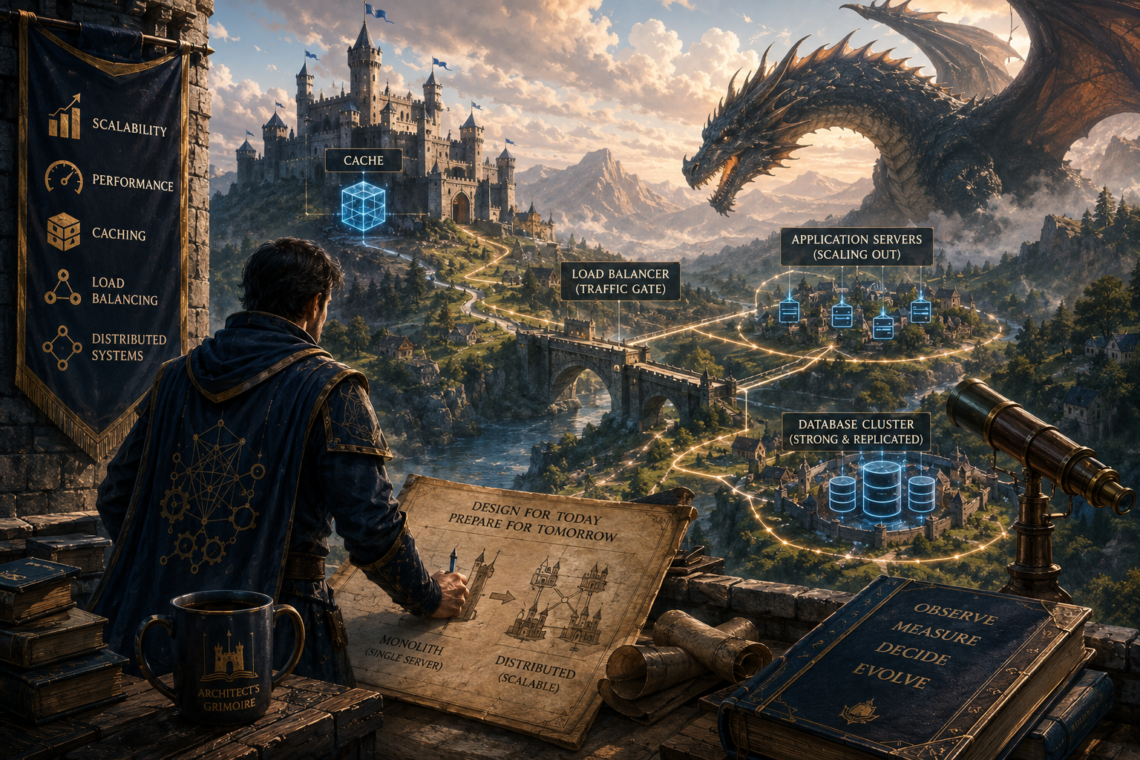
The Dragon Named Scale: Building Systems That Grow
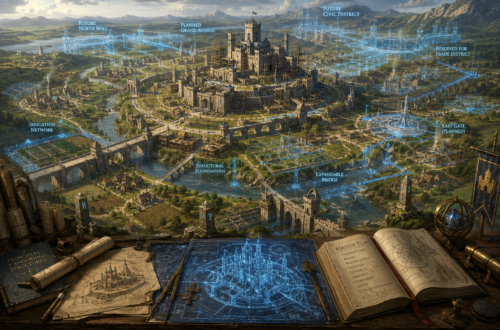
The Dragon Named Scale: Building Systems That Grow Every growing kingdom eventually attracts dragons. Success changes software in ways that are easy to underestimate. The application that comfortably serves a handful of users suddenly supports thousands. Database queries that once completed in milliseconds begin competing for resources. Features that once lived peacefully beside one another begin interacting in unexpected ways. None of these changes necessarily mean the original architecture was flawed. They simply reflect a reality every successful system eventually encounters. Growth exposes assumptions that remained invisible while the kingdom was still small. The fantasy kingdoms that have accompanied us throughout The Architect’s Grimoire offer another lesson worth carrying into…
-
The Roads Between Cities: Building APIs Worth Trusting
Kingdoms prosper because their roads are trusted as much as their walls. A castle can stand for centuries and still preside over a dying realm. Towering walls may discourage invaders, magnificent keeps may inspire admiration, and disciplined soldiers may protect the capital, but none of those accomplishments guarantee prosperity. A thriving civilization depends upon something far less glamorous. Merchants must reach distant markets, royal couriers must carry news without delay, craftsmen must exchange ideas across provinces, and neighboring cities must cooperate toward common goals. Long before history remembers the greatness of a realm, it first remembers whether its roads could be depended upon. Software architecture follows the same principle. Well-designed…