-
Becoming the Developer You Once Needed
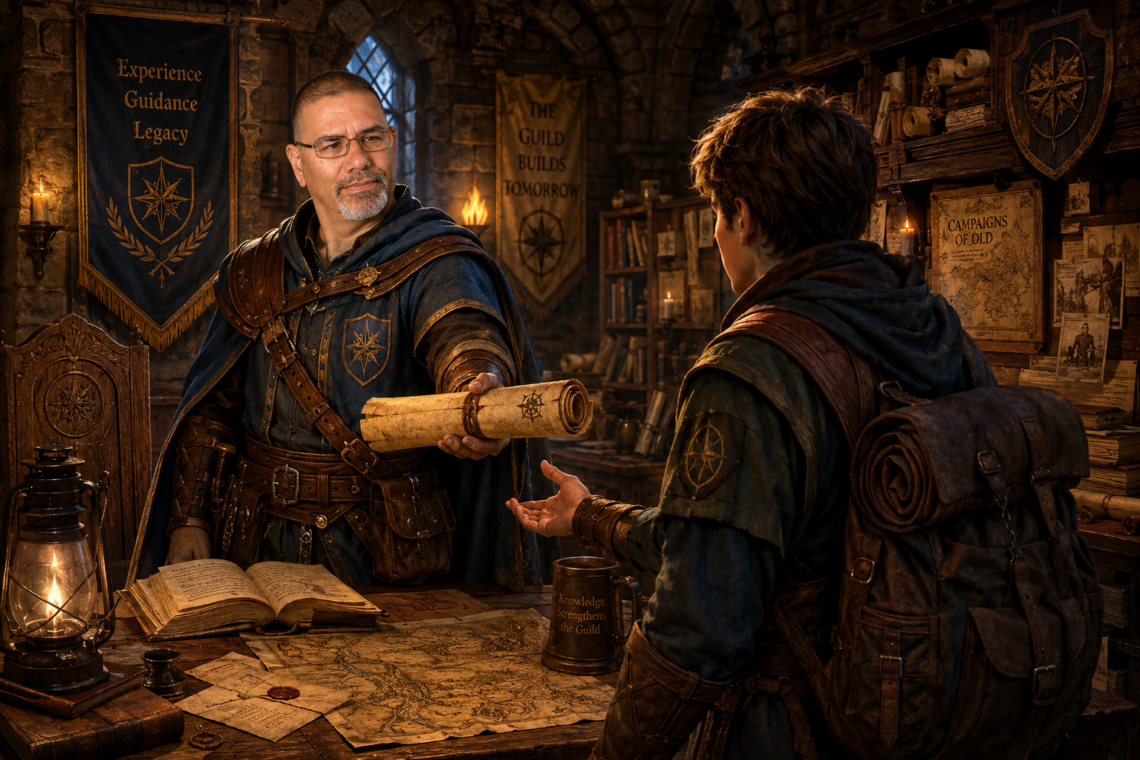
The greatest guides are often those who remember what it felt like to walk alone. The Veteran at the Tavern Table One of the most surprising lessons I have learned throughout my career is that software development is not ultimately about software. The code matters. The systems matter. The architecture matters. Yet when I look back on the people who changed my career, I do not remember them primarily because of the software they built. I remember them because of the guidance they provided when I needed it most. Over time, I came to realize that the final stage of becoming a developer is not mastering technology. It is becoming…
-
When Impostor Syndrome Rolls a Critical Hit
Even seasoned adventurers sometimes mistake uncertainty for failure. The Trial Hidden Behind the Character Sheet During this week’s theme, The Trials of the Realm, it would be easy to focus exclusively on technical challenges. We could discuss production outages, difficult debugging sessions, complex architectures, or impossible deadlines. Those are certainly trials every engineer encounters. Yet one of the most persistent challenges I have faced throughout my career never appeared in a ticketing system, generated an error message, or triggered an alert. It appeared quietly in my own thinking and attempted to convince me that I did not belong where I had already earned the right to stand. Impostor syndrome is…
-
Code Reviews Without Emotional Damage
Criticism is not the enemy. Pride without growth is far more dangerous. The Review Table in the Guild Hall One of the most important lessons I have learned during my years in software development has very little to do with writing code. It is not about mastering a framework, learning a language, designing architecture, or deploying applications to the cloud. Instead, it concerns learning how to participate in code reviews without allowing pride, insecurity, frustration, or ego to interfere with growth. Many developers spend years improving their technical skills while investing far less effort in the collaborative skills that make engineering teams successful. Yet some of the strongest engineers I…
-
Writing Code Others Can Read
The guild hall is crowded with adventurers. Write clearly, or your allies become your next obstacle. Life Inside the Guild Hall One of the first misconceptions many developers carry into the profession is the belief that software development is primarily a solitary activity. Popular culture often reinforces this image. We imagine a lone programmer sitting in a dimly lit room, crafting brilliant solutions through sheer technical skill and determination. While moments of solitary work certainly exist, the reality is far different. Most software is built, maintained, reviewed, and expanded by teams. Success depends as much on communication as it does on technical ability. This week’s theme is Surviving the Guild…
-
The Guildmaster’s Handbook
Becoming the Developer Everyone Wants on the Quest. There is something I wish somebody had explained to me much earlier in my career. Most people believe software development is a profession where success belongs to the person who memorizes the most technologies, masters the newest framework first, or somehow manages to turn coffee into functional code through sheer force of determination. That idea sounds convincing when you are standing at the beginning of the road, staring at tutorials, job listings, and enough conflicting advice to make your head spin. The truth feels much less dramatic and far more useful. Code matters. Technical skill matters. You absolutely need to know how…