-
Restoring Ancient Spellbooks: Modernizing Legacy Code
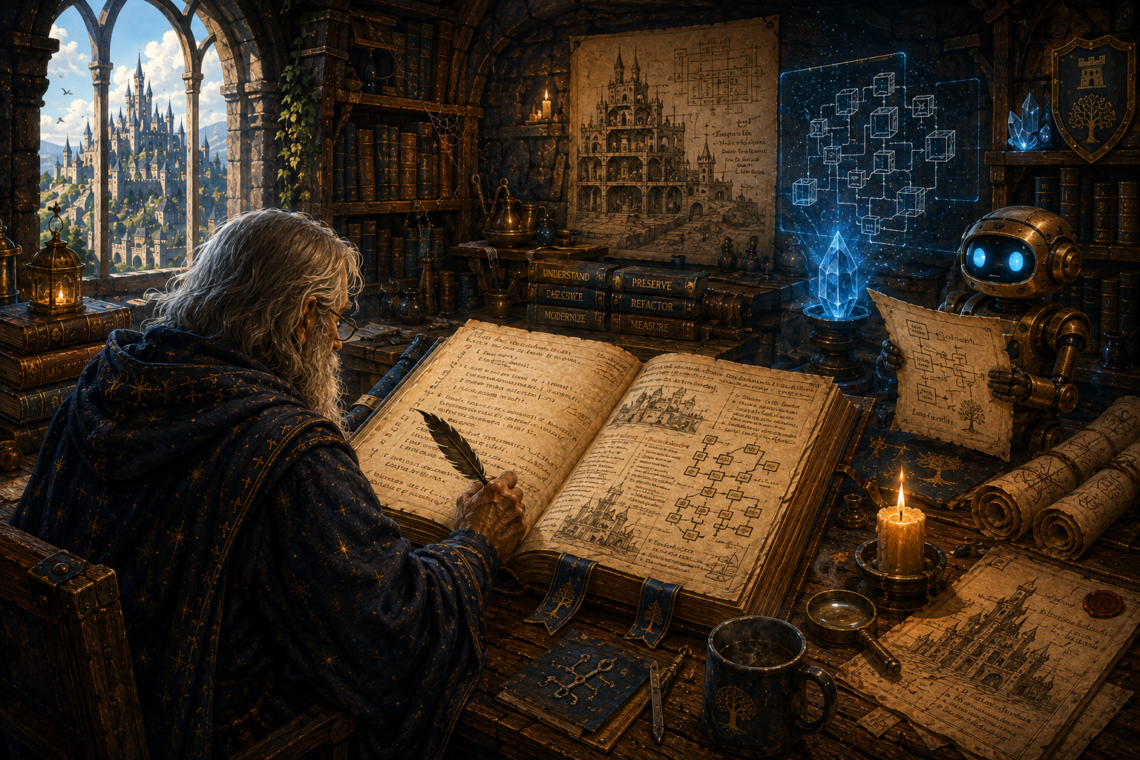
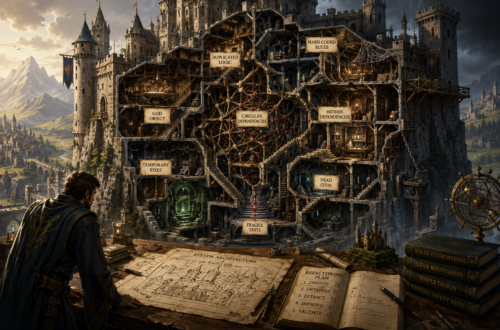
Some of the greatest magic lies hidden beneath centuries of dust. There is a particular kind of software that almost every experienced engineer eventually encounters. It has been running for years, perhaps decades, quietly processing orders, generating reports, moving money, coordinating inventory, or supporting some other function the business cannot simply abandon. Its architecture reflects decisions made by developers who may have left long ago. Its dependencies have aged, its conventions belong to another era, and certain portions of the codebase are approached with the same caution a wizard might use when opening an ancient spellbook whose margins contain several generations of increasingly nervous annotations. The temptation is to look…
-
The Roads Between Cities: Building APIs Worth Trusting
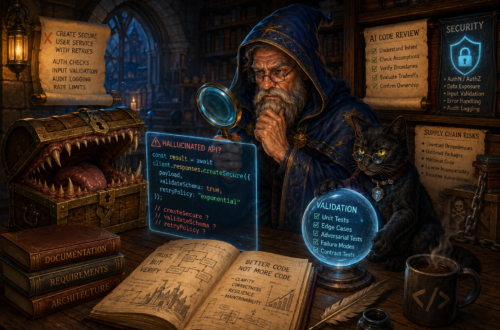
Kingdoms prosper because their roads are trusted as much as their walls. A castle can stand for centuries and still preside over a dying realm. Towering walls may discourage invaders, magnificent keeps may inspire admiration, and disciplined soldiers may protect the capital, but none of those accomplishments guarantee prosperity. A thriving civilization depends upon something far less glamorous. Merchants must reach distant markets, royal couriers must carry news without delay, craftsmen must exchange ideas across provinces, and neighboring cities must cooperate toward common goals. Long before history remembers the greatness of a realm, it first remembers whether its roads could be depended upon. Software architecture follows the same principle. Well-designed…
-
Building for Today’s Quest or Tomorrow’s Empire?
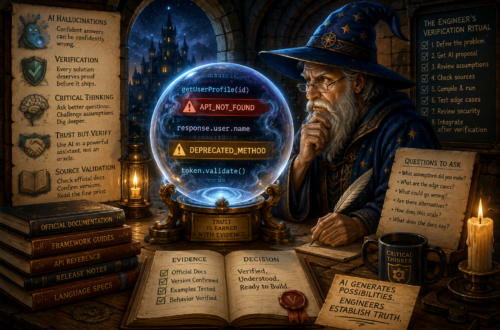
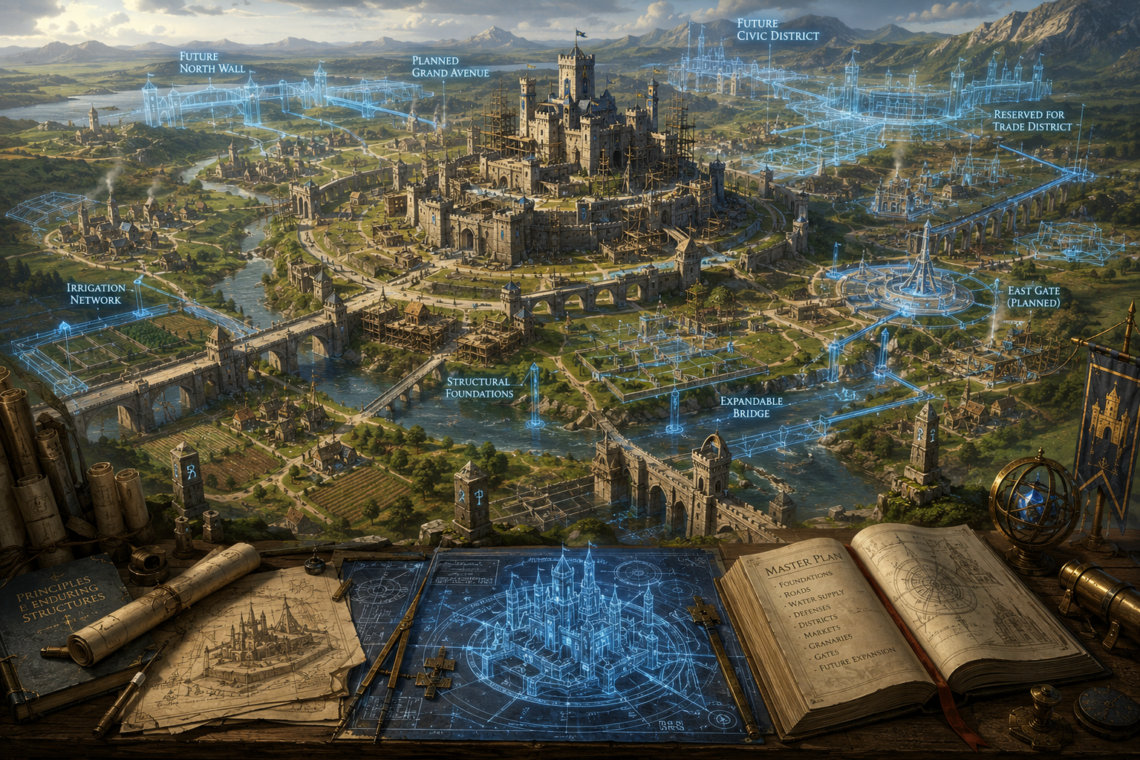
Every shortcut is a promise the future must eventually keep. The First Road Beyond the Castle Gates Long before a kingdom becomes an empire, someone chooses where the first road will be built. Travelers may never remember who laid those stones, but generations will depend upon the decision. Software is built much the same way. Long before users celebrate new features, someone quietly decides how the application will grow, how its parts will work together, and whether future engineers will inherit a thriving kingdom or spend their days repairing crumbling foundations. When I first began writing software, I believed every project had a finish line. Complete the feature, fix the…
-
Writing Code Others Can Read
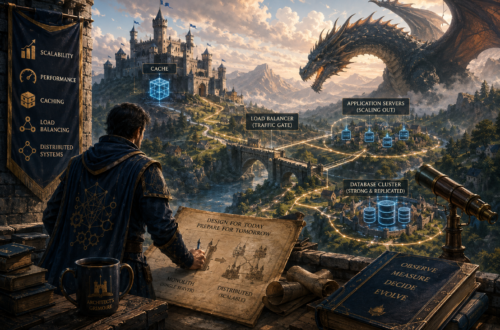
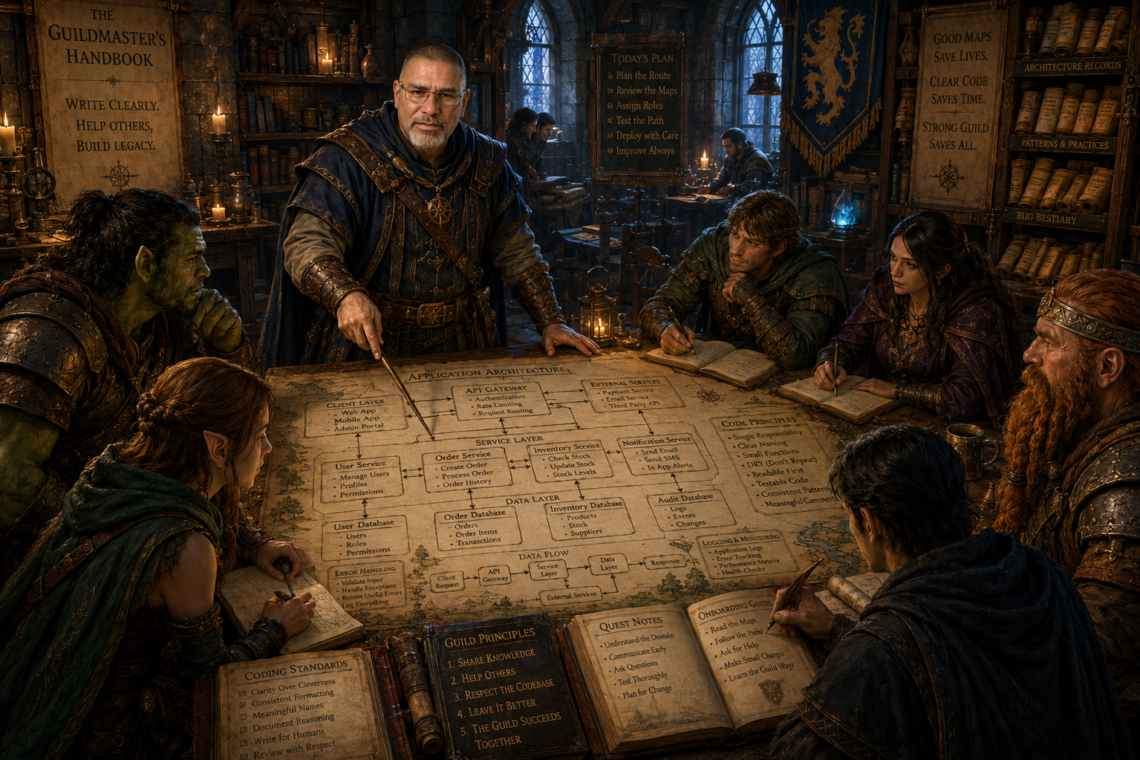
The guild hall is crowded with adventurers. Write clearly, or your allies become your next obstacle. Life Inside the Guild Hall One of the first misconceptions many developers carry into the profession is the belief that software development is primarily a solitary activity. Popular culture often reinforces this image. We imagine a lone programmer sitting in a dimly lit room, crafting brilliant solutions through sheer technical skill and determination. While moments of solitary work certainly exist, the reality is far different. Most software is built, maintained, reviewed, and expanded by teams. Success depends as much on communication as it does on technical ability. This week’s theme is Surviving the Guild…
-
The Cost of Power: From DOM Manipulation to Better Design
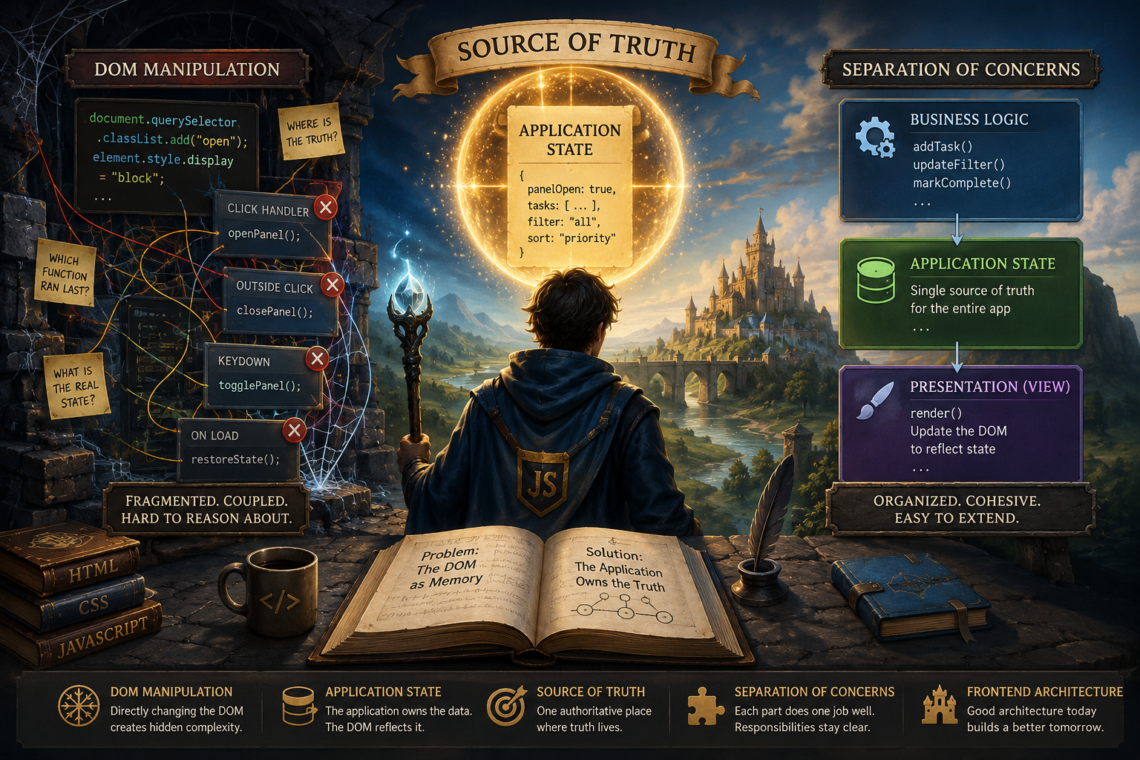
True mastery comes not from controlling every spell, but from knowing when to let the magic follow the design. Editor’s Note: This article is an updated and expanded edition of an article originally published on RandomThoughtsInTraffic.com. For this StackNScroll edition, I have substantially expanded the original discussion by moving beyond the mechanics of DOM manipulation into the architectural thinking that allows frontend applications to remain maintainable as they mature. Along with new JavaScript examples, this revised edition explores application state, separation of concerns, and the engineering habits that distinguish software built for demonstrations from software built to survive years of growth. It also serves as a bridge into this week’s…
-
The Inventory System: Managing State Without Losing Control
Editor’s Note This article is an updated and expanded edition of a lesson originally published on RandomThoughtsInTraffic.com. For this StackNScroll edition, I have substantially revised both the technical discussion and the engineering guidance to move beyond introducing JavaScript state and toward understanding the architectural decisions that allow interactive applications to grow without becoming fragile. New material explores immutable updates, centralized state transitions, shared application data, and engineering tradeoffs that emerge as software matures, all while reinforcing this week’s theme, The Spark of Adventure. My objective is not simply to explain state management, but to demonstrate why experienced engineers organize application state long before complexity demands it. The Spark of Adventure:…
-
The Bones of the Realm: Writing Semantic HTML That Holds
Strong kingdoms are built on structure long before they are decorated. Editor’s Note: This article is an expanded and substantially revised edition of an article originally published on RandomThoughtsInTraffic.com. While the original introduced semantic HTML as an important front-end development practice, this StackNScroll edition explores the subject through the broader disciplines of software architecture, browser interpretation, accessibility, maintainability, and long-term engineering thinking. New material examines how browsers parse documents before rendering interfaces, why semantic HTML influences every layer of the modern web stack, and how experienced engineers gradually learn to think differently about markup after years of maintaining production software. As part of this week’s Foundations of the Realm theme,…
-
Patience Is a Scaling Stat
The greatest guild halls were not built in a single turn of the hourglass. Editor’s Note: Before joining The CSS Codex: Mastering the Rules of the Realm, Patience Is a Scaling Stat first appeared on RandomThoughtsInTraffic.com. This revised and expanded edition explores the relationship between patience, craftsmanship, and long-term CSS maintainability through the lens of sustainable engineering practices. New material examines how small implementation decisions compound over time, how experienced developers approach architectural choices differently than newer practitioners, and why understanding systems often matters more than solving individual problems quickly. While the original article focused primarily on professional growth and mindset, this edition connects those lessons directly to CSS architecture,…
-
The Laws of the Cascade
In every kingdom of styles, only one ruler may claim the throne. Editor’s Note: Before becoming Part I of The CSS Codex, The Laws of the Cascade was originally published on RandomThoughtsInTraffic.com. This updated edition expands on the original article with additional lessons, practical examples, and a deeper exploration of the rules governing how CSS resolves competing styles. The Invisible Throne When developers first begin learning CSS, they usually encounter it as a collection of individual instructions. A selector targets an element. A property changes its appearance. A value produces a visible result in the browser. At first, the relationship seems straightforward because the browser appears to simply follow instructions…