-
Why Castles Need Architects
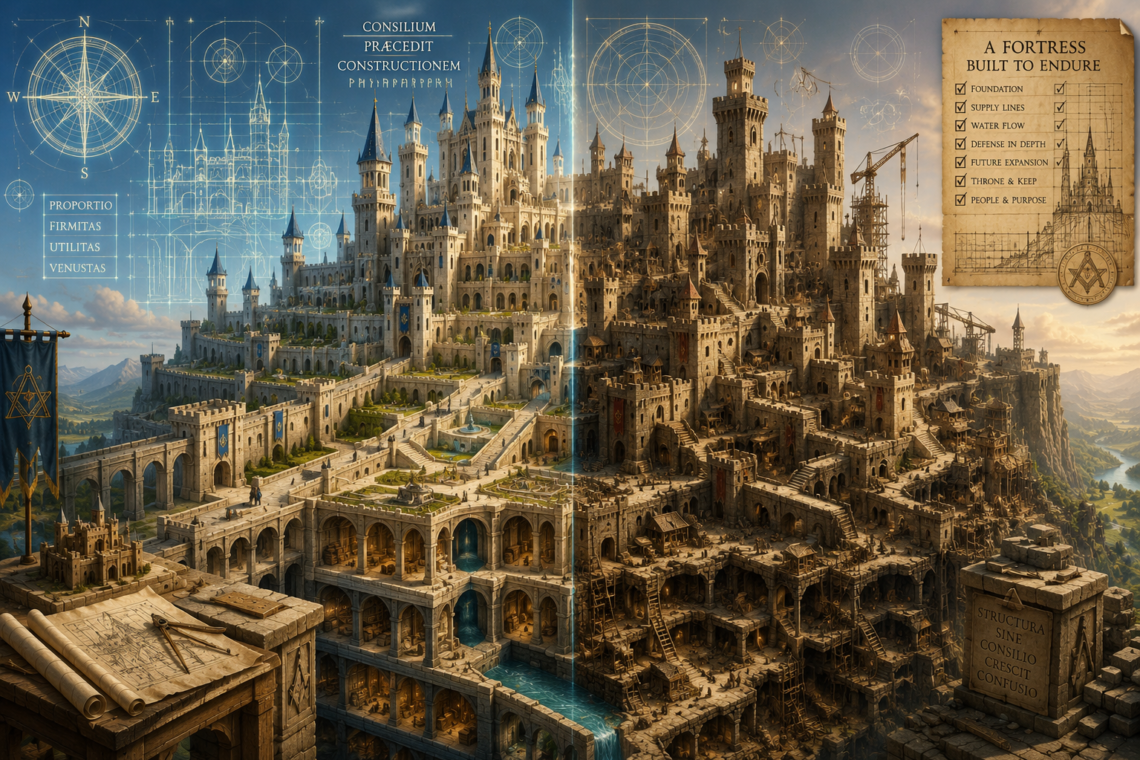
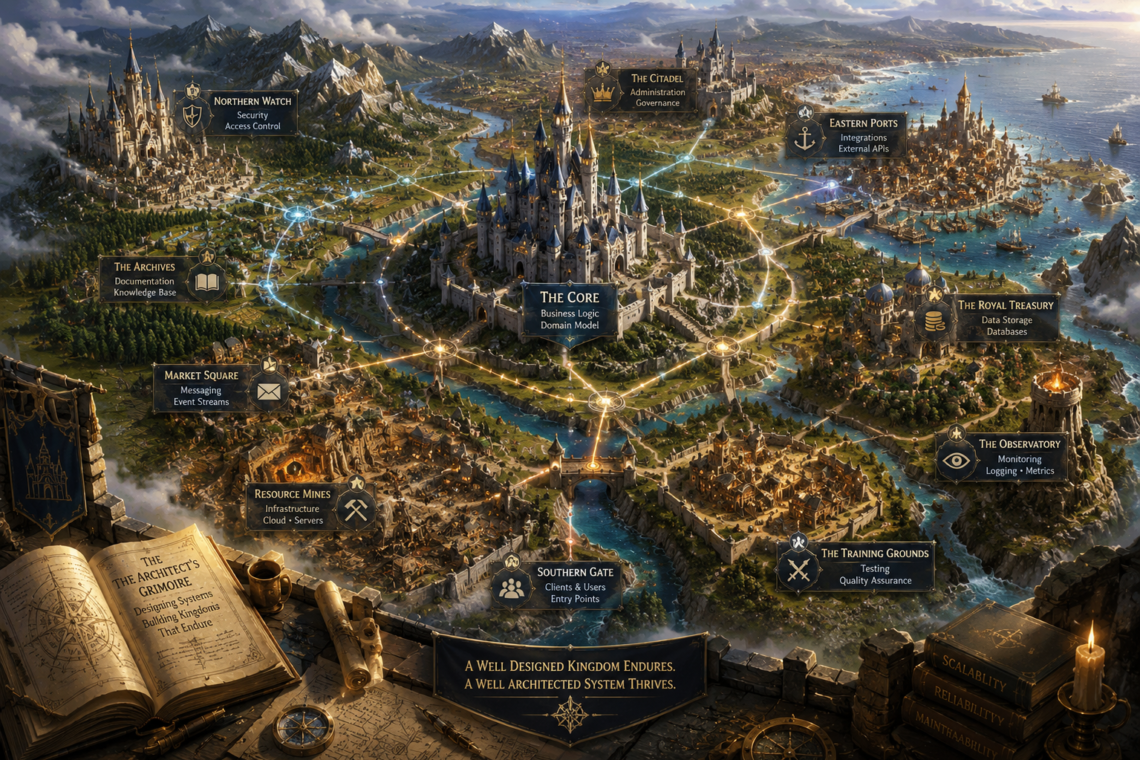
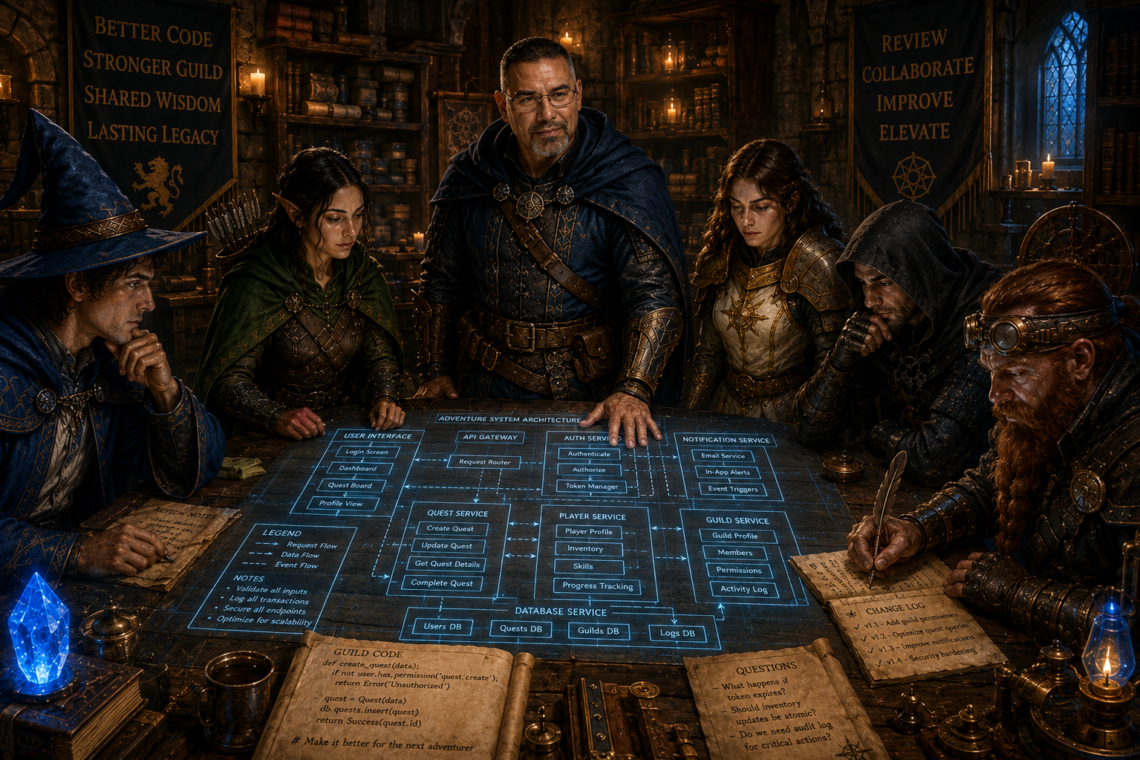
Even the finest builders need someone who can see beyond the next wall. Foundations of the Kingdom Maintaining software taught me lessons that writing software never could. Early in my career, I assumed difficult applications were usually the result of poor programming. Whenever a simple change required hours of investigation, I expected to uncover careless decisions, rushed deadlines, or code that had simply been neglected for too long. The more systems I inherited, however, the less convincing that explanation became. Different companies, different teams, and different programming languages produced remarkably similar maintenance problems. As we begin Foundations of the Kingdom, one lesson rises above all the others: every enduring kingdom…
-
Building Kingdoms That Endure
Every enduring kingdom begins with a blueprint. Every developer learns to build. The best developers learn what to build next. No kingdom becomes legendary because its masons laid beautiful stones. No empire survives because its carpenters built magnificent gates or its blacksmiths forged exceptional swords. History remembers kingdoms that endured because someone looked beyond the next building and imagined how an entire realm would one day function. Roads connected cities before merchants ever traveled them. Walls protected districts that had not yet been built. Aqueducts carried water to neighborhoods that existed only on parchment. Long before the first stone was laid, someone had already begun designing the future. Software follows…
-
Becoming the Developer You Once Needed
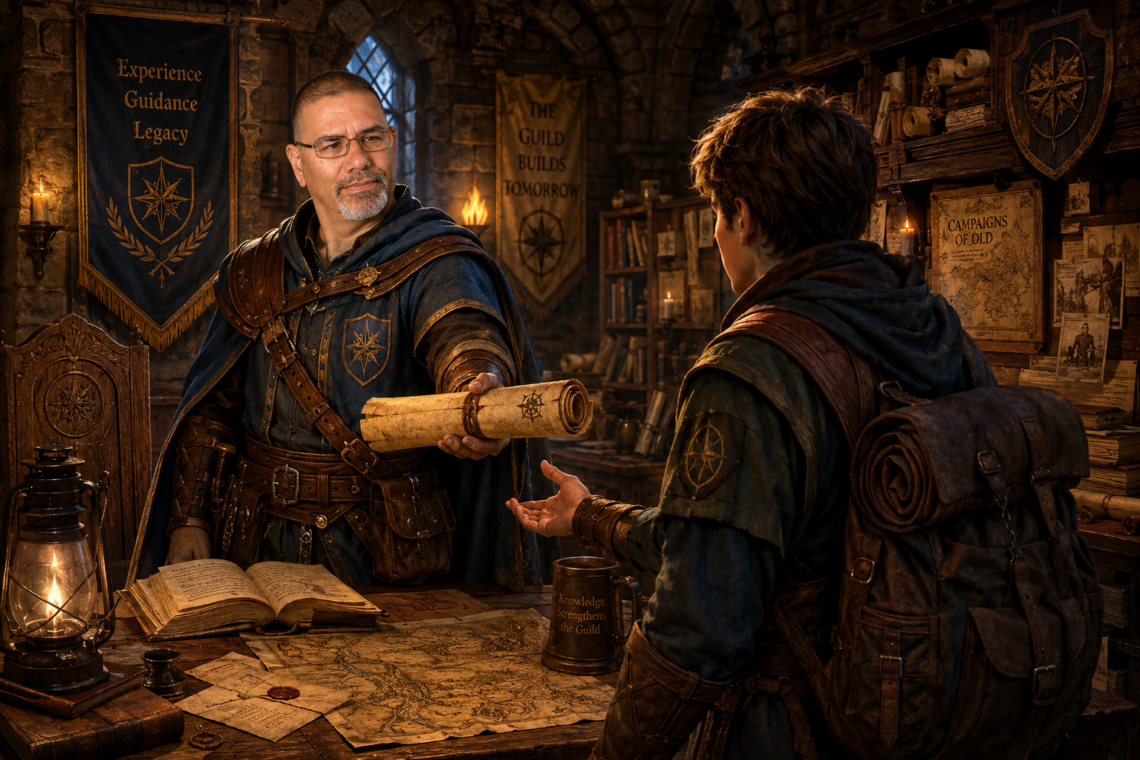
The greatest guides are often those who remember what it felt like to walk alone. The Veteran at the Tavern Table One of the most surprising lessons I have learned throughout my career is that software development is not ultimately about software. The code matters. The systems matter. The architecture matters. Yet when I look back on the people who changed my career, I do not remember them primarily because of the software they built. I remember them because of the guidance they provided when I needed it most. Over time, I came to realize that the final stage of becoming a developer is not mastering technology. It is becoming…
-
Legacy Code and Ancient Curses
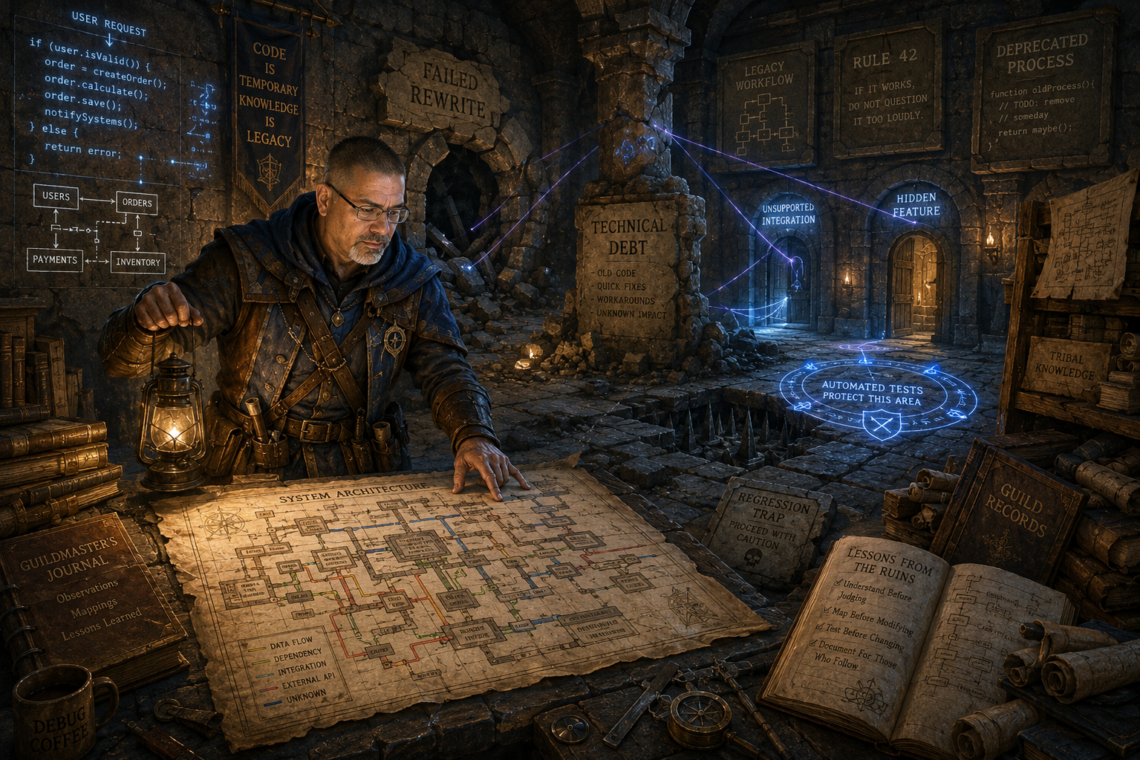
Every developer eventually enters forgotten ruins and wonders what kind of sorcery built them. Entering the Forgotten Ruins Among all the challenges software engineers face throughout their careers, few are as universal as inheriting legacy code. Most developers begin their journey imagining they will spend their days creating new applications, experimenting with modern technologies, and designing elegant architectures from a blank canvas. While those opportunities certainly exist, they represent only a portion of professional software development. Much of our work involves maintaining, extending, repairing, and modernizing systems that already exist. Some of these applications are only a few years old. Others have survived multiple generations of developers and business leaders.…
-
Code Reviews Without Emotional Damage
Criticism is not the enemy. Pride without growth is far more dangerous. The Review Table in the Guild Hall One of the most important lessons I have learned during my years in software development has very little to do with writing code. It is not about mastering a framework, learning a language, designing architecture, or deploying applications to the cloud. Instead, it concerns learning how to participate in code reviews without allowing pride, insecurity, frustration, or ego to interfere with growth. Many developers spend years improving their technical skills while investing far less effort in the collaborative skills that make engineering teams successful. Yet some of the strongest engineers I…
-
Writing Code Others Can Read
The guild hall is crowded with adventurers. Write clearly, or your allies become your next obstacle. Life Inside the Guild Hall One of the first misconceptions many developers carry into the profession is the belief that software development is primarily a solitary activity. Popular culture often reinforces this image. We imagine a lone programmer sitting in a dimly lit room, crafting brilliant solutions through sheer technical skill and determination. While moments of solitary work certainly exist, the reality is far different. Most software is built, maintained, reviewed, and expanded by teams. Success depends as much on communication as it does on technical ability. This week’s theme is Surviving the Guild…
-
Learning Without Burning Out
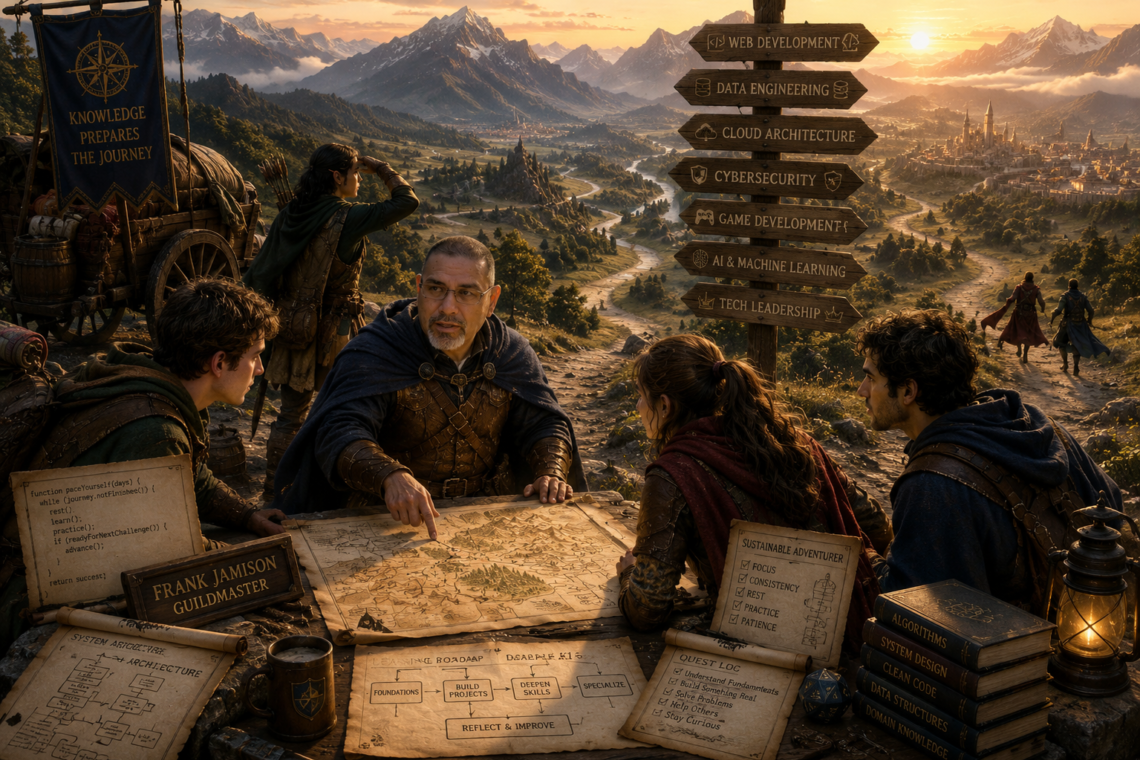
No warrior survives every battle at full speed. Pace yourself, or exhaustion becomes the enemy. In our last gathering at the guild hall, I spoke about choosing a path. Every developer eventually faces a decision about where to invest time, energy, and attention. Some are drawn toward frontend development. Others find themselves fascinated by backend systems, cybersecurity, cloud infrastructure, data science, or countless other specialties. Choosing a path provides direction, but direction alone is not enough. An adventurer who charges down the correct road at an unsustainable pace may still fail to reach the destination. One of the most important lessons I have learned throughout my career is that success…
-
The Guildmaster’s Handbook
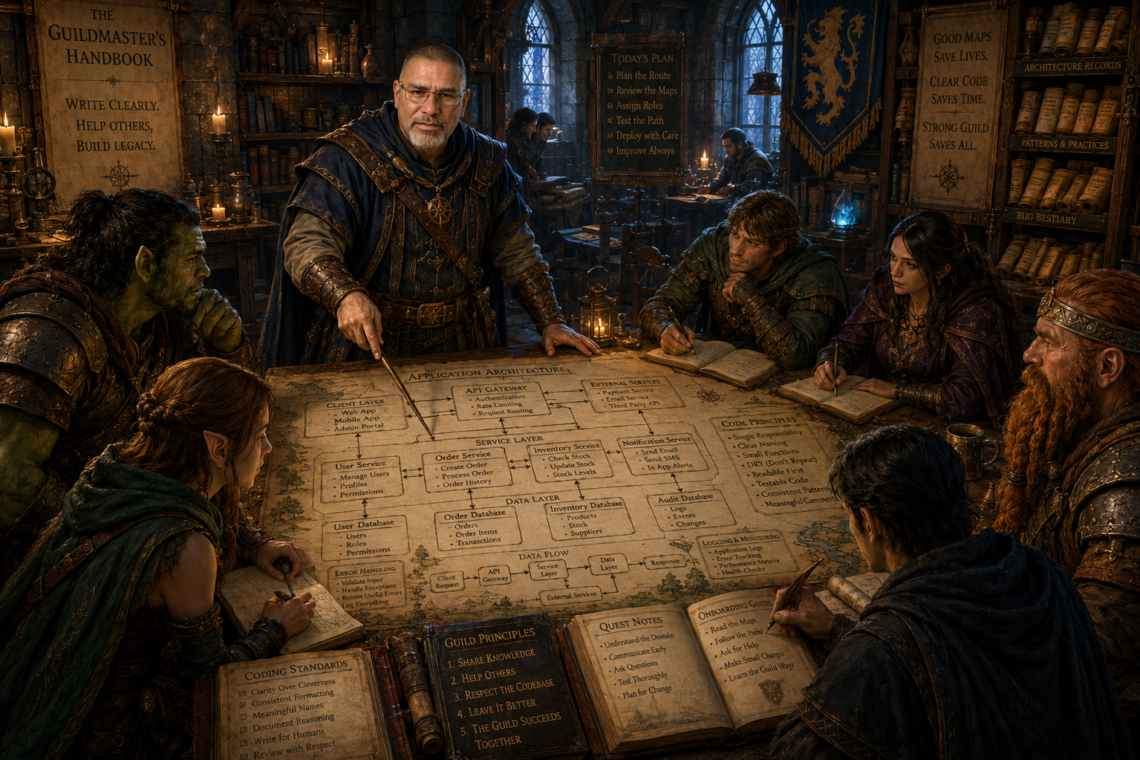
Becoming the Developer Everyone Wants on the Quest. There is something I wish somebody had explained to me much earlier in my career. Most people believe software development is a profession where success belongs to the person who memorizes the most technologies, masters the newest framework first, or somehow manages to turn coffee into functional code through sheer force of determination. That idea sounds convincing when you are standing at the beginning of the road, staring at tutorials, job listings, and enough conflicting advice to make your head spin. The truth feels much less dramatic and far more useful. Code matters. Technical skill matters. You absolutely need to know how…
-
The Bones of the Realm: Writing Semantic HTML That Holds
Strong kingdoms are built on structure long before they are decorated. Editor’s Note: This article is an expanded and substantially revised edition of an article originally published on RandomThoughtsInTraffic.com. While the original introduced semantic HTML as an important front-end development practice, this StackNScroll edition explores the subject through the broader disciplines of software architecture, browser interpretation, accessibility, maintainability, and long-term engineering thinking. New material examines how browsers parse documents before rendering interfaces, why semantic HTML influences every layer of the modern web stack, and how experienced engineers gradually learn to think differently about markup after years of maintaining production software. As part of this week’s Foundations of the Realm theme,…
-
The First Map: How the Browser Shapes the World
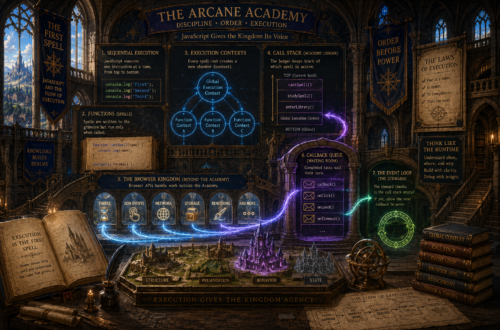
Every adventure begins with understanding the terrain beneath your feet. Editor’s Note: This article is an expanded and revised edition of a piece originally published on RandomThoughtsInTraffic.com. For its StackNScroll release, the material has been substantially updated with deeper coverage of browser architecture, rendering behavior, document parsing, resource loading, and the relationship between structure, presentation, and interactivity. New sections have been added to explain the browser’s rendering pipeline, introduce foundational performance concepts, and establish the technical groundwork for future articles in The Full-Stack Campaign. As part of this week’s Foundations of the Realm theme, the goal is to help readers develop accurate mental models of how browsers transform source code…