-
Restoring Ancient Spellbooks: Modernizing Legacy Code
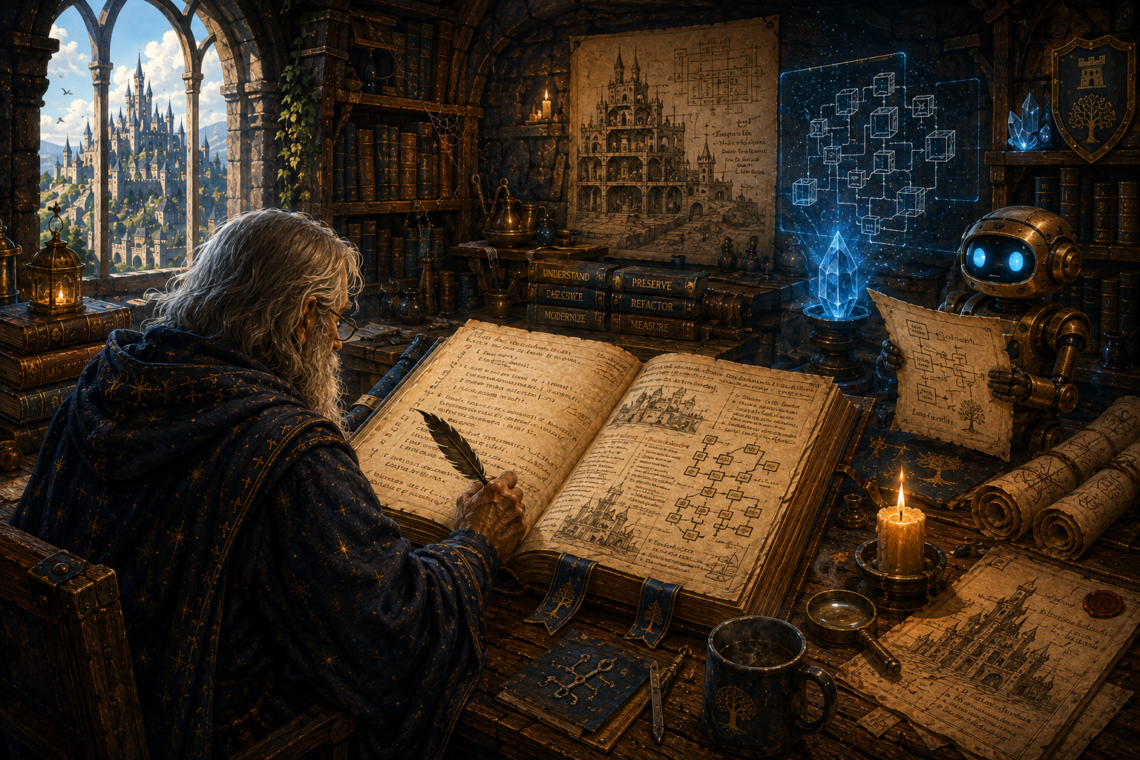
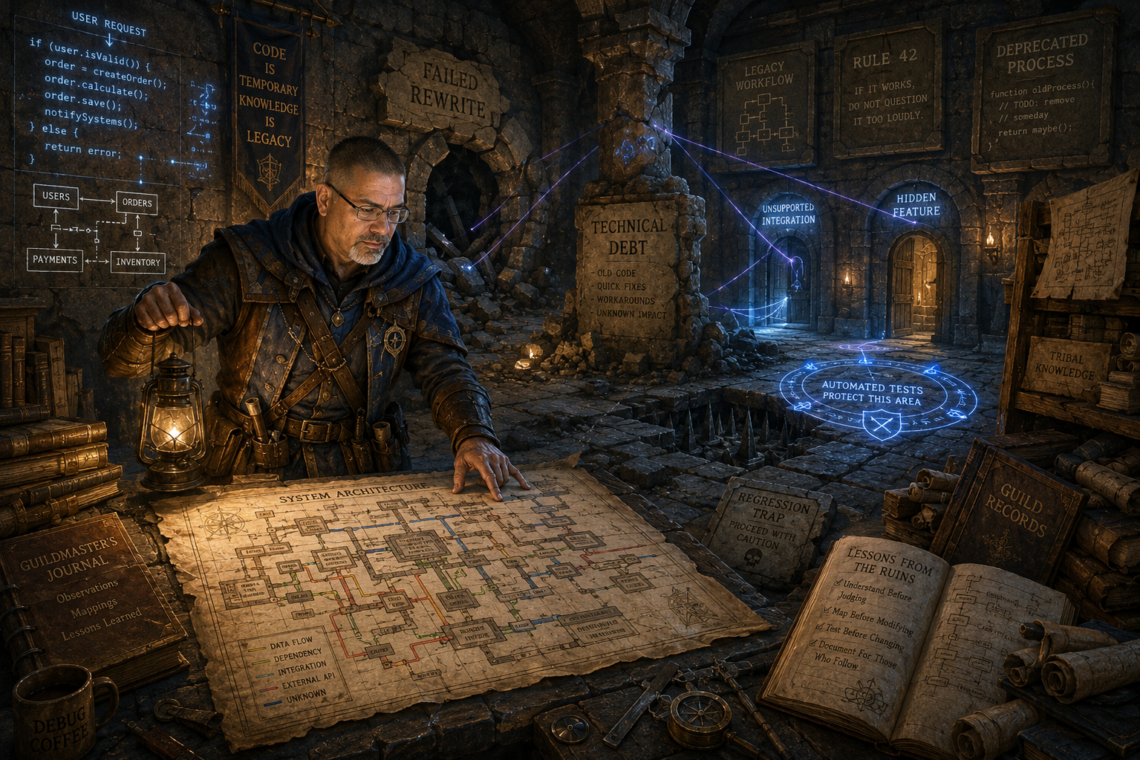
Some of the greatest magic lies hidden beneath centuries of dust. There is a particular kind of software that almost every experienced engineer eventually encounters. It has been running for years, perhaps decades, quietly processing orders, generating reports, moving money, coordinating inventory, or supporting some other function the business cannot simply abandon. Its architecture reflects decisions made by developers who may have left long ago. Its dependencies have aged, its conventions belong to another era, and certain portions of the codebase are approached with the same caution a wizard might use when opening an ancient spellbook whose margins contain several generations of increasingly nervous annotations. The temptation is to look…
-
Hidden Traps in the Dungeon: Escaping Technical Debt
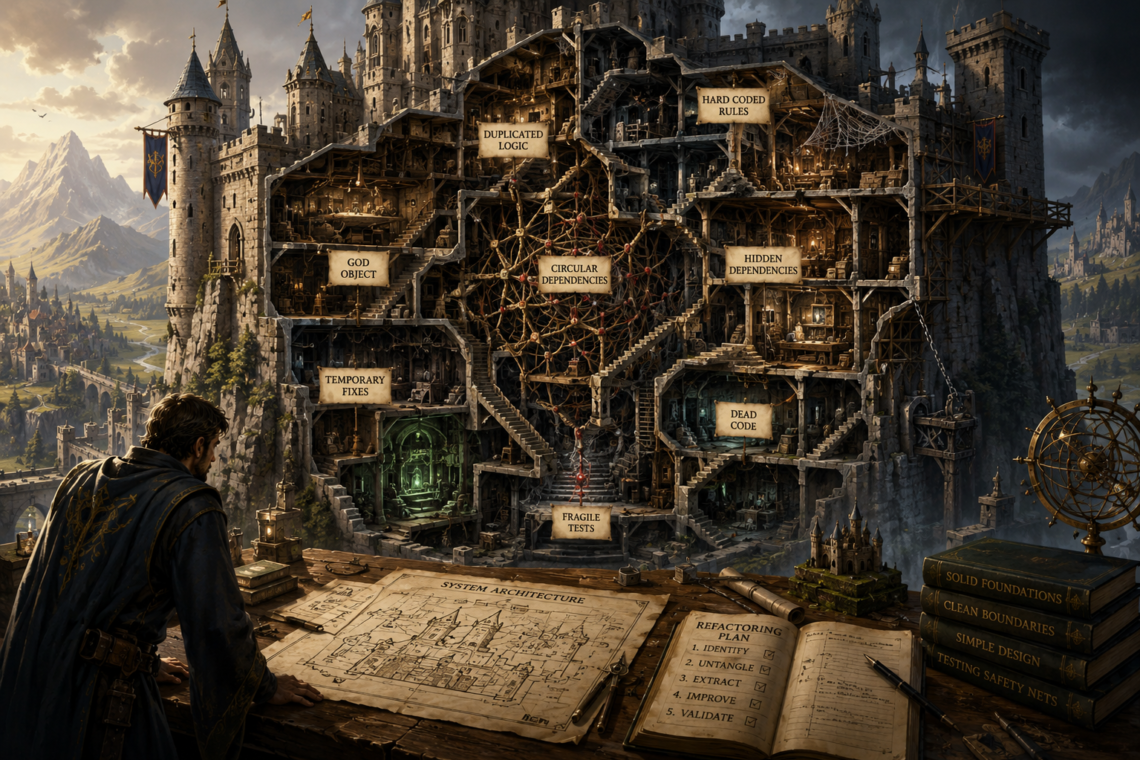
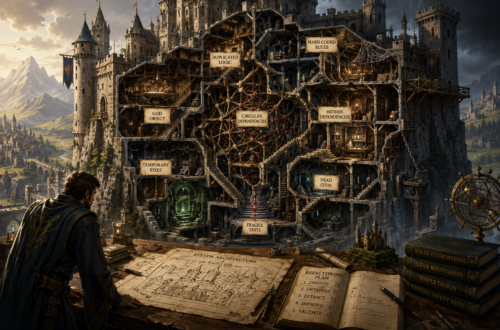
The deadliest dangers are often the ones built into the castle itself. No architect intentionally designs a maze. Every castle begins with a sensible plan. Corridors connect naturally, storerooms serve nearby kitchens, towers overlook vulnerable approaches, and every staircase leads somewhere meaningful. Yet castles that survive for generations rarely retain that original simplicity. New rulers expand old wings. Temporary passageways become permanent corridors. Storage rooms become workshops. Secret tunnels built during one crisis remain long after the danger has passed. Over time, the castle becomes increasingly difficult to navigate, not because its builders lacked skill, but because each generation solved the problems immediately before them. Long-lived software follows the same…
-
Dividing the Kingdom: Finding the Right Boundaries
A realm divided too soon may fall before it ever grows. Software architecture has a way of making every difficult decision appear deceptively simple. A whiteboard fills with neatly drawn boxes connected by clean lines, and suddenly an application that once fit comfortably into a single project has become a collection of independent services. Every box promises greater flexibility, cleaner organization, and limitless room for future growth. Years spent designing, maintaining, and repairing production systems eventually teach every architect the same lesson. Every boundary carries a cost that will be paid long after the diagram has been erased. This week, as we continue Designing the Realm, we are moving beyond…
-
The Curse of Premature Fortification
Not every empty field needs a fortress. Software rarely becomes difficult to maintain because developers lacked technical ability. More often, intelligent engineers create long-term maintenance problems by solving challenges that have not yet appeared. A project begins with a handful of straightforward requirements, but its structure quickly expands to accommodate hypothetical integrations, future scalability, interchangeable components, and extension points that may never become necessary. Before long, the codebase grows steadily larger while the problem it exists to solve remains remarkably small. Long before the application reaches maturity, supporting the design requires nearly as much effort as advancing the product itself. Good design prepares software to evolve as knowledge grows. Premature…
-
Building for Today’s Quest or Tomorrow’s Empire?
Every shortcut is a promise the future must eventually keep. The First Road Beyond the Castle Gates Long before a kingdom becomes an empire, someone chooses where the first road will be built. Travelers may never remember who laid those stones, but generations will depend upon the decision. Software is built much the same way. Long before users celebrate new features, someone quietly decides how the application will grow, how its parts will work together, and whether future engineers will inherit a thriving kingdom or spend their days repairing crumbling foundations. When I first began writing software, I believed every project had a finish line. Complete the feature, fix the…
-
Why Castles Need Architects
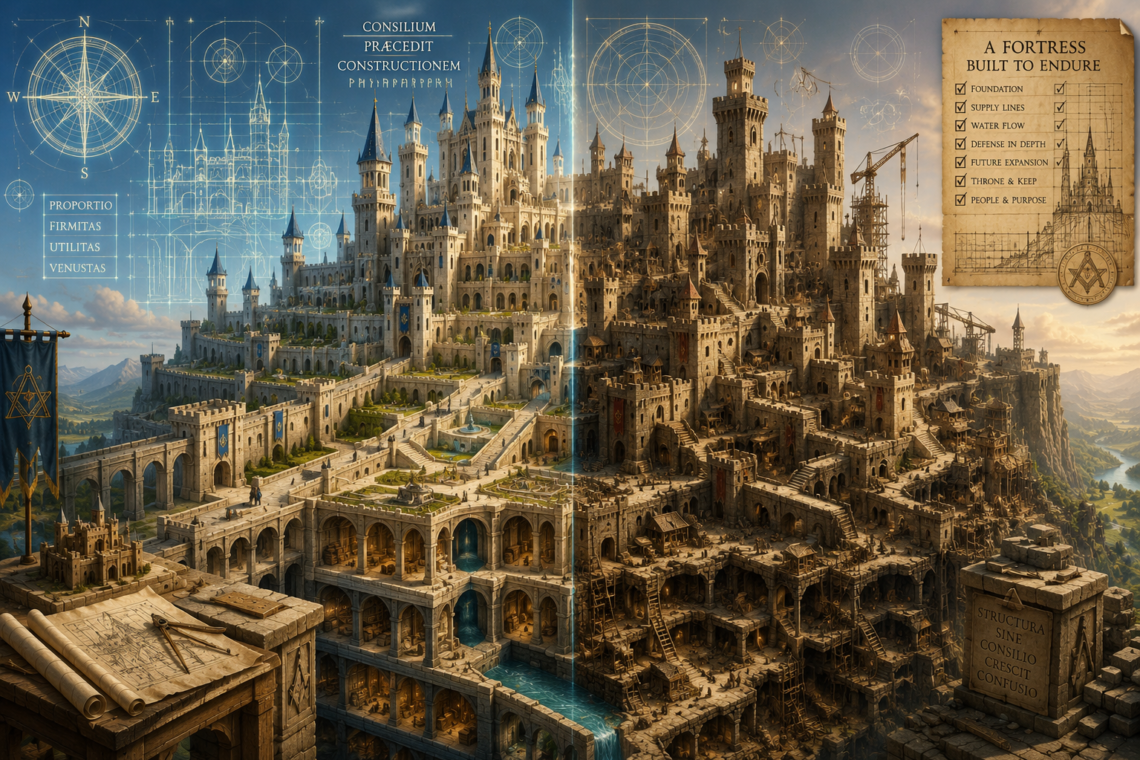
Even the finest builders need someone who can see beyond the next wall. Foundations of the Kingdom Maintaining software taught me lessons that writing software never could. Early in my career, I assumed difficult applications were usually the result of poor programming. Whenever a simple change required hours of investigation, I expected to uncover careless decisions, rushed deadlines, or code that had simply been neglected for too long. The more systems I inherited, however, the less convincing that explanation became. Different companies, different teams, and different programming languages produced remarkably similar maintenance problems. As we begin Foundations of the Kingdom, one lesson rises above all the others: every enduring kingdom…
-
Building Kingdoms That Endure
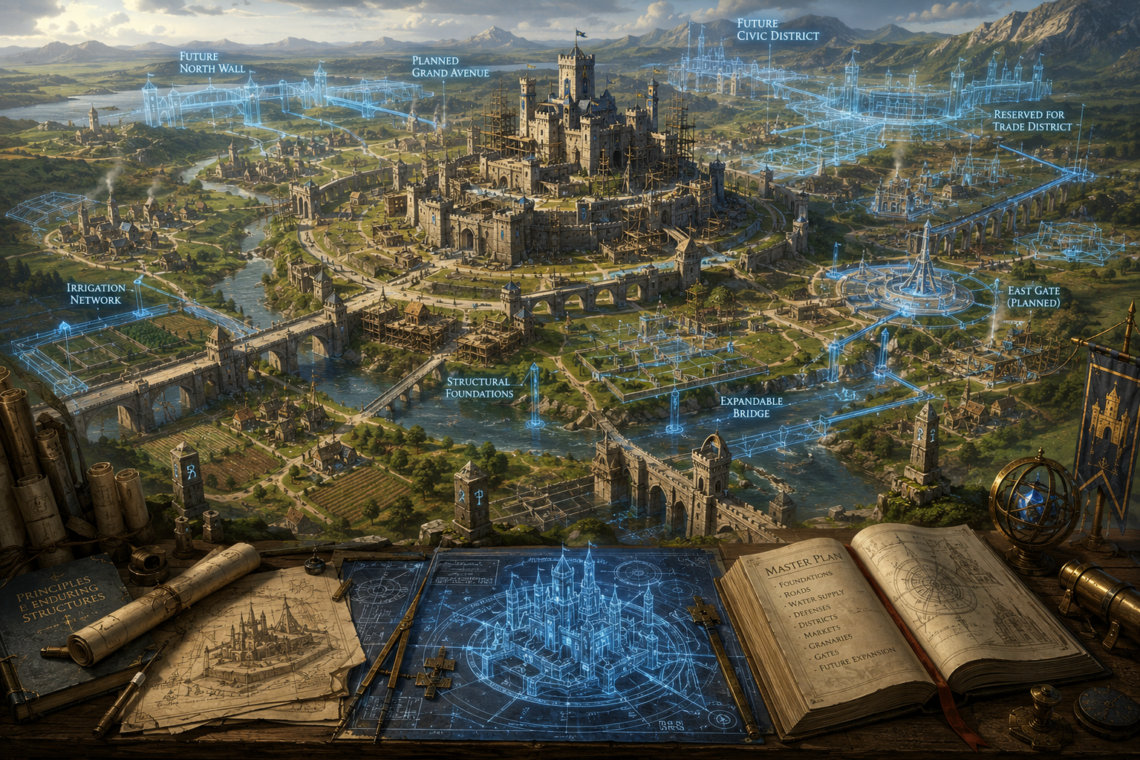
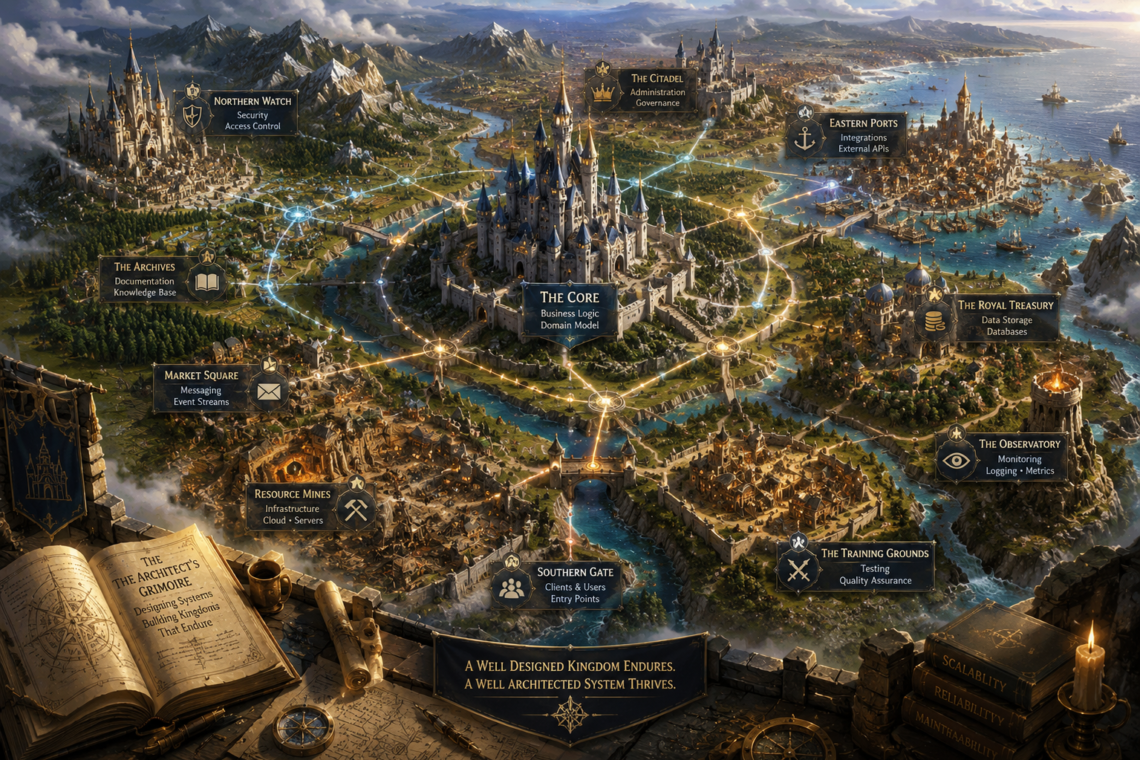
Every enduring kingdom begins with a blueprint. Every developer learns to build. The best developers learn what to build next. No kingdom becomes legendary because its masons laid beautiful stones. No empire survives because its carpenters built magnificent gates or its blacksmiths forged exceptional swords. History remembers kingdoms that endured because someone looked beyond the next building and imagined how an entire realm would one day function. Roads connected cities before merchants ever traveled them. Walls protected districts that had not yet been built. Aqueducts carried water to neighborhoods that existed only on parchment. Long before the first stone was laid, someone had already begun designing the future. Software follows…
-
Scope Creep and Other Predators
Beware the quest that quietly grows teeth while nobody is paying attention. The Monster Nobody Notices Throughout my career in software development, I have learned that some of the most dangerous project threats are not technical in nature. Bugs can be identified, analyzed, and fixed. Performance bottlenecks can be measured and optimized. Infrastructure failures can usually be diagnosed through careful investigation and experience. Scope creep is different because it rarely presents itself as a problem at the beginning. Instead, it often arrives disguised as a helpful suggestion, a reasonable enhancement, or an opportunity to improve the final product. Left unmanaged, those small additions accumulate until the original project becomes something…
-
Legacy Code and Ancient Curses
Every developer eventually enters forgotten ruins and wonders what kind of sorcery built them. Entering the Forgotten Ruins Among all the challenges software engineers face throughout their careers, few are as universal as inheriting legacy code. Most developers begin their journey imagining they will spend their days creating new applications, experimenting with modern technologies, and designing elegant architectures from a blank canvas. While those opportunities certainly exist, they represent only a portion of professional software development. Much of our work involves maintaining, extending, repairing, and modernizing systems that already exist. Some of these applications are only a few years old. Others have survived multiple generations of developers and business leaders.…
-
The Cost of Power: From DOM Manipulation to Better Design
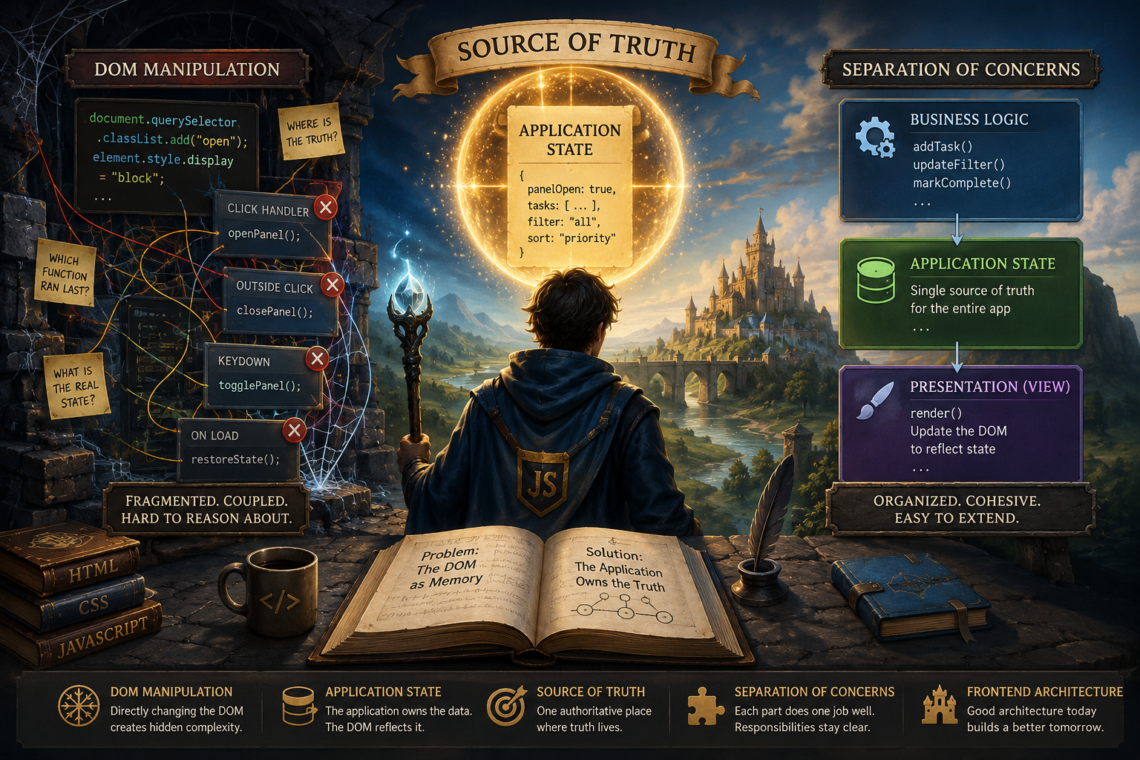
True mastery comes not from controlling every spell, but from knowing when to let the magic follow the design. Editor’s Note: This article is an updated and expanded edition of an article originally published on RandomThoughtsInTraffic.com. For this StackNScroll edition, I have substantially expanded the original discussion by moving beyond the mechanics of DOM manipulation into the architectural thinking that allows frontend applications to remain maintainable as they mature. Along with new JavaScript examples, this revised edition explores application state, separation of concerns, and the engineering habits that distinguish software built for demonstrations from software built to survive years of growth. It also serves as a bridge into this week’s…