-
The Workshop of Tomorrow: The Future of AI-Assisted Software Engineering
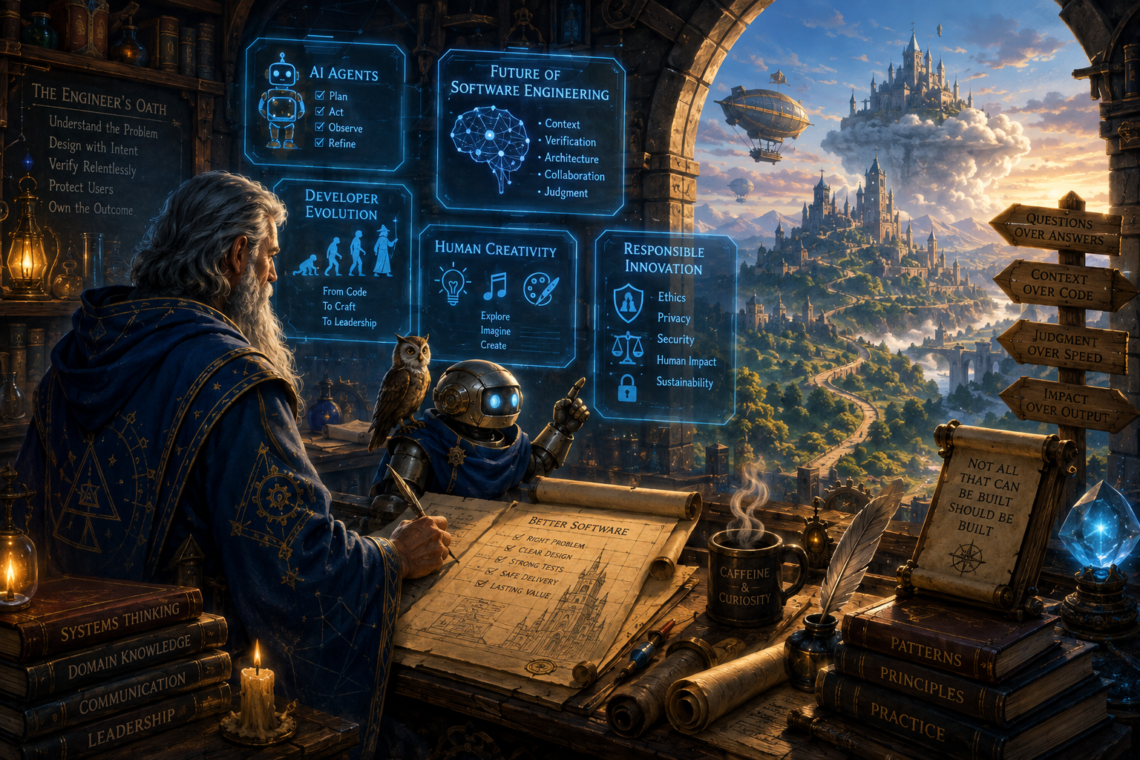
Every generation of wizards inherits greater magic and greater responsibility. There was a time when the most valuable object in a wizard’s workshop was the spellbook. It contained knowledge that had taken generations to discover and preserve, and a young wizard might spend years learning its incantations before being trusted to use them. Then imagine placing an enchanted tome on the workbench that could produce a new spell on demand, explain unfamiliar enchantments, repair damaged runes, and occasionally invent an incantation that sounded perfectly legitimate but summoned absolutely nothing. The workshop would become more productive almost overnight, but it would not become simpler. Software engineering has entered that workshop. AI-assisted…
-
The Guild of Many Minds: Collaborative Engineering in the Age of AI
The strongest enchantments emerge only after every wizard has challenged the spell. There is a peculiar temptation that arrives with powerful tools. When an engineer can describe a problem to an AI system and receive working code seconds later, software development begins to feel increasingly individual. A developer can explore an unfamiliar library, draft an implementation, generate tests, inspect an error, and revise the solution without asking another person to leave whatever they are doing. The enchanted workshop suddenly contains a tireless apprentice who is always available and remarkably quick with a quill. Yet the more capable that apprentice becomes, the easier it is to forget one of the oldest…
-
Becoming the Royal Architect: Designing Systems That Outlive You
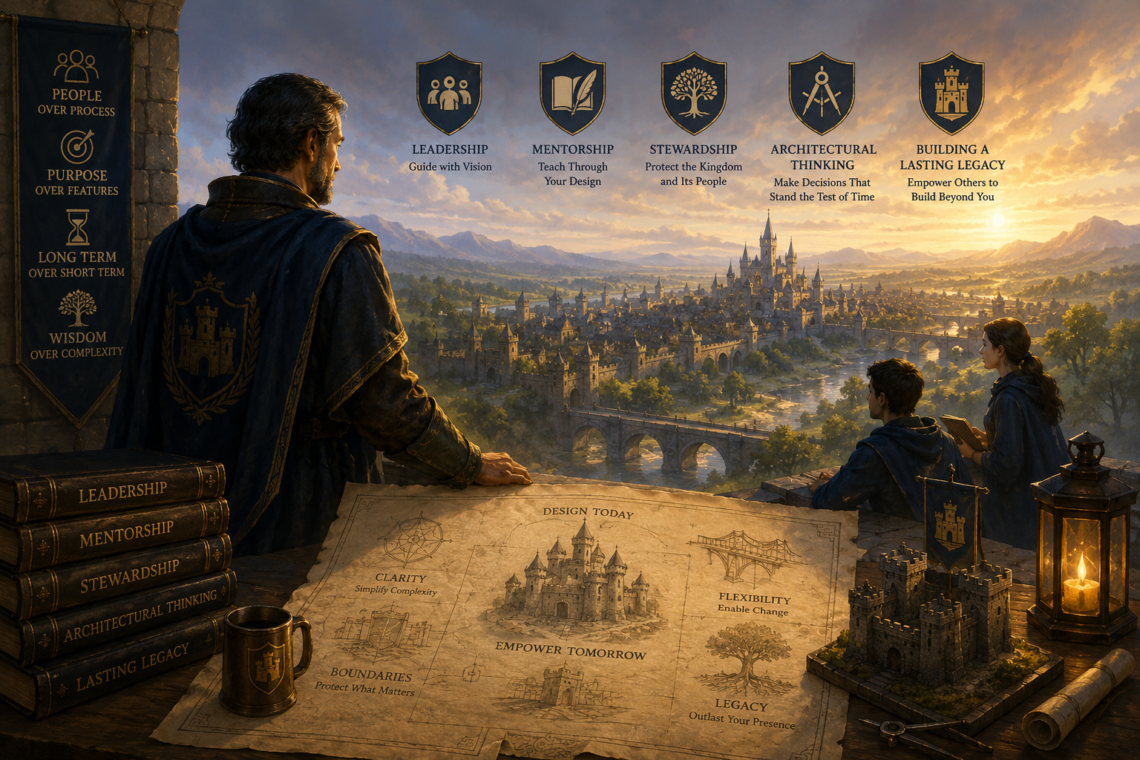
Every kingdom remembers its architects long after its builders have gone home. Every software system eventually becomes someone else’s responsibility. That single reality has shaped nearly every architectural decision I have made throughout my career. Features are eventually rewritten. Technologies become obsolete. Frameworks rise and fall. Entire engineering teams come and go. Yet long after the original developers have moved on, the software remains, waiting for new engineers to understand it, maintain it, and continue building upon it. Whether those future engineers inherit a thriving kingdom or a crumbling ruin depends far less on the quality of individual features than on the quality of the architecture beneath them. Throughout The…
-
The Automated Kingdom: When Excellence Becomes Routine
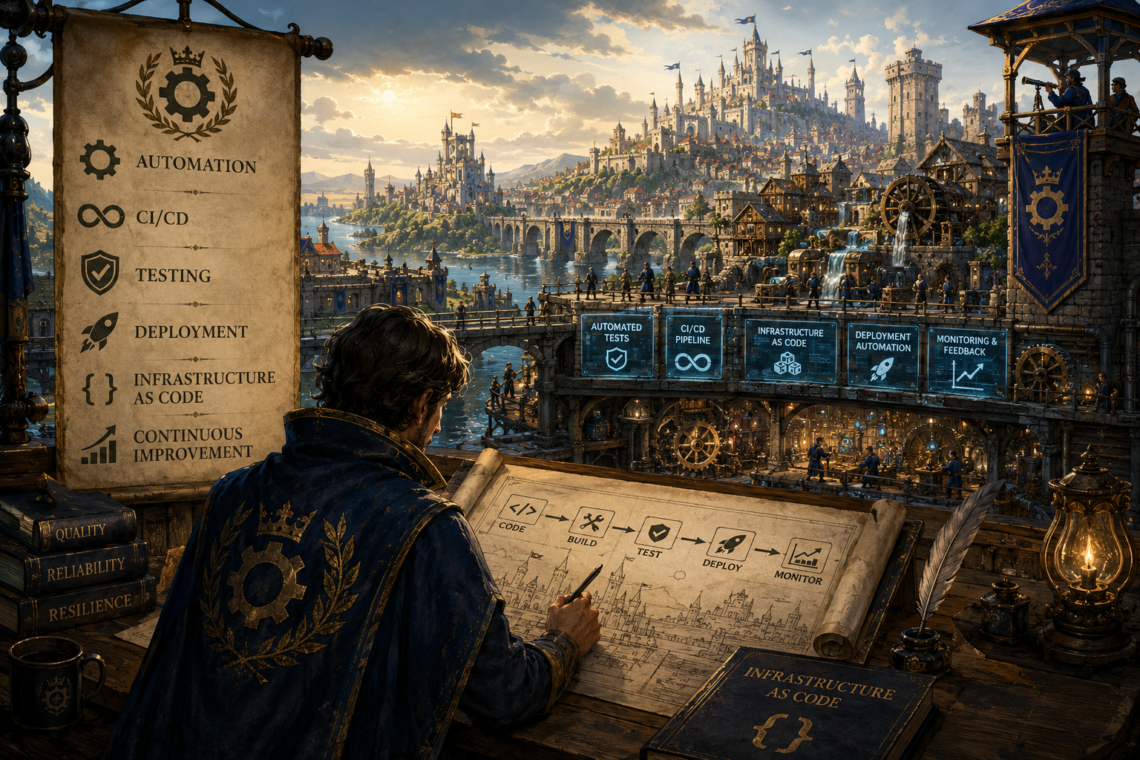
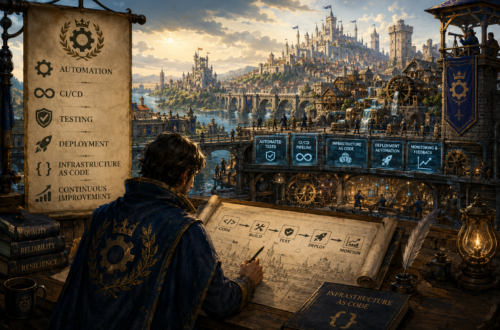
The greatest kingdoms flourish because excellence becomes routine. The most reliable software systems are often the least impressive. Their deployments happen without ceremony. Their monitoring catches problems before customers notice them. Their infrastructure quietly provisions itself, and their operational routines become so dependable that engineers gradually stop thinking about them. The greatest compliment those systems receive is that nobody considers them remarkable anymore. Like the finest kingdoms, their success has become ordinary because excellence has become routine. Travelers rarely praise the aqueducts that deliver clean water every day or the roads that quietly connect every village to the capital. They admire the thriving markets, magnificent libraries, and prosperous cities made…
-
When the Kingdom Burns: Designing for Failure Before Disaster Strikes
Hope is a poor evacuation plan. There is a quiet confidence that settles over every engineering team after enough successful deployments. Systems remain stable for months. Monitoring dashboards glow green. Customers continue using the software without incident, and the last major outage slowly fades into memory. Over time, it becomes easy to mistake reliability for a permanent characteristic of the software instead of recognizing it as the product of thousands of careful engineering decisions. That confidence is understandable, but it is also one of the greatest risks a software organization can face. Software rarely fails because developers expect it to fail. More often, it fails because teams gradually stop imagining…
-
The Royal Treasury: Protecting the Kingdom’s Data
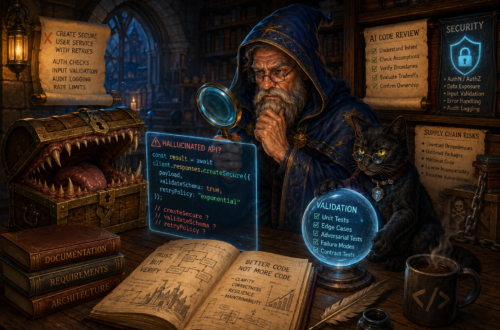
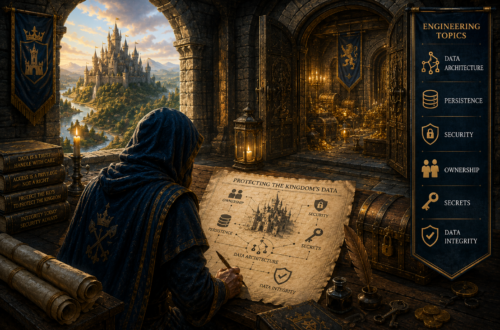
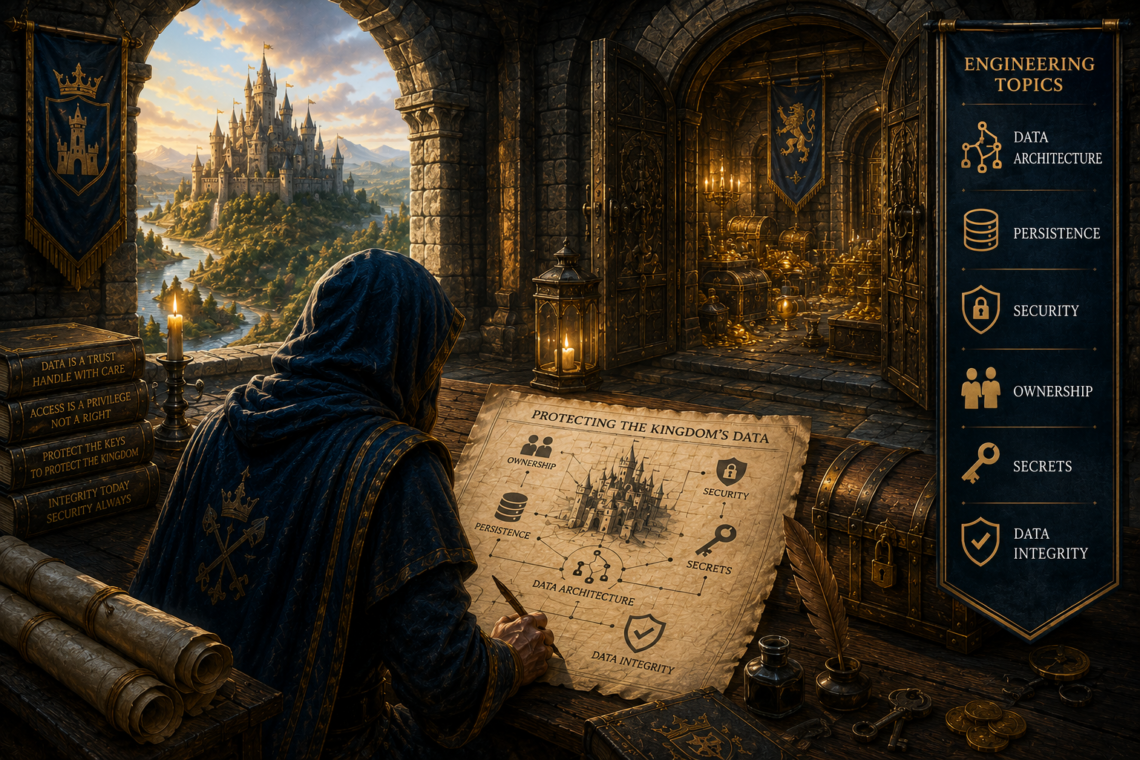
The kingdom’s greatest treasure is not its gold, but who guards it. Every successful software system eventually becomes responsible for something far more valuable than the application itself. During its earliest days, a project may consist of little more than a handful of pages, a modest database, and enough business logic to solve a single problem. As the software matures, however, customers begin entrusting it with personal information, financial transactions, authentication credentials, business records, intellectual property, and years of institutional knowledge. Without anyone announcing the moment it happens, the application becomes the keeper of a treasury whose value far exceeds the cost of constructing the software. Many developers begin their…
-
Building a Portfolio Worth Showing
Good work deserves witnesses. Build proof of the journey, not merely trophies. Every Adventurer Needs a Record of Their Journey One of the most common mistakes I see newer developers make is treating a portfolio as something they will build someday. They imagine a future version of themselves who has completed enough projects, learned enough technologies, and accumulated enough experience to finally deserve a public showcase. Until that day arrives, they keep their work hidden inside repositories, forgotten folders, abandoned cloud accounts, and unfinished side projects. Unfortunately, that approach creates a serious problem. By the time they decide they need a portfolio, much of the journey that would have made…
-
Working With Stakeholders Without Losing Sanity
The kingdom rarely speaks in technical terms. Wisdom begins with learning how to translate chaos. The Most Important Room Most Engineers Underestimate When many people first enter the world of software development, they imagine that success will be determined primarily by technical skill. They expect to spend their days solving complex problems, learning new technologies, designing elegant systems, and building useful applications. Those activities certainly form an important part of the profession, but they are not the whole story. Over time, most engineers discover that some of the most challenging and valuable work they perform happens away from the keyboard. I learned this lesson slowly. Early in my career, I…