Stack n' Scroll

Code, Campaigns, and Lessons from the Digital Realm

August 2026
S M T W T F S
 1
2345678
9101112131415
16171819202122
23242526272829
3031  
« Jul    

Meta

  • Register
  • Log in
  • Entries feed
  • Comments feed
  • WordPress.org
Frank Jamison Avatar
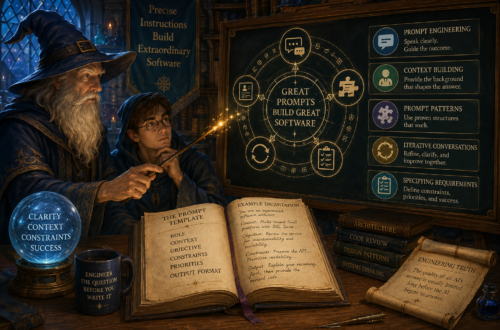
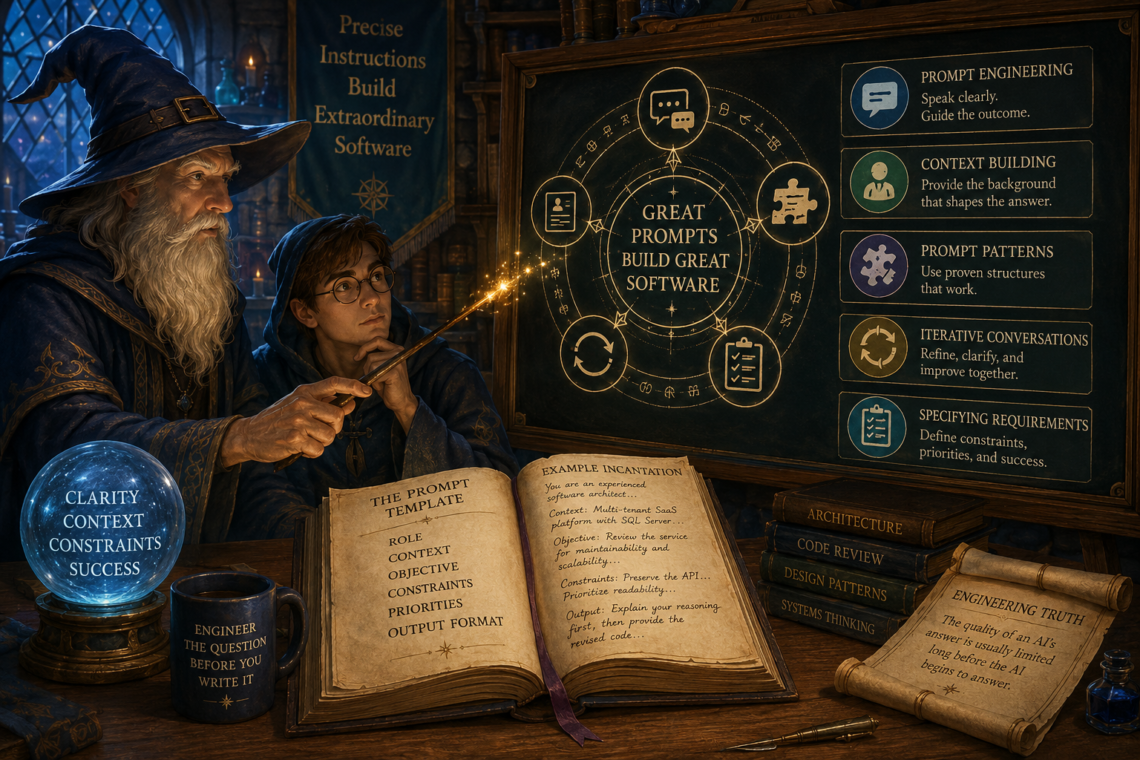
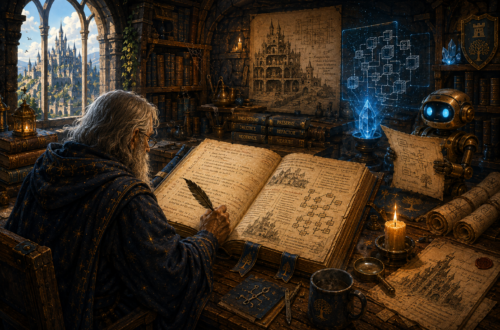
  • An experienced wizard mentors a young apprentice in a candlelit magical workshop where fantasy and software engineering converge. A glowing instructional board illustrates prompt engineering concepts including context building, prompt patterns, iterative conversations, and specifying requirements, while an open spellbook displays a structured AI prompt template. A crystal ball labeled with clarity, context, constraints, and success symbolizes effective prompt design, surrounded by engineering books, architectural references, and magical artifacts that reinforce the theme of AI as an apprentice guided by thoughtful engineering judgment.
    The Enchanted Workshop

    Speaking the Language of Spells: Prompt Engineering That Works

    July 29, 2026 /

    Magic obeys precision far more faithfully than intention. Artificial intelligence has changed the way software engineers approach daily work, but it has not changed the fundamentals of engineering itself. Every successful project still depends upon communicating requirements clearly, defining constraints carefully, and evaluating results critically. AI simply introduces a new participant into that familiar conversation. Instead of translating business requirements directly into code, we now spend part of our time translating engineering intent into language that another intelligent system can understand. The quality of that translation often determines whether AI becomes a valuable collaborator or an expensive distraction. As in every other engineering discipline, success depends less on discovering secret…

    Read More
    Frank Jamison

    You May Also Like

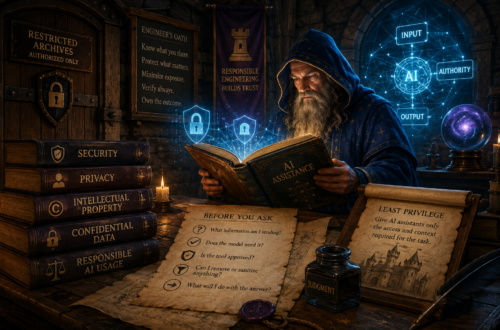
    A fantasy wizard studies a glowing AI spellbook inside a restricted archive, surrounded by magical security shields and references to security, privacy, intellectual property, confidential data, and responsible AI usage. An illuminated diagram connects AI with input, authority, and output, while notes about least privilege and careful information sharing emphasize responsible engineering judgment.

    Forbidden Tomes: AI, Security, and Responsible Engineering

    August 12, 2026
    An elderly wizard restores a massive ancient spellbook in a candlelit fantasy library, studying aged pages filled with code, diagrams, and architectural notes while a small AI automaton assists nearby. Glowing blue system diagrams, old technical volumes, scrolls, and a castle beyond the window symbolize legacy code, refactoring, code modernization, technical debt, and AI-assisted cleanup.

    Restoring Ancient Spellbooks: Modernizing Legacy Code

    August 7, 2026
    A wide, painterly fantasy workshop serves as an editorial metaphor for modern software engineering. An experienced wizard mentor and a thoughtful apprentice study a glowing architectural blueprint projected above a large drafting table covered with medieval engineering plans, measuring tools, and manuscripts. A luminous blue magical familiar sits beside them, symbolizing human and AI collaboration. Towering bookshelves are filled with volumes on algorithms, design patterns, testing, security, ethics, and software architecture, while the surrounding workshop features drafting instruments, enchanted artifacts, blueprints, and engineering ledgers that emphasize craftsmanship, long-term planning, and responsible engineering. Warm golden light contrasts with cool blue magical illumination, creating an atmosphere of thoughtful mentorship where engineering judgment, software craftsmanship, and responsible AI take precedence over magical spectacle. The image introduces The Enchanted Workshop by portraying software engineering as a disciplined craft supported by powerful tools rather than defined by them, consistent with the StackNScroll editorial illustration philosophy.

    The Enchanted Workshop Begins: An Engineer’s Guide to the Age of AI

    July 25, 2026
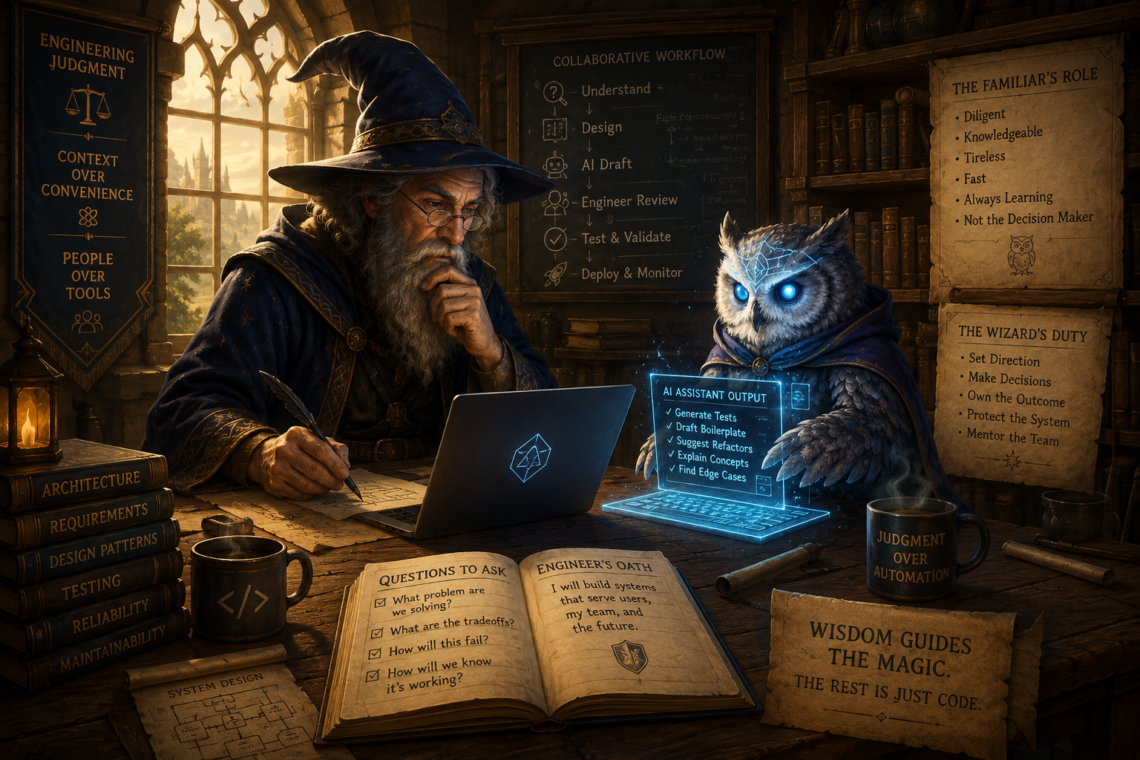
  • An experienced wizard sits thoughtfully at a workbench inside a warm, medieval-inspired workshop, collaborating with a glowing owl familiar that represents artificial intelligence. Ancient spellbooks and engineering references surround them alongside a modern laptop displaying architectural diagrams, while magical holographic interfaces illustrate AI-assisted development workflows. Banners and notes throughout the workshop emphasize engineering judgment, human responsibility, and collaboration over automation. The scene blends fantasy and software engineering to symbolize AI as a trusted apprentice that accelerates development without replacing the wisdom, decision-making, and accountability of the engineer.
    The Enchanted Workshop

    The Wizard’s New Apprentice: Working Alongside AI

    July 27, 2026 /

    The greatest familiar is still only as wise as the wizard who commands it. Every generation of software engineers encounters a tool that promises to change the profession forever. Assembly language gave way to higher-level languages. Manual deployments yielded to continuous integration and continuous delivery. Virtual machines evolved into cloud platforms. Each innovation made building software faster, but none diminished the importance of sound engineering judgment. Artificial intelligence represents the latest transformation in that long history. It is a remarkable addition to the workshop, but it remains exactly that: an addition. The craft itself has not changed nearly as much as the tools we use to practice it. The excitement…

    Read More
    Frank Jamison

    You May Also Like

    An elderly wizard in deep blue robes sits at a wooden desk inside a grand medieval library, carefully writing on a parchment with a feather quill. Shelves of ancient books fill the background beneath tall stone arches, creating the atmosphere of a magical archive. Around the wizard, glowing blue holographic panels illustrate an AI-assisted documentation workflow, showing an AI assistant drafting information, an engineer adding judgment and context, and a review process validating accuracy and clarity before documentation is shared. Stacks of books labeled Design Decisions, Lessons Learned, Architecture Notes, Incident Reports, and Operational Runbooks reinforce the importance of preserving engineering knowledge. A scroll on the desk highlights the qualities of effective documentation, including explaining why decisions were made, capturing context, guiding future decisions, preventing mistakes, and outliving the original engineers. Nearby, a documentation quality checklist emphasizes accuracy, current information, clear context, valid examples, and usefulness to future team members. A glowing crystal orb displays the message Better Docs = Better Systems, visually connecting thoughtful documentation, AI-assisted knowledge sharing, and long-term software maintainability.

    The Endless Scribe: Writing Documentation with AI

    August 3, 2026
    A thoughtful wizard studies a glowing crystal ball inside a medieval observatory transformed into a software engineering workspace. The crystal ball displays realistic-looking code alongside prominent warning messages indicating nonexistent APIs and deprecated methods, symbolizing AI hallucinations. Surrounding the wizard are official documentation books, verification checklists, engineering notes, and a ritual board outlining a disciplined software validation process. Additional notes encourage asking critical questions, verifying assumptions, and consulting authoritative sources before trusting AI-generated solutions. The scene combines fantasy and technology to illustrate the importance of critical thinking, source validation, and professional judgment in AI-assisted software development.

    The Crystal Ball Lies Sometimes: Verifying AI Before You Trust It

    July 31, 2026
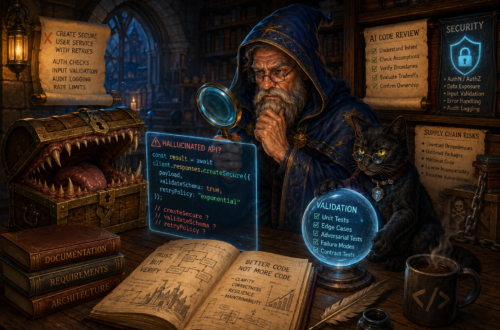
    A fantasy wizard-developer examines glowing AI-generated code with a magnifying glass in a candlelit library while a black cat familiar guards a validation orb. A toothy mimic chest lurks nearby, surrounded by scrolls and books representing AI code review, security, hallucinated APIs, supply chain risks, testing, requirements, and architecture.

    The Mimic in the Library: Trusting AI Without Being Fooled

    August 10, 2026
  • A wide, painterly fantasy workshop serves as an editorial metaphor for modern software engineering. An experienced wizard mentor and a thoughtful apprentice study a glowing architectural blueprint projected above a large drafting table covered with medieval engineering plans, measuring tools, and manuscripts. A luminous blue magical familiar sits beside them, symbolizing human and AI collaboration. Towering bookshelves are filled with volumes on algorithms, design patterns, testing, security, ethics, and software architecture, while the surrounding workshop features drafting instruments, enchanted artifacts, blueprints, and engineering ledgers that emphasize craftsmanship, long-term planning, and responsible engineering. Warm golden light contrasts with cool blue magical illumination, creating an atmosphere of thoughtful mentorship where engineering judgment, software craftsmanship, and responsible AI take precedence over magical spectacle. The image introduces The Enchanted Workshop by portraying software engineering as a disciplined craft supported by powerful tools rather than defined by them, consistent with the StackNScroll editorial illustration philosophy.
    The Enchanted Workshop

    The Enchanted Workshop Begins: An Engineer’s Guide to the Age of AI

    July 25, 2026 /

    Every generation inherits new magic. Only wisdom turns it into craftsmanship. Every Generation Thinks It Is Witnessing the Greatest Revolution Every generation of software engineers believes it is living through the greatest technological shift the profession has ever seen. The names of the technologies change, but the conversation rarely does. Yesterday it was object-oriented programming, the internet, cloud computing, containers, or serverless architecture. Today it is artificial intelligence. Tomorrow it will be something none of us have imagined yet. The tools change far more often than the profession itself. During my own career, I have watched technologies arrive with extraordinary promises. Some genuinely transformed the way we build software. Others…

    Read More
    Frank Jamison

    You May Also Like

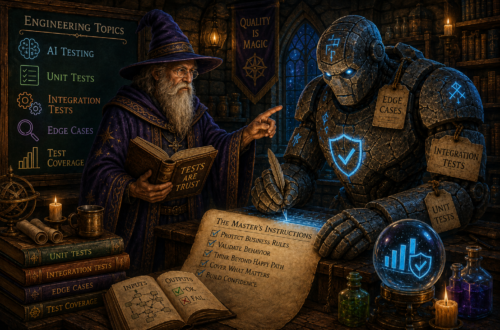
    An experienced wizard mentors a young apprentice in a candlelit magical workshop where fantasy and software engineering converge. A glowing instructional board illustrates prompt engineering concepts including context building, prompt patterns, iterative conversations, and specifying requirements, while an open spellbook displays a structured AI prompt template. A crystal ball labeled with clarity, context, constraints, and success symbolizes effective prompt design, surrounded by engineering books, architectural references, and magical artifacts that reinforce the theme of AI as an apprentice guided by thoughtful engineering judgment.

    Speaking the Language of Spells: Prompt Engineering That Works

    July 29, 2026
    An elderly wizard in deep blue robes sits at a wooden desk inside a grand medieval library, carefully writing on a parchment with a feather quill. Shelves of ancient books fill the background beneath tall stone arches, creating the atmosphere of a magical archive. Around the wizard, glowing blue holographic panels illustrate an AI-assisted documentation workflow, showing an AI assistant drafting information, an engineer adding judgment and context, and a review process validating accuracy and clarity before documentation is shared. Stacks of books labeled Design Decisions, Lessons Learned, Architecture Notes, Incident Reports, and Operational Runbooks reinforce the importance of preserving engineering knowledge. A scroll on the desk highlights the qualities of effective documentation, including explaining why decisions were made, capturing context, guiding future decisions, preventing mistakes, and outliving the original engineers. Nearby, a documentation quality checklist emphasizes accuracy, current information, clear context, valid examples, and usefulness to future team members. A glowing crystal orb displays the message Better Docs = Better Systems, visually connecting thoughtful documentation, AI-assisted knowledge sharing, and long-term software maintainability.

    The Endless Scribe: Writing Documentation with AI

    August 3, 2026
    A fantasy wizard studies a glowing AI spellbook inside a restricted archive, surrounded by magical security shields and references to security, privacy, intellectual property, confidential data, and responsible AI usage. An illuminated diagram connects AI with input, authority, and output, while notes about least privilege and careful information sharing emphasize responsible engineering judgment.

    Forbidden Tomes: AI, Security, and Responsible Engineering

    August 12, 2026
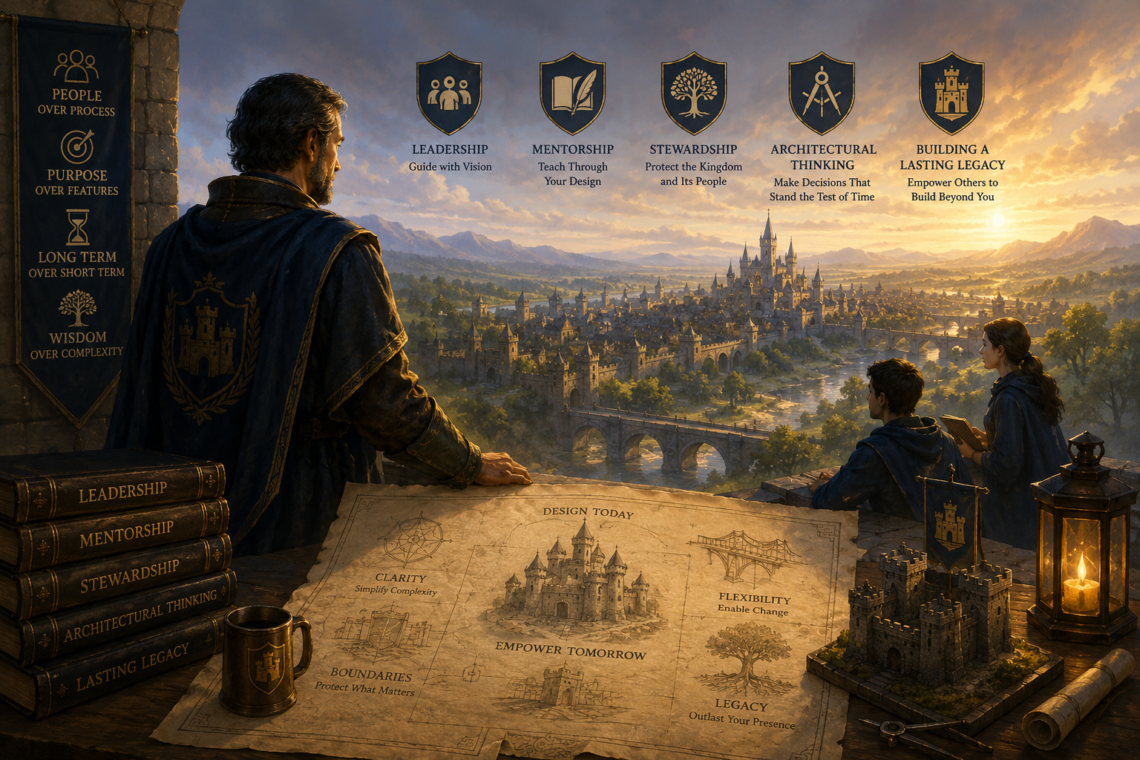
  • A cinematic fantasy illustration of a master architect standing on a castle balcony at sunrise, overlooking a vast medieval kingdom while mentoring two apprentices. An architectural blueprint of the kingdom is spread across a stone table alongside drafting tools, a castle model, and books labeled Leadership, Mentorship, Stewardship, Architectural Thinking, and Lasting Legacy. Banners and heraldic emblems reinforce themes of leadership, architectural vision, and building systems that endure. The warm golden light, expansive cityscape, and symbolic imagery convey the lasting influence of thoughtful software architecture, mentorship, and engineering stewardship across generations.
    The Architect's Grimoire

    Becoming the Royal Architect: Designing Systems That Outlive You

    July 24, 2026 /

    Every kingdom remembers its architects long after its builders have gone home. Every software system eventually becomes someone else’s responsibility. That single reality has shaped nearly every architectural decision I have made throughout my career. Features are eventually rewritten. Technologies become obsolete. Frameworks rise and fall. Entire engineering teams come and go. Yet long after the original developers have moved on, the software remains, waiting for new engineers to understand it, maintain it, and continue building upon it. Whether those future engineers inherit a thriving kingdom or a crumbling ruin depends far less on the quality of individual features than on the quality of the architecture beneath them. Throughout The…

    Read More
    Frank Jamison

    You May Also Like

    A hooded royal architect studies a detailed medieval blueprint inside a heavily fortified castle treasury, where secure vaults, locked chests, and guarded passageways symbolize data protection, ownership, persistence, secrets management, and data integrity. Through a large stone archway, a majestic castle overlooks a peaceful river valley, reinforcing the theme that strong software architecture protects an organization's most valuable assets through thoughtful design rather than visible defenses alone.

    The Royal Treasury: Protecting the Kingdom’s Data

    July 10, 2026
    A detailed fantasy castle is shown in cross-section, revealing a maze of interconnected rooms, stairways, hidden passages, and structural layers that symbolize the complexity of a long-lived software system. At the center, tangled corridors and web-like connections represent circular dependencies and hidden coupling, while workshop-like chambers illustrate concepts such as duplicated logic, hard-coded rules, temporary fixes, fragile tests, dead code, and hidden dependencies. In the foreground, an architect studies blueprints and a refactoring plan spread across a drafting table, surrounded by engineering tools, manuscripts, and architectural diagrams. The surrounding kingdom is orderly and well maintained, contrasting with the increasingly convoluted interior of the castle. The painterly, Dungeons & Dragons-inspired editorial illustration uses fantasy architecture to represent technical debt, legacy systems, refactoring, and the challenge of maintaining software that has grown through years of incremental change.

    Hidden Traps in the Dungeon: Escaping Technical Debt

    July 15, 2026
    A vast medieval fantasy castle dominates the landscape, split into two contrasting halves to illustrate the importance of architectural planning. The left side features a beautifully organized fortress with symmetrical towers, interconnected courtyards, bridges, aqueducts, and orderly roads, overlaid with glowing magical blueprints, surveying grids, compass roses, and geometric construction diagrams. The right side remains impressive but is visibly less organized, with awkward tower placement, inefficient stairways, conflicting roads, and haphazard expansions that suggest growth without an overall plan. Artistic cutaway sections reveal deep stone foundations, underground chambers, drainage tunnels, and structural supports extending into bedrock. Tiny builders and stonemasons emphasize the immense scale of the castle, while warm morning light highlights the contrast between intentional design and organic growth, visually representing the role of software architecture in creating maintainable, long-lasting systems.

    Why Castles Need Architects

    June 29, 2026
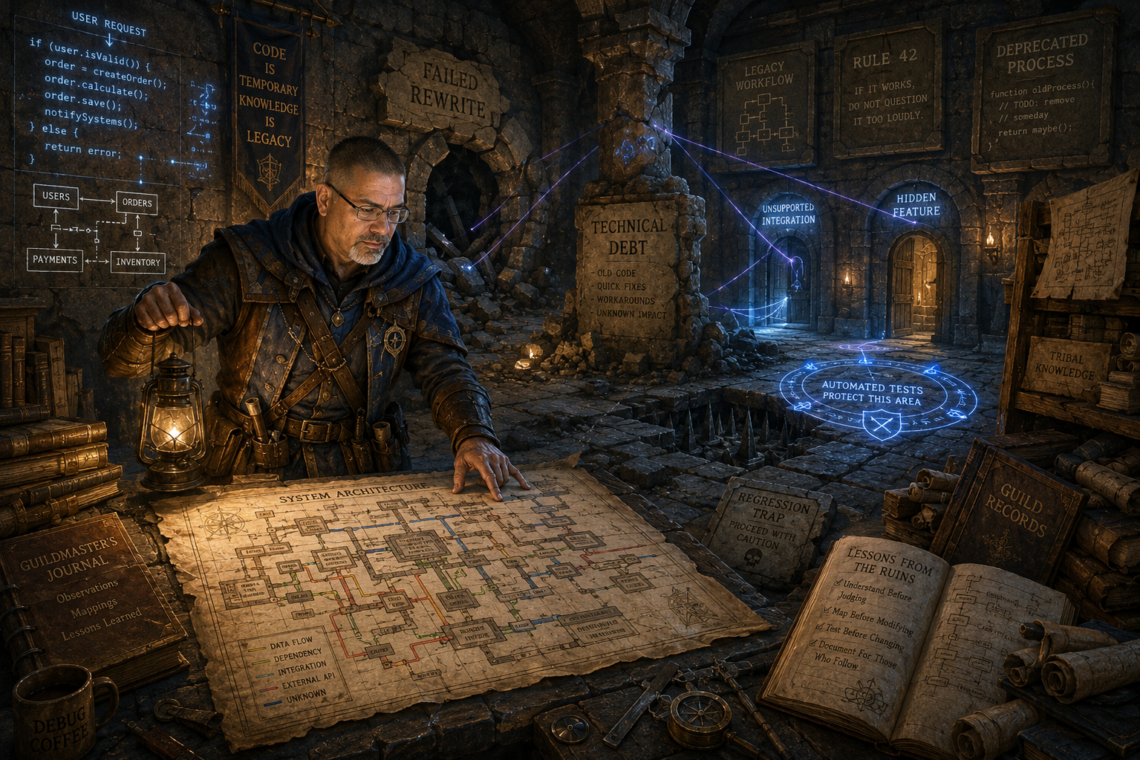
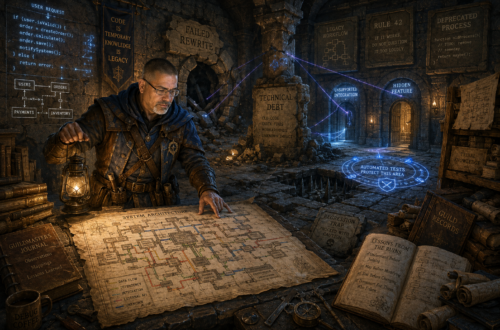
  • Frank Jamison, depicted as a seasoned Guildmaster and software engineer, studies a detailed architectural map inside a vast underground fantasy ruin representing a legacy software system. Wearing practical adventurer-scholar gear and holding a lantern, he stands at a stone table surrounded by guild journals, engineering records, maps, and ancient scrolls. Glowing blue runes resembling source code, database diagrams, and system architecture cover the dungeon walls. Nearby, a collapsed passage marked Failed Rewrite, a monument labeled Technical Debt, hidden doors representing undocumented features, and magical wards protecting explored areas symbolize the challenges of maintaining legacy code. The cinematic scene conveys exploration, problem-solving, knowledge preservation, and the careful navigation of complex software systems.
    The Guildmaster’s Handbook

    Legacy Code and Ancient Curses

    June 15, 2026 /

    Every developer eventually enters forgotten ruins and wonders what kind of sorcery built them. Entering the Forgotten Ruins Among all the challenges software engineers face throughout their careers, few are as universal as inheriting legacy code. Most developers begin their journey imagining they will spend their days creating new applications, experimenting with modern technologies, and designing elegant architectures from a blank canvas. While those opportunities certainly exist, they represent only a portion of professional software development. Much of our work involves maintaining, extending, repairing, and modernizing systems that already exist. Some of these applications are only a few years old. Others have survived multiple generations of developers and business leaders.…

    Read More
    Frank Jamison

    You May Also Like

    Frank Jamison, portrayed as a seasoned guildmaster in a medieval fantasy guild hall, calmly studies a simple quest contract while a massive mimic-like monster made of scrolls, requirements documents, project plans, diagrams, and task lists erupts across a wooden strategy table. The paper creature's tendrils spread through the room, consuming timelines, architecture diagrams, and engineering blueprints as nearby adventurers react with alarm. Warm torchlight illuminates the scene, symbolizing the dangers of scope creep in software development and project management.

    Scope Creep and Other Predators

    June 17, 2026
    Frank Jamison portrayed as a veteran guildmaster mentoring a nervous young adventurer outside a grand fantasy guild hall at dawn, reviewing a map while adventurers prepare for quests in the background.

    Interviews Without Panic Damage

    June 24, 2026
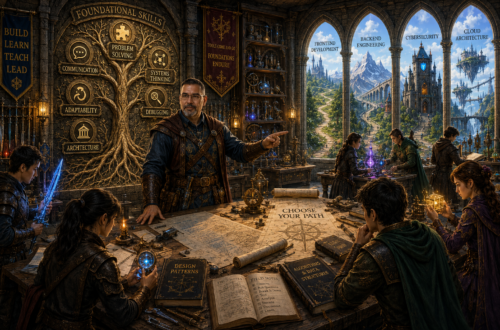
    Frank Jamison, portrayed as a seasoned guildmaster and veteran engineer, stands in a grand fantasy training hall guiding young adventurers toward foundational skills rather than magical treasures. A towering stone skill tree labeled Communication, Problem Solving, Systems Thinking, Adaptability, Debugging, and Architecture dominates the wall behind him. Apprentices study maps, engineering blueprints, notebooks, drafting tools, and glowing artifacts around a massive wooden training table marked Choose Your Path. Through large arched windows, fantasy landscapes represent different technology career paths including Frontend Development, Backend Engineering, Cybersecurity, and Cloud Architecture. Warm torchlight and subtle blue magical illumination create a wise, instructional atmosphere emphasizing mentorship, learning, and long-term skill development.

    Building Skills That Actually Matter

    June 5, 2026
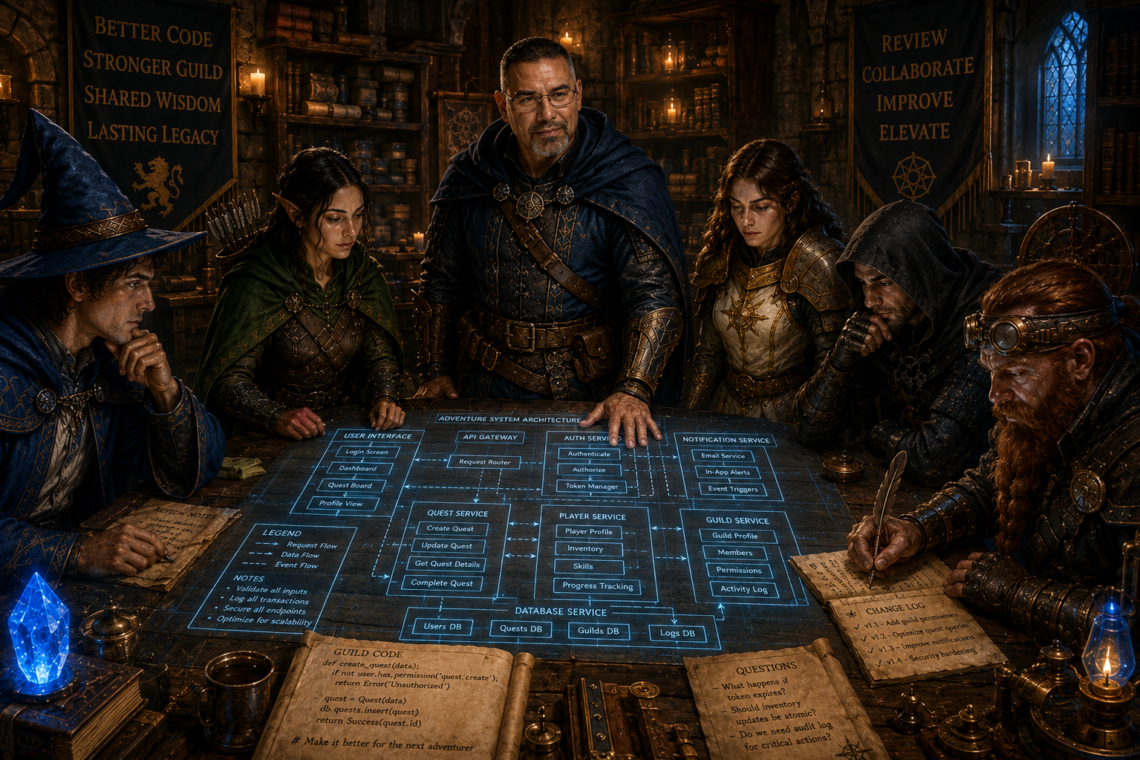
  • Frank Jamison, portrayed as a seasoned guildmaster and adventurer, stands at the head of a large strategy table inside a warmly lit medieval guild hall. Around him, a diverse party of adventurers including a wizard, ranger, cleric, rogue, and artificer collaboratively review a glowing magical blueprint filled with software architecture diagrams, annotated notes, and arcane symbols. Shelves of books and scrolls line the stone walls, while lanterns and blue magical runes illuminate the room. The scene symbolizes constructive code reviews, teamwork, mentorship, and professional growth within a fantasy-inspired guild setting.
    The Guildmaster’s Handbook

    Code Reviews Without Emotional Damage

    June 10, 2026 /

    Criticism is not the enemy. Pride without growth is far more dangerous. The Review Table in the Guild Hall One of the most important lessons I have learned during my years in software development has very little to do with writing code. It is not about mastering a framework, learning a language, designing architecture, or deploying applications to the cloud. Instead, it concerns learning how to participate in code reviews without allowing pride, insecurity, frustration, or ego to interfere with growth. Many developers spend years improving their technical skills while investing far less effort in the collaborative skills that make engineering teams successful. Yet some of the strongest engineers I…

    Read More
    Frank Jamison

    You May Also Like

    Frank Jamison, portrayed as a seasoned guildmaster and veteran engineer, stands in a grand fantasy training hall guiding young adventurers toward foundational skills rather than magical treasures. A towering stone skill tree labeled Communication, Problem Solving, Systems Thinking, Adaptability, Debugging, and Architecture dominates the wall behind him. Apprentices study maps, engineering blueprints, notebooks, drafting tools, and glowing artifacts around a massive wooden training table marked Choose Your Path. Through large arched windows, fantasy landscapes represent different technology career paths including Frontend Development, Backend Engineering, Cybersecurity, and Cloud Architecture. Warm torchlight and subtle blue magical illumination create a wise, instructional atmosphere emphasizing mentorship, learning, and long-term skill development.

    Building Skills That Actually Matter

    June 5, 2026
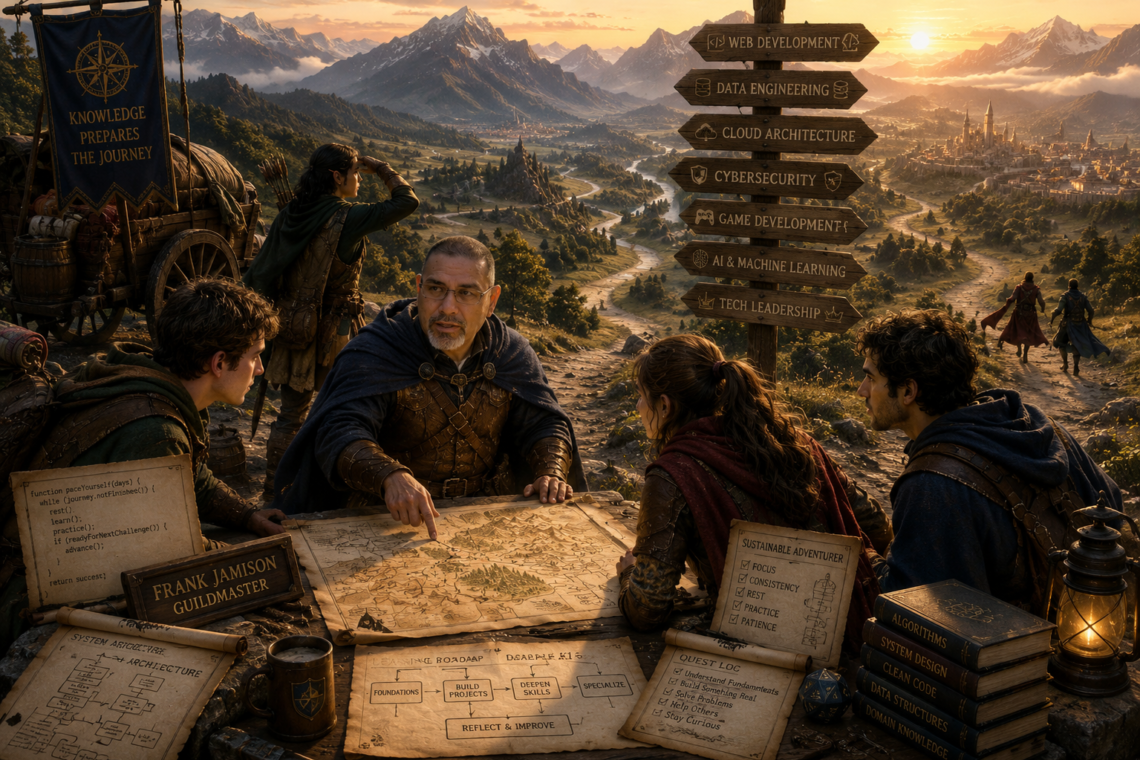
    Frank Jamison, depicted as a seasoned guildmaster and mentor, leads a group of younger adventurers at sunrise while gathered around a large map beside a mountain crossroads. Wearing practical fantasy adventuring attire, he points toward multiple roads stretching through forests, valleys, mountains, and distant cities, symbolizing different technology career paths. Around the group are travel wagons, lanterns, books, engineering diagrams, code-filled scrolls, learning roadmaps, and quest logs that represent sustainable skill development. A towering signpost lists various specialties, including web development, cloud architecture, cybersecurity, and machine learning. The scene emphasizes mentorship, planning, endurance, and choosing a path wisely, with warm golden light illuminating the vast landscape and reinforcing the article's theme of learning without burning out.

    Learning Without Burning Out

    June 3, 2026
    Frank Jamison, portrayed as a seasoned guildmaster adventurer, stands at the center of a grand medieval guild hall strategy table covered with maps, contracts, architectural blueprints, engineering schematics, and glowing magical diagrams. Surrounded by representatives of merchants, nobility, scholars, quartermasters, and city officials, he calmly mediates a discussion while gesturing toward an illuminated map displaying interconnected pathways across the kingdom. Warm torchlight and cool magical light fill the bustling stone hall, emphasizing leadership, collaboration, communication, and problem-solving in a richly detailed fantasy setting inspired by Dungeons & Dragons.

    Working With Stakeholders Without Losing Sanity

    June 12, 2026
  • Frank Jamison, depicted as a seasoned guildmaster and mentor, leads a group of younger adventurers at sunrise while gathered around a large map beside a mountain crossroads. Wearing practical fantasy adventuring attire, he points toward multiple roads stretching through forests, valleys, mountains, and distant cities, symbolizing different technology career paths. Around the group are travel wagons, lanterns, books, engineering diagrams, code-filled scrolls, learning roadmaps, and quest logs that represent sustainable skill development. A towering signpost lists various specialties, including web development, cloud architecture, cybersecurity, and machine learning. The scene emphasizes mentorship, planning, endurance, and choosing a path wisely, with warm golden light illuminating the vast landscape and reinforcing the article's theme of learning without burning out.
    The Guildmaster’s Handbook

    Learning Without Burning Out

    June 3, 2026 /

    No warrior survives every battle at full speed. Pace yourself, or exhaustion becomes the enemy. In our last gathering at the guild hall, I spoke about choosing a path. Every developer eventually faces a decision about where to invest time, energy, and attention. Some are drawn toward frontend development. Others find themselves fascinated by backend systems, cybersecurity, cloud infrastructure, data science, or countless other specialties. Choosing a path provides direction, but direction alone is not enough. An adventurer who charges down the correct road at an unsustainable pace may still fail to reach the destination. One of the most important lessons I have learned throughout my career is that success…
    Read More
    Frank Jamison

    You May Also Like

    Frank Jamison, portrayed as a seasoned guildmaster and veteran engineer, stands at the center of a grand medieval guild hall, guiding a group of young adventurers around a glowing magical map table. Multiple illuminated pathways branch from a central crossroads toward fantasy realms representing technology career paths, including backend development, frontend development, cybersecurity, cloud engineering and DevOps, and AI and data science. Floating books, architectural diagrams, magical runes, code fragments, and enchanted cityscapes surround the table, while warm lantern light and blue magical energy create an atmosphere of mentorship, discovery, and professional growth. The scene blends Dungeons & Dragons-inspired fantasy with modern software engineering concepts, symbolizing the process of choosing a path in technology.

    Picking Your Class in Tech

    June 1, 2026
    Frank Jamison, depicted as a seasoned adventurer-engineer, studies a large map at a guild hall worktable covered with architectural diagrams, engineering blueprints, books, scrolls, and magical instruments. Behind him looms a towering shadowy creature formed from smoke and mist, symbolizing impostor syndrome. Warm torchlight illuminates the stone chamber, highlighting symbols of past achievements, knowledge, and experience. The scene blends medieval fantasy and software engineering themes to represent overcoming self-doubt through wisdom, perseverance, and hard-earned expertise.

    When Impostor Syndrome Rolls a Critical Hit

    June 19, 2026
    Frank Jamison, portrayed as a seasoned guildmaster in a medieval fantasy guild hall, calmly studies a simple quest contract while a massive mimic-like monster made of scrolls, requirements documents, project plans, diagrams, and task lists erupts across a wooden strategy table. The paper creature's tendrils spread through the room, consuming timelines, architecture diagrams, and engineering blueprints as nearby adventurers react with alarm. Warm torchlight illuminates the scene, symbolizing the dangers of scope creep in software development and project management.

    Scope Creep and Other Predators

    June 17, 2026
  • The Architect's Grimoire (13)
  • The CSS Codex (13)
  • The Enchanted Workshop (9)
  • The Full-Stack Campaign (7)
  • The Guildmaster’s Handbook (13)

AI-Assisted Development Artificial Intelligence Backend Development Career Development Clean Code Code Quality CSS CSS Architecture CSS Best Practices CSS Fundamentals CSS Layout Design Systems Developer Education Developer Growth Developer Productivity Dungeons and Dragons Engineering Culture Engineering Judgment Engineering Leadership Fantasy Theme Front-End Development Frontend Development Full Stack Development Maintainable Code Maintainable CSS Mentorship Professional Development Professional Growth Refactoring Responsive Design Software Architecture Software Craftsmanship Software Design Software Development Software Engineering StackNScroll System Design Technical Debt Technical Leadership The Architect's Grimoire The CSS Codex The Enchanted Workshop The Full-Stack Campaign The Guildmaster's Handbook Web Development

Stack N' Scroll - 2026 ©