-
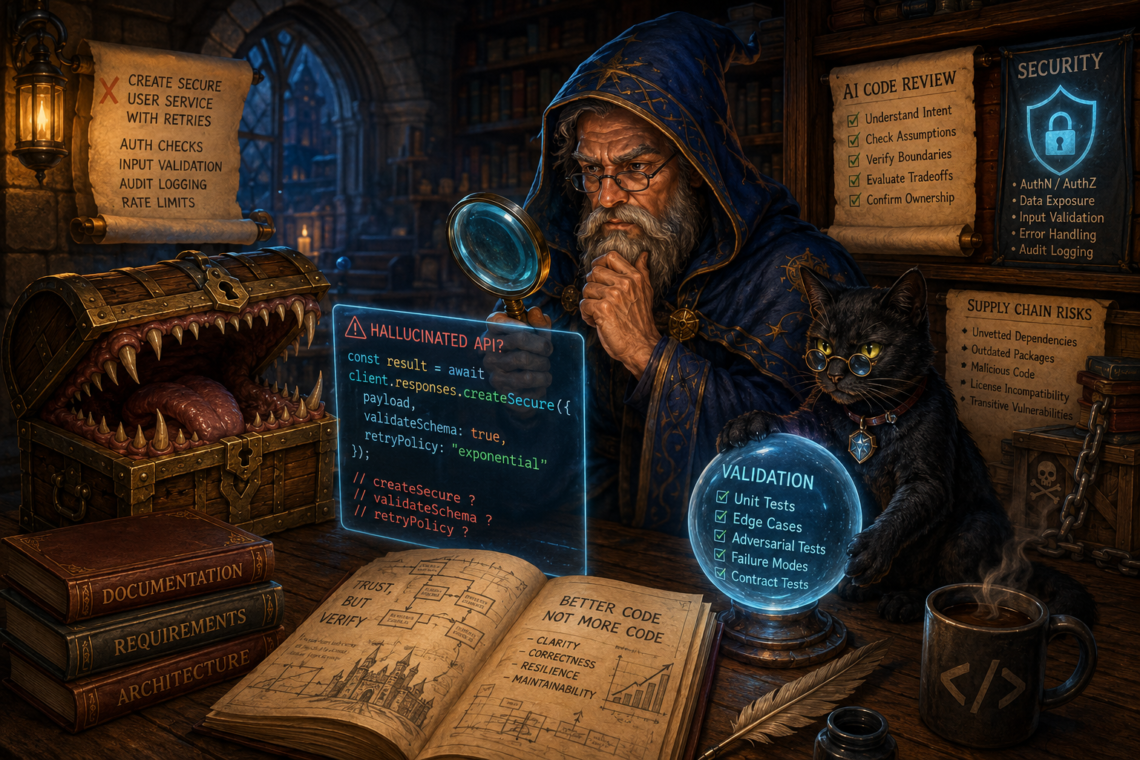
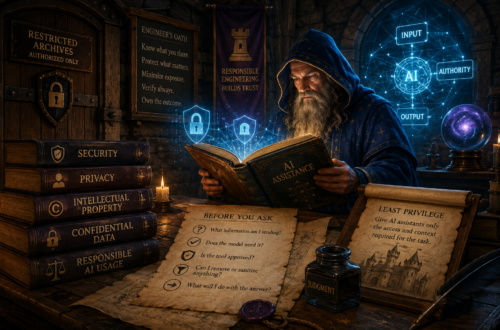
The Mimic in the Library: Trusting AI Without Being Fooled
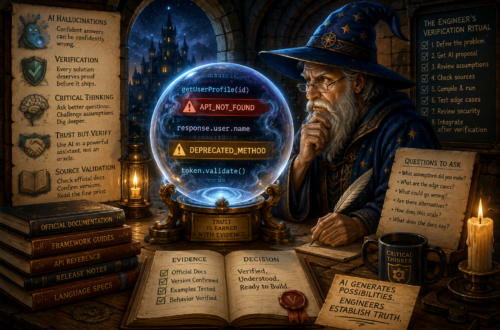
Not every answer wearing the robes of wisdom deserves your trust. There is a particular danger experienced adventurers learn to fear more than an obvious monster. A dragon announces itself with fire, claws, and a considerable disregard for local building codes. A mimic survives by looking useful. AI-generated production code can present the same problem. The function is clean, the naming is sensible, and the explanation sounds authoritative. Nothing immediately signals that somewhere inside it sits an incorrect assumption, a nonexistent API, a security weakness, or an architectural decision that does not belong in production. Modern AI tools are remarkably good at producing plausible code. Given a clear request, they…
-
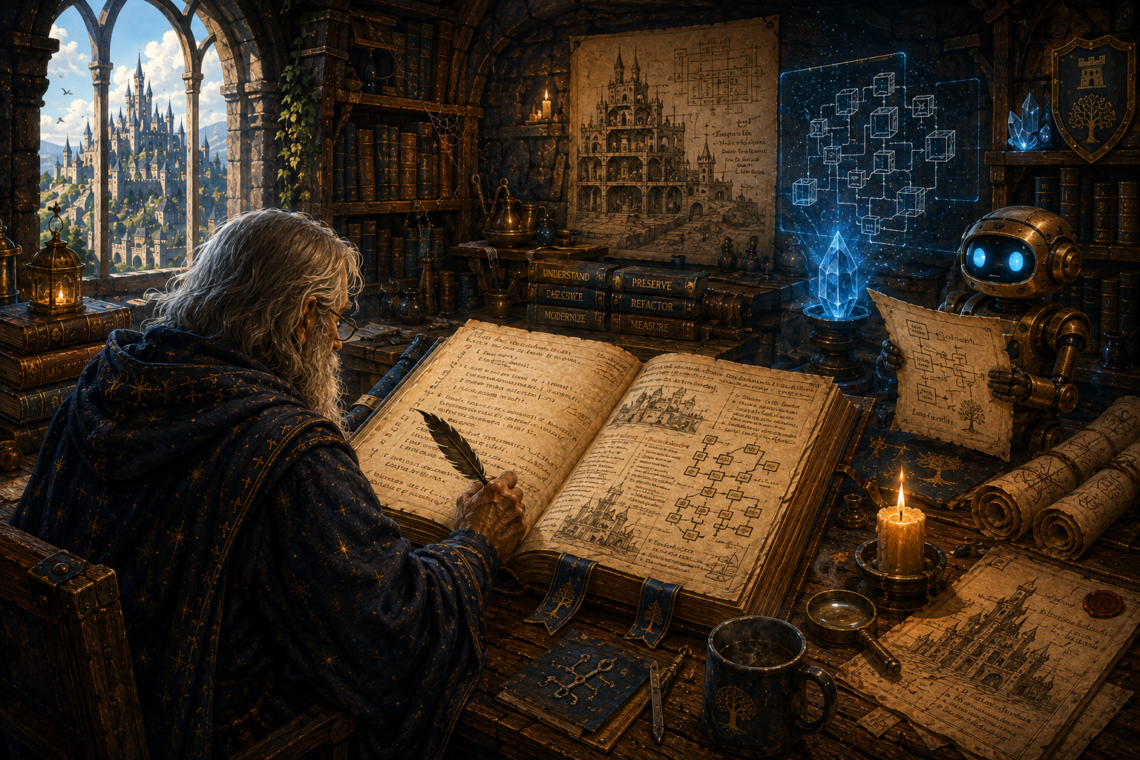
Restoring Ancient Spellbooks: Modernizing Legacy Code
Some of the greatest magic lies hidden beneath centuries of dust. There is a particular kind of software that almost every experienced engineer eventually encounters. It has been running for years, perhaps decades, quietly processing orders, generating reports, moving money, coordinating inventory, or supporting some other function the business cannot simply abandon. Its architecture reflects decisions made by developers who may have left long ago. Its dependencies have aged, its conventions belong to another era, and certain portions of the codebase are approached with the same caution a wizard might use when opening an ancient spellbook whose margins contain several generations of increasingly nervous annotations. The temptation is to look…
-
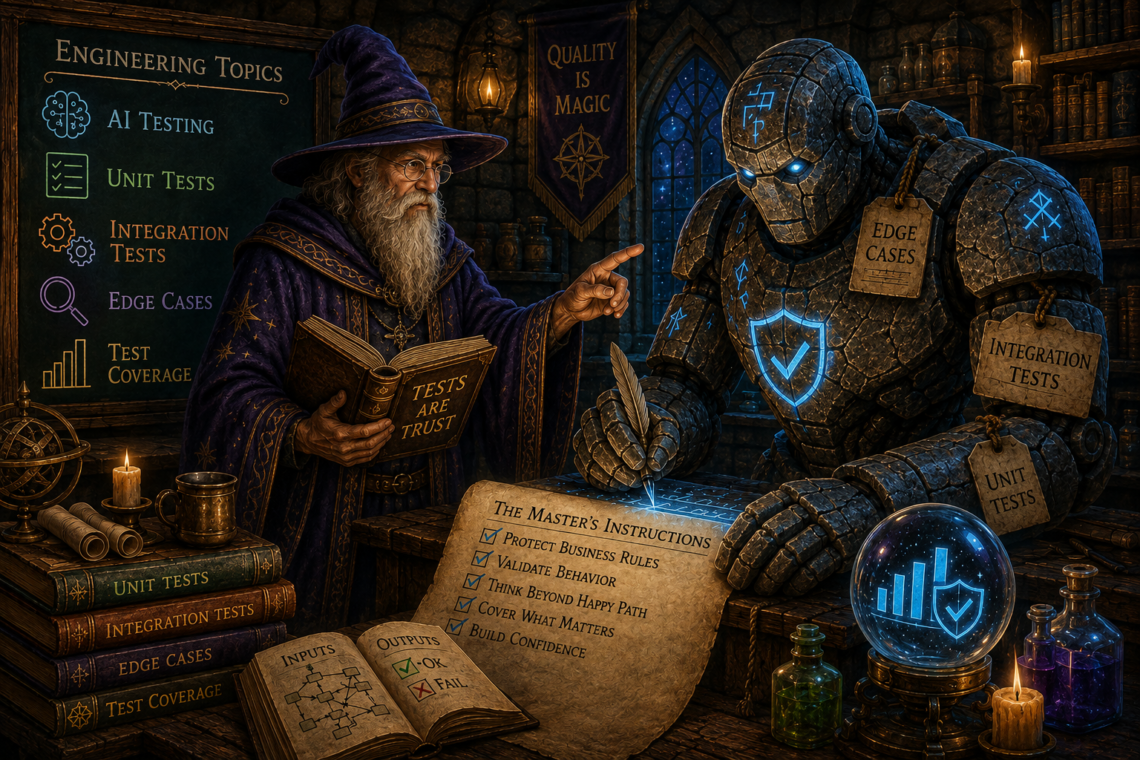
The Tireless Golem: Building Better Tests with AI
A servant who never sleeps must still be taught what success looks like. Software engineers have always searched for ways to reduce repetitive work without sacrificing quality. Compilers eliminated many manual mistakes. Continuous integration ensured that code could be validated automatically after every change. Static analysis exposed entire categories of defects before applications ever reached production. Each advancement freed engineers to spend more time solving meaningful problems instead of repeating mechanical tasks. Artificial intelligence represents another step along that path, but it introduces a subtle temptation. Because AI can generate code remarkably quickly, it is easy to assume it can generate equally effective tests with little oversight. Many developers discover…
-
The Wizard’s New Apprentice: Working Alongside AI
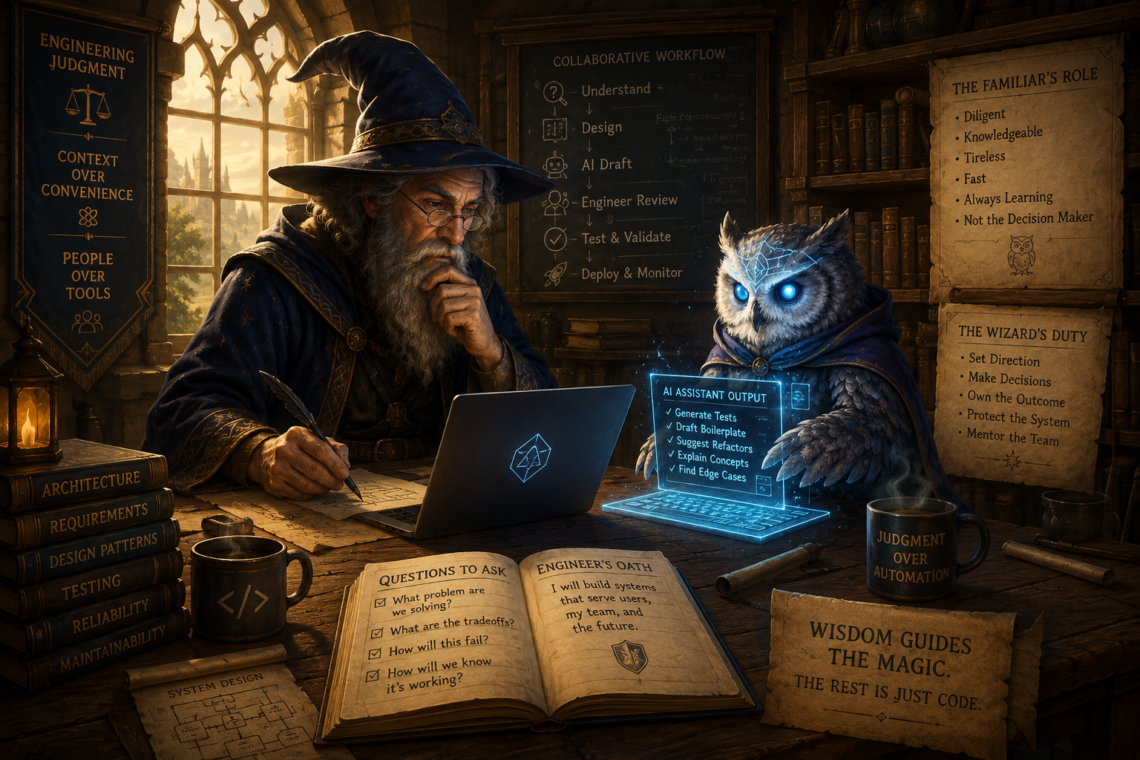
The greatest familiar is still only as wise as the wizard who commands it. Every generation of software engineers encounters a tool that promises to change the profession forever. Assembly language gave way to higher-level languages. Manual deployments yielded to continuous integration and continuous delivery. Virtual machines evolved into cloud platforms. Each innovation made building software faster, but none diminished the importance of sound engineering judgment. Artificial intelligence represents the latest transformation in that long history. It is a remarkable addition to the workshop, but it remains exactly that: an addition. The craft itself has not changed nearly as much as the tools we use to practice it. The excitement…
-
Hidden Traps in the Dungeon: Escaping Technical Debt
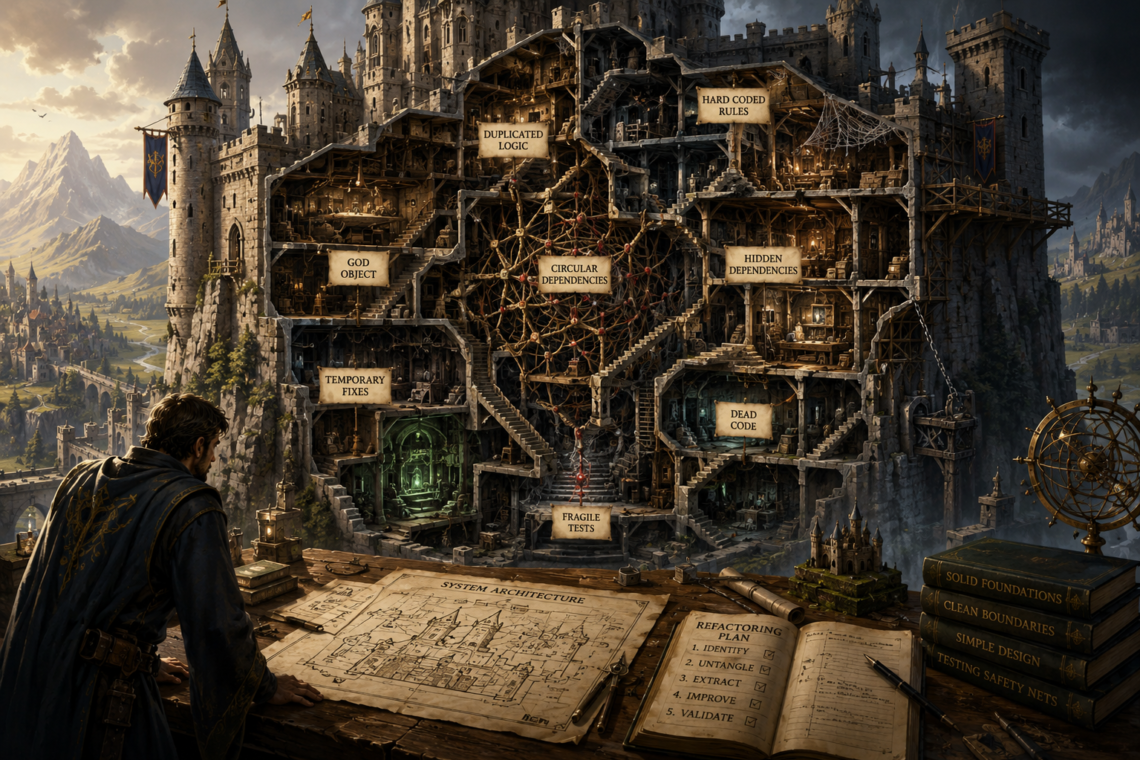
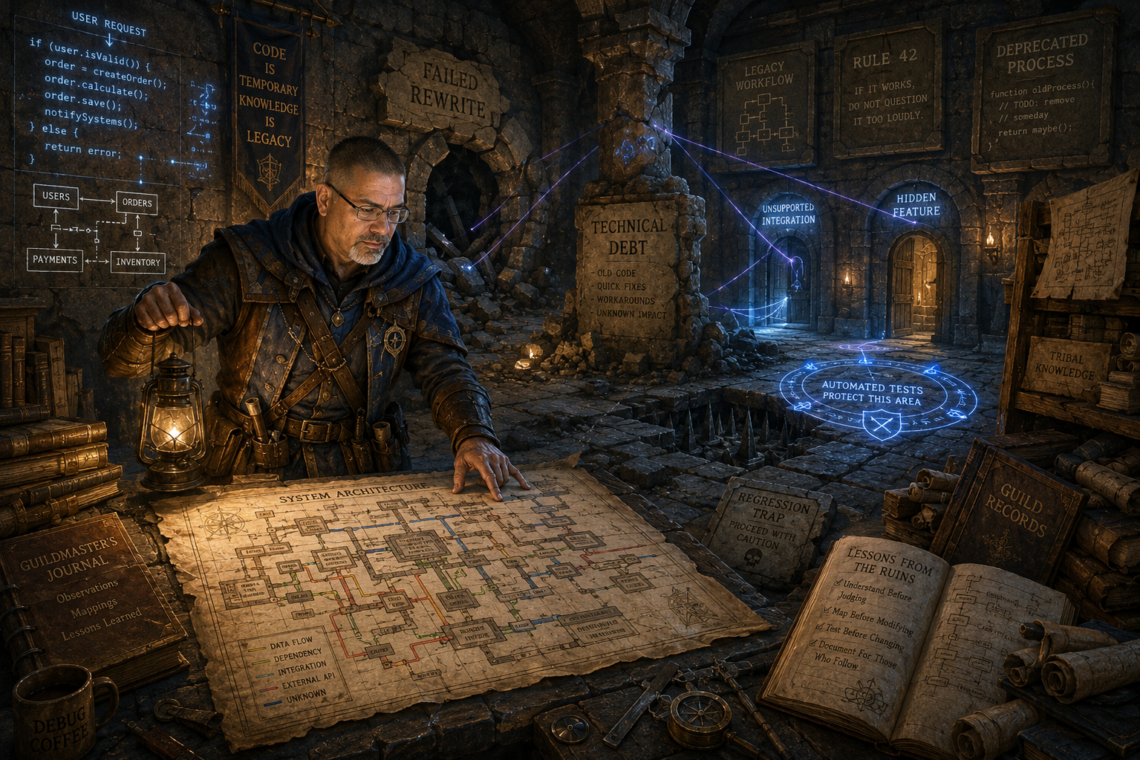
The deadliest dangers are often the ones built into the castle itself. No architect intentionally designs a maze. Every castle begins with a sensible plan. Corridors connect naturally, storerooms serve nearby kitchens, towers overlook vulnerable approaches, and every staircase leads somewhere meaningful. Yet castles that survive for generations rarely retain that original simplicity. New rulers expand old wings. Temporary passageways become permanent corridors. Storage rooms become workshops. Secret tunnels built during one crisis remain long after the danger has passed. Over time, the castle becomes increasingly difficult to navigate, not because its builders lacked skill, but because each generation solved the problems immediately before them. Long-lived software follows the same…
-
Legacy Code and Ancient Curses
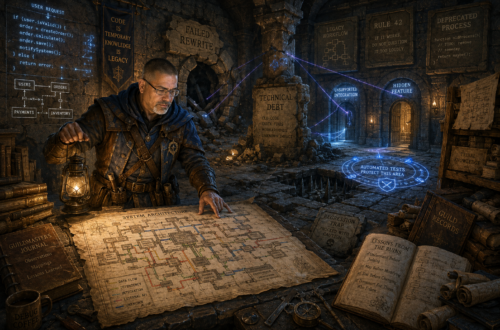
Every developer eventually enters forgotten ruins and wonders what kind of sorcery built them. Entering the Forgotten Ruins Among all the challenges software engineers face throughout their careers, few are as universal as inheriting legacy code. Most developers begin their journey imagining they will spend their days creating new applications, experimenting with modern technologies, and designing elegant architectures from a blank canvas. While those opportunities certainly exist, they represent only a portion of professional software development. Much of our work involves maintaining, extending, repairing, and modernizing systems that already exist. Some of these applications are only a few years old. Others have survived multiple generations of developers and business leaders.…
-
Code Reviews Without Emotional Damage
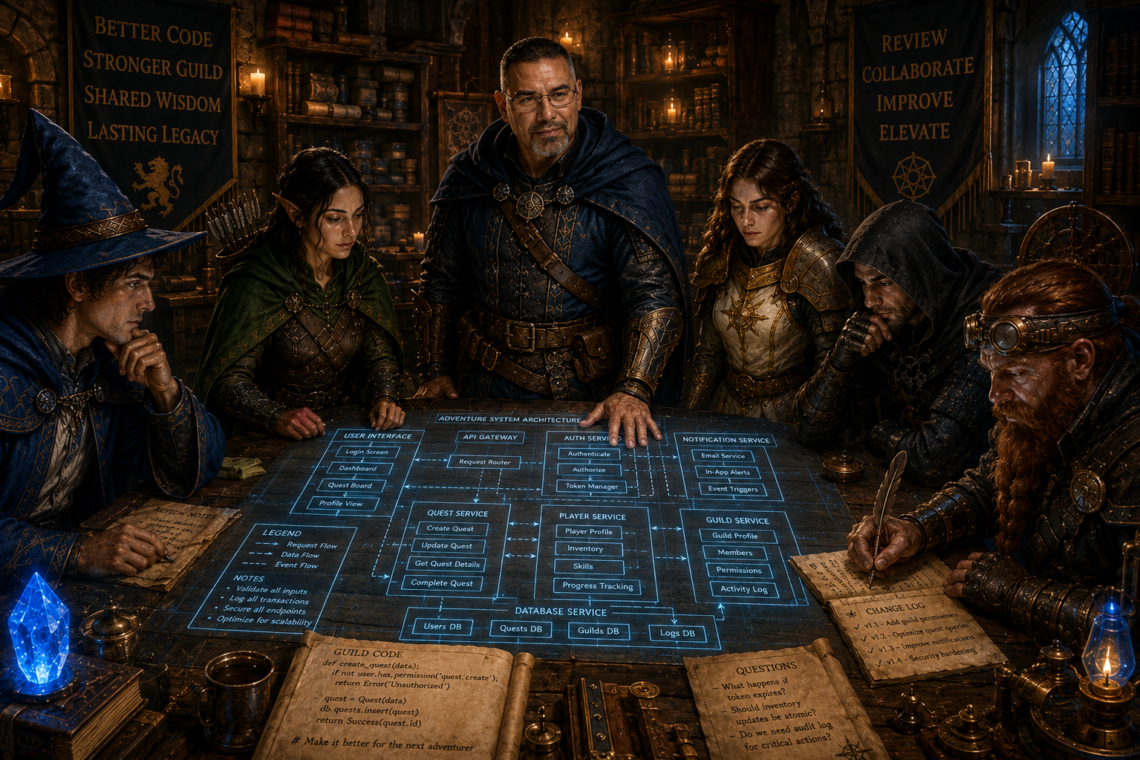
Criticism is not the enemy. Pride without growth is far more dangerous. The Review Table in the Guild Hall One of the most important lessons I have learned during my years in software development has very little to do with writing code. It is not about mastering a framework, learning a language, designing architecture, or deploying applications to the cloud. Instead, it concerns learning how to participate in code reviews without allowing pride, insecurity, frustration, or ego to interfere with growth. Many developers spend years improving their technical skills while investing far less effort in the collaborative skills that make engineering teams successful. Yet some of the strongest engineers I…
-
Writing Code Others Can Read
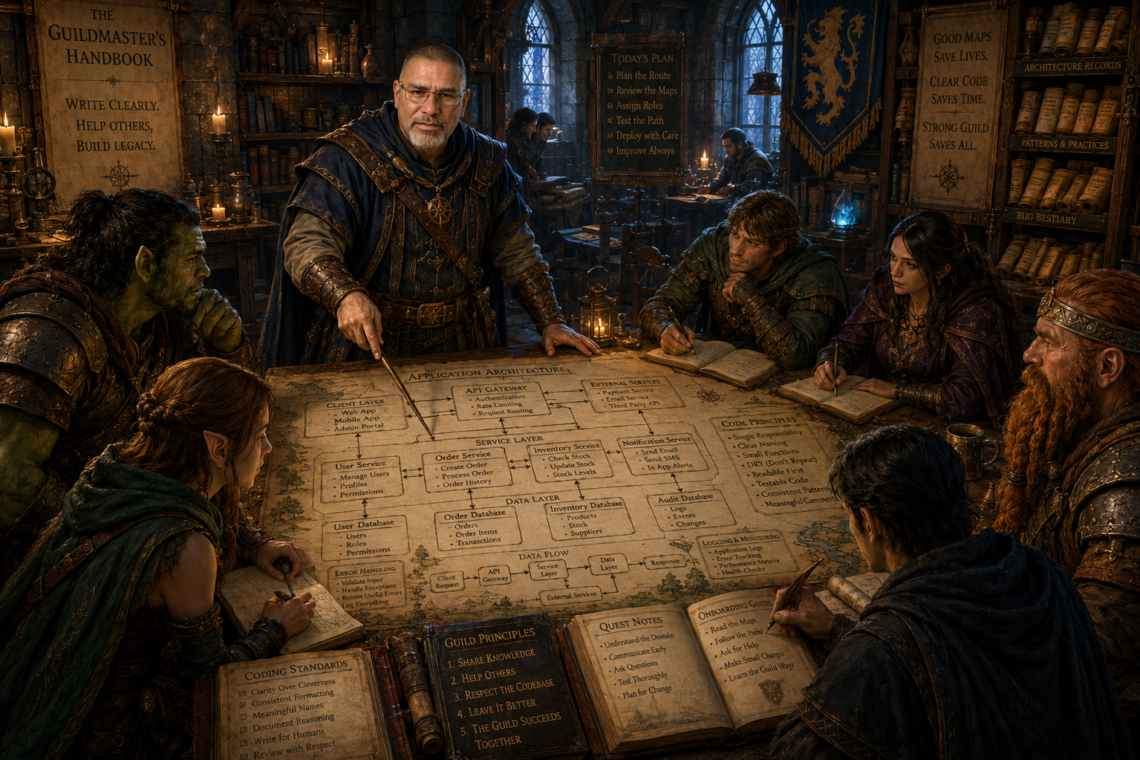
The guild hall is crowded with adventurers. Write clearly, or your allies become your next obstacle. Life Inside the Guild Hall One of the first misconceptions many developers carry into the profession is the belief that software development is primarily a solitary activity. Popular culture often reinforces this image. We imagine a lone programmer sitting in a dimly lit room, crafting brilliant solutions through sheer technical skill and determination. While moments of solitary work certainly exist, the reality is far different. Most software is built, maintained, reviewed, and expanded by teams. Success depends as much on communication as it does on technical ability. This week’s theme is Surviving the Guild…
-
When the Stylesheet Becomes the Monster
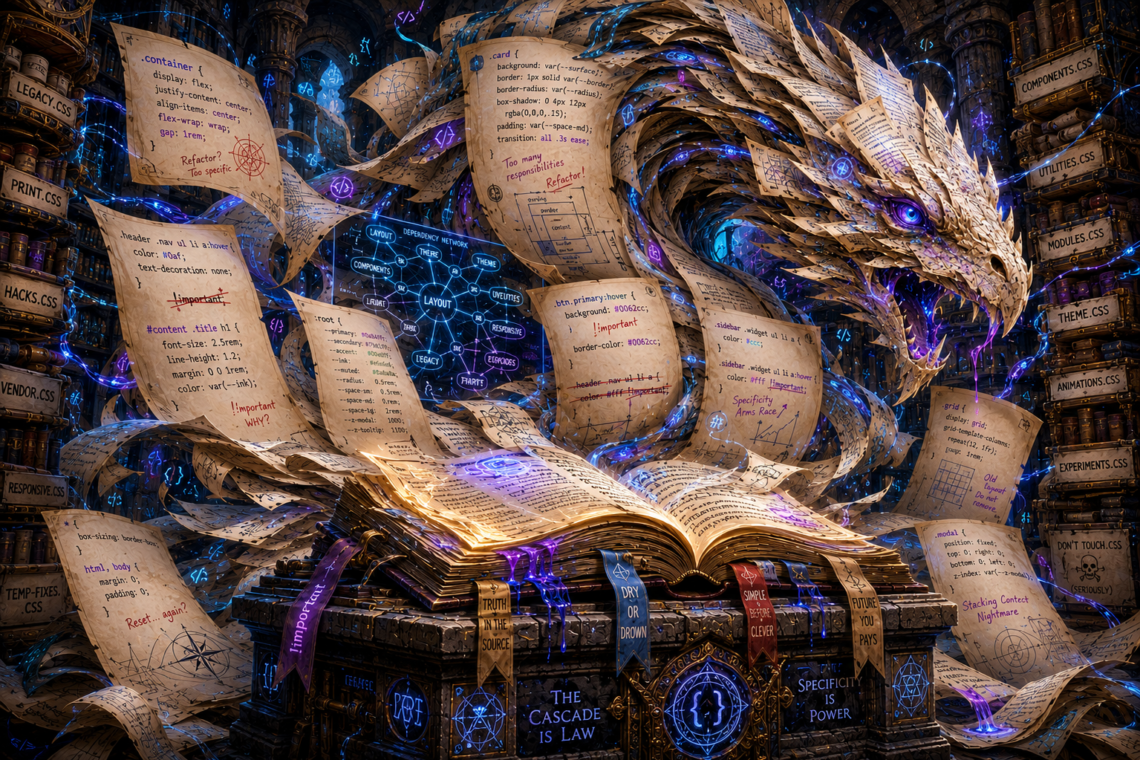
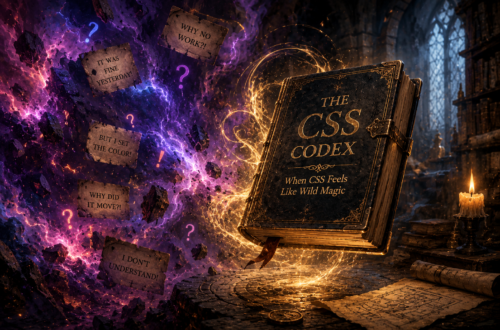
Ignore a growing beast long enough and eventually it guards the dungeon. Editor’s Note: This article originally appeared on RandomThoughtsInTraffic.com and has been revised and expanded for StackNScroll as the closing chapter of The CSS Codex. The original edition explored how CSS codebases gradually become more difficult to maintain as shortcuts, overrides, and exceptions accumulate over time. This updated version expands that discussion with deeper examination of architectural drift, technical debt, component design, specificity management, long-term maintenance practices, and the warning signs that experienced engineers learn to recognize before problems become crises. It also serves as a capstone for the broader lessons explored throughout The CSS Codex, bringing together concepts…
-
Refactoring the Spellbook
Every spellbook gathers clutter until a wizard dares to rewrite it. Editor’s Note: This article is an expanded and revised edition of a piece originally published on RandomThoughtsInTraffic.com. While the original article focused primarily on the practical need to clean up aging stylesheets, this StackNScroll edition explores refactoring as a long-term architectural discipline within CSS systems. New material examines design tokens, specificity management, component ownership, incremental refactoring strategies, dead code removal, and the relationship between technical debt and maintainability during long-lived projects. As part of this week’s theme, The Long Campaign, the article focuses on how experienced developers preserve the health of stylesheets over months and years of continuous development,…