Stack n' Scroll

Code, Campaigns, and Lessons from the Digital Realm

June 2026
S M T W T F S
 123456
78910111213
14151617181920
21222324252627
282930  
« May    

Meta

  • Register
  • Log in
  • Entries feed
  • Comments feed
  • WordPress.org
Frank Jamison Avatar
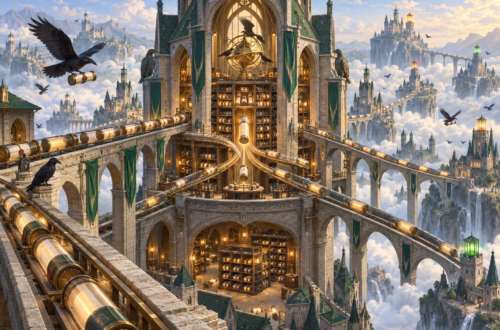
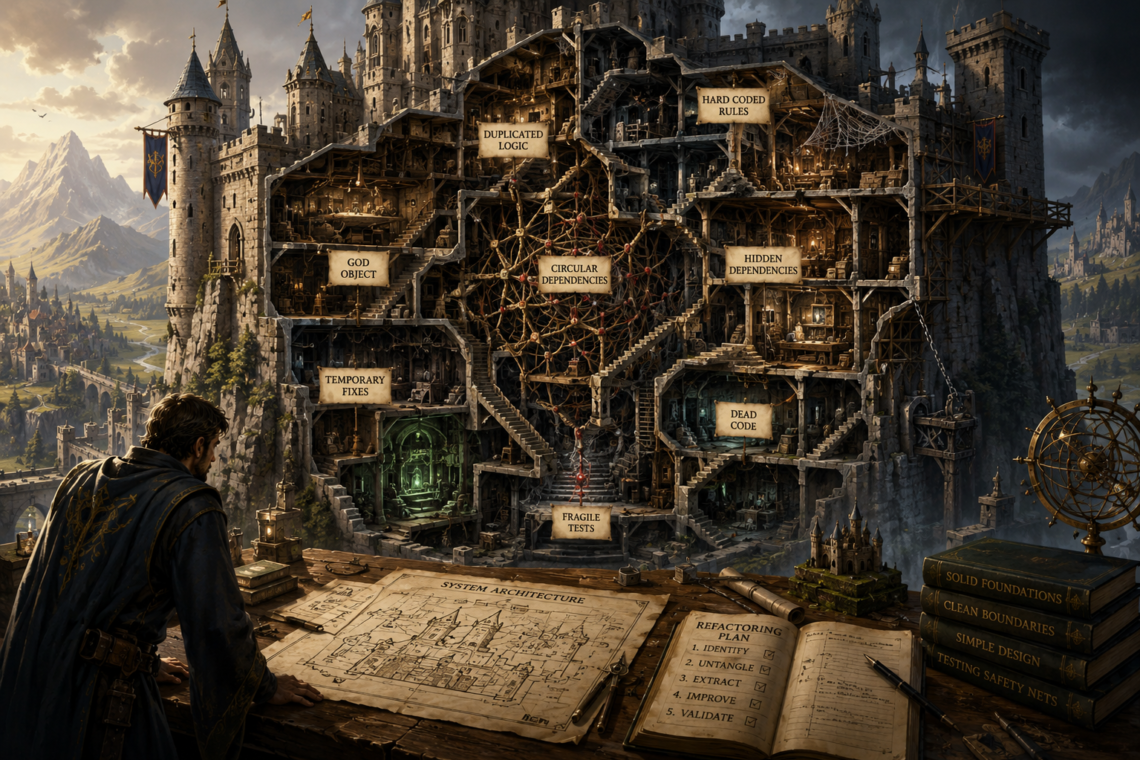
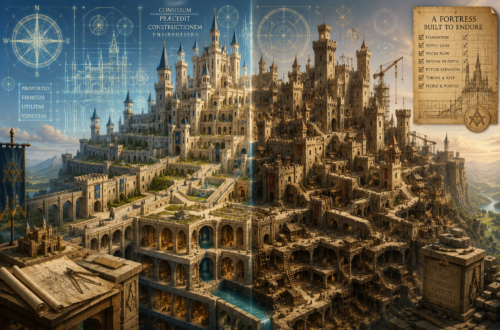
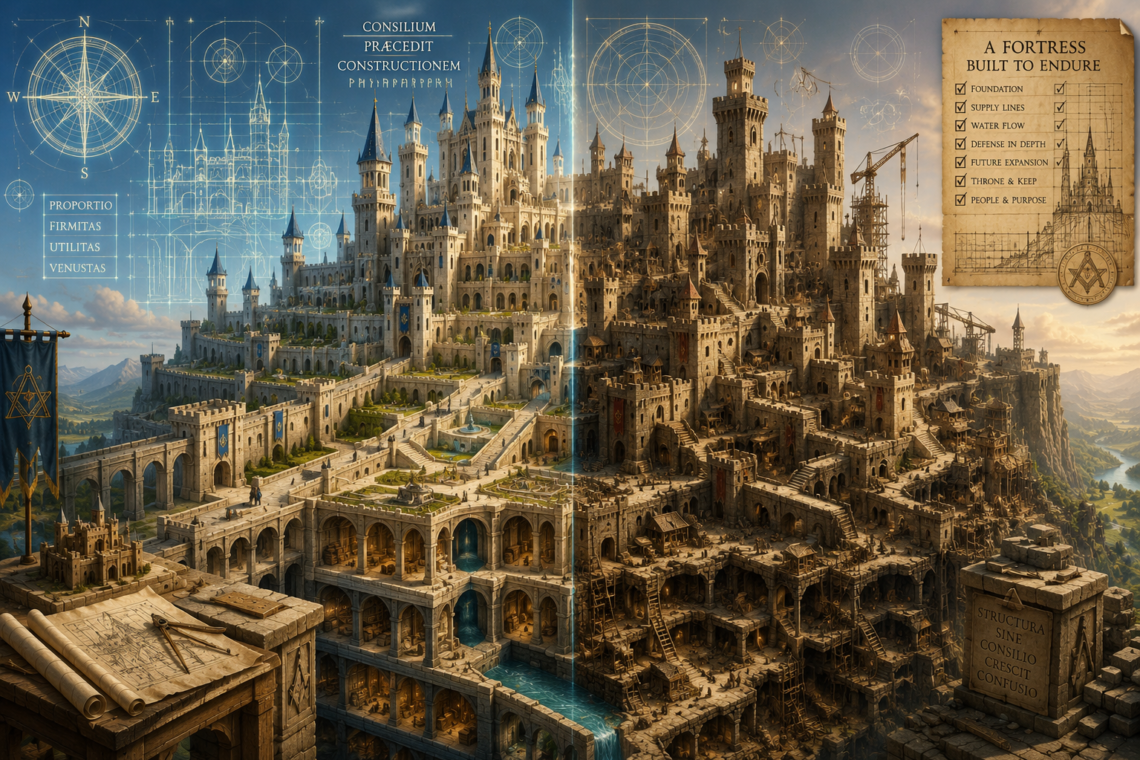
  • A vast medieval fantasy castle dominates the landscape, split into two contrasting halves to illustrate the importance of architectural planning. The left side features a beautifully organized fortress with symmetrical towers, interconnected courtyards, bridges, aqueducts, and orderly roads, overlaid with glowing magical blueprints, surveying grids, compass roses, and geometric construction diagrams. The right side remains impressive but is visibly less organized, with awkward tower placement, inefficient stairways, conflicting roads, and haphazard expansions that suggest growth without an overall plan. Artistic cutaway sections reveal deep stone foundations, underground chambers, drainage tunnels, and structural supports extending into bedrock. Tiny builders and stonemasons emphasize the immense scale of the castle, while warm morning light highlights the contrast between intentional design and organic growth, visually representing the role of software architecture in creating maintainable, long-lasting systems.
    Software Architecture

    The Architect’s Grimoire: Why Castles Need Architects

    June 29, 2026 /

    Even the finest builders need someone who can see beyond the next wall. Foundations of the Kingdom Maintaining software taught me lessons that writing software never could. Early in my career, I assumed difficult applications were usually the result of poor programming. Whenever a simple change required hours of investigation, I expected to uncover careless decisions, rushed deadlines, or code that had simply been neglected for too long. The more systems I inherited, however, the less convincing that explanation became. Different companies, different teams, and different programming languages produced remarkably similar maintenance problems. As we begin Foundations of the Kingdom, one lesson rises above all the others: every enduring kingdom…

    Read More
    Frank Jamison

    You May Also Like

    An illuminated magical codex rests open atop an ornate stone throne in the center of a vast fantasy library. Streams of blue and gold arcane energy flow from surrounding scrolls, drafting tables, and enchanted tablets toward the glowing book. Above the throne, layered translucent diagrams resembling architectural blueprints, interconnected systems, and cascading structures overlap in the air, with one central design shining brightest. The grand hall is filled with bookshelves, maps, measuring instruments, and research materials beneath vaulted stone arches lit by warm torchlight and magical illumination. The scene evokes order, authority, craftsmanship, and the mastery of complex systems.

    The CSS Codex: The Laws of the Cascade

    March 9, 2026
    Detailed fantasy cross-section illustration titled The Full-Stack Campaign: From Interface to Infrastructure. A sprawling medieval fantasy kingdom filled with castles, towers, bridges, marketplaces, and guild halls sits on the surface beneath a bright sky. The ground beneath the city is cut away to reveal multiple interconnected underground layers extending deep into the earth. Massive stone roads, elevators, tunnels, aqueducts, glowing magical conduits, and engineering works connect hidden chambers, archives, vaults, transit networks, and subterranean fortresses. The deepest levels contain enormous dwarven-style machinery, crystal power systems, and foundational infrastructure supporting the realm above. Informational panels label each layer of the kingdom, visually illustrating how visible systems depend upon increasingly complex hidden foundations. The image conveys themes of architecture, interconnected systems, dependencies, and the journey from user-facing experiences to the infrastructure that supports them.

    The Full-Stack Campaign: From Interface to Infrastructure

    April 4, 2026
    An ancient illuminated codex lies open at the center of a massive oak drafting table inside a grand fantasy library. The book's pages display intricate architectural diagrams made of interconnected circles, layered structures, branching pathways, geometric grids, and cascading systems illuminated by flowing blue and gold magical energy. Surrounding the codex are blueprints, maps, scrolls, compasses, measuring tools, and drafting instruments arranged in an organized workspace. Towering bookshelves filled with books and manuscripts rise beneath vaulted stone arches in the background. Warm lantern and torchlight blend with soft magical illumination, creating a scholarly atmosphere of knowledge, craftsmanship, structure, and discovery. The scene evokes a Dungeons & Dragons-inspired vision of system design and architecture, with the codex serving as the focal point of an orderly realm governed by hidden rules.

    The CSS Codex: Mastering the Rules of the Realm

    March 7, 2026
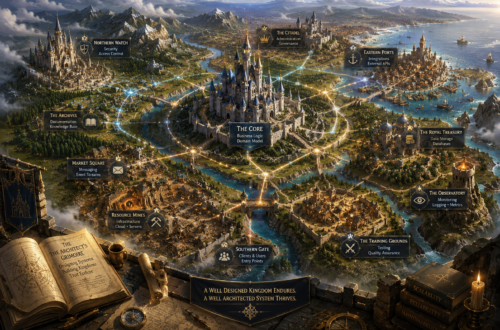
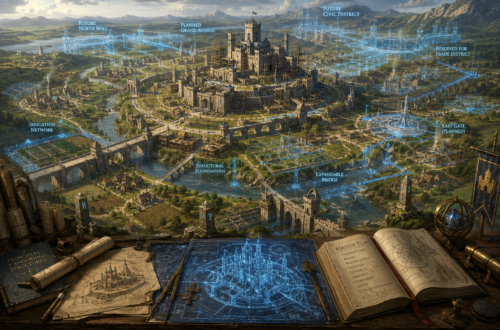
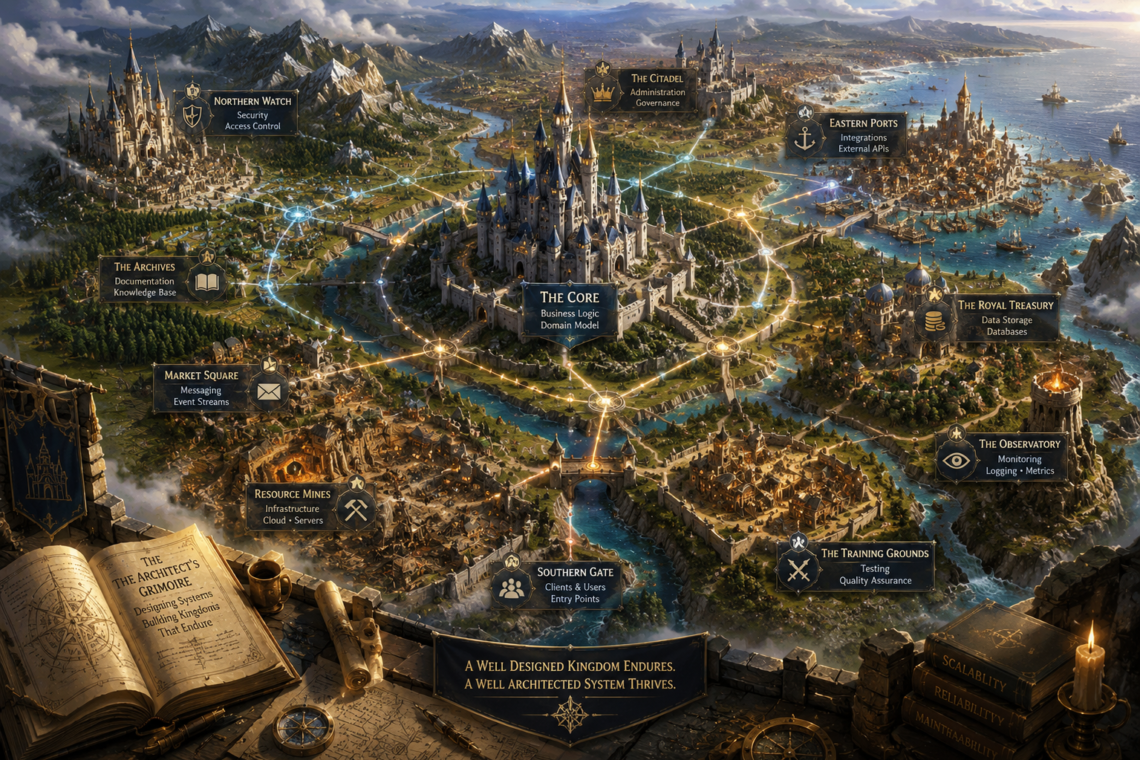
  • An epic fantasy map-style illustration depicts a thriving kingdom viewed from above, with a grand central castle labeled "The Core" connected by glowing roads and magical pathways to surrounding regions. Each district represents a software architecture concept, including Northern Watch (Security and Access Control), Eastern Ports (Integrations and External APIs), The Royal Treasury (Data Storage and Databases), The Observatory (Monitoring and Metrics), The Training Grounds (Testing and Quality Assurance), Market Square (Messaging and Event Streams), Resource Mines (Infrastructure and Servers), The Archives (Documentation and Knowledge Base), and Southern Gate (Clients and Users). In the foreground, an open book titled The Architect's Grimoire rests on a stone table alongside maps, drafting tools, and architectural plans. A banner reads, "A Well Designed Kingdom Endures. A Well Architected System Thrives." The image uses fantasy kingdom imagery to visualize software architecture as an interconnected, carefully planned realm.
    Software Architecture

    The Architect’s Grimoire: Building Kingdoms That Endure

    June 28, 2026 /

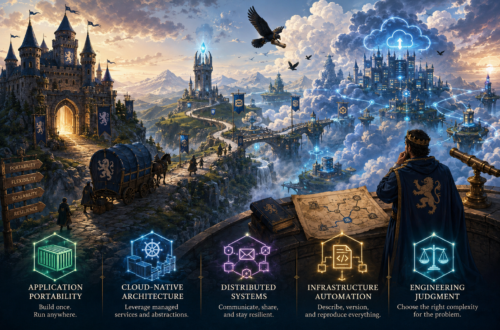
    Every enduring kingdom begins with a blueprint. Every developer learns to build. The best developers learn what to build next. No kingdom becomes legendary because its masons laid beautiful stones. No empire survives because its carpenters built magnificent gates or its blacksmiths forged exceptional swords. History remembers kingdoms that endured because someone looked beyond the next building and imagined how an entire realm would one day function. Roads connected cities before merchants ever traveled them. Walls protected districts that had not yet been built. Aqueducts carried water to neighborhoods that existed only on parchment. Long before the first stone was laid, someone had already begun designing the future. Software follows…

    Read More
    Frank Jamison

    You May Also Like

    Detailed fantasy cross-section illustration titled The Full-Stack Campaign: From Interface to Infrastructure. A sprawling medieval fantasy kingdom filled with castles, towers, bridges, marketplaces, and guild halls sits on the surface beneath a bright sky. The ground beneath the city is cut away to reveal multiple interconnected underground layers extending deep into the earth. Massive stone roads, elevators, tunnels, aqueducts, glowing magical conduits, and engineering works connect hidden chambers, archives, vaults, transit networks, and subterranean fortresses. The deepest levels contain enormous dwarven-style machinery, crystal power systems, and foundational infrastructure supporting the realm above. Informational panels label each layer of the kingdom, visually illustrating how visible systems depend upon increasingly complex hidden foundations. The image conveys themes of architecture, interconnected systems, dependencies, and the journey from user-facing experiences to the infrastructure that supports them.

    The Full-Stack Campaign: From Interface to Infrastructure

    April 4, 2026
    A vast medieval fantasy castle dominates the landscape, split into two contrasting halves to illustrate the importance of architectural planning. The left side features a beautifully organized fortress with symmetrical towers, interconnected courtyards, bridges, aqueducts, and orderly roads, overlaid with glowing magical blueprints, surveying grids, compass roses, and geometric construction diagrams. The right side remains impressive but is visibly less organized, with awkward tower placement, inefficient stairways, conflicting roads, and haphazard expansions that suggest growth without an overall plan. Artistic cutaway sections reveal deep stone foundations, underground chambers, drainage tunnels, and structural supports extending into bedrock. Tiny builders and stonemasons emphasize the immense scale of the castle, while warm morning light highlights the contrast between intentional design and organic growth, visually representing the role of software architecture in creating maintainable, long-lasting systems.

    The Architect’s Grimoire: Why Castles Need Architects

    June 29, 2026
    An ancient illuminated codex lies open at the center of a massive oak drafting table inside a grand fantasy library. The book's pages display intricate architectural diagrams made of interconnected circles, layered structures, branching pathways, geometric grids, and cascading systems illuminated by flowing blue and gold magical energy. Surrounding the codex are blueprints, maps, scrolls, compasses, measuring tools, and drafting instruments arranged in an organized workspace. Towering bookshelves filled with books and manuscripts rise beneath vaulted stone arches in the background. Warm lantern and torchlight blend with soft magical illumination, creating a scholarly atmosphere of knowledge, craftsmanship, structure, and discovery. The scene evokes a Dungeons & Dragons-inspired vision of system design and architecture, with the codex serving as the focal point of an orderly realm governed by hidden rules.

    The CSS Codex: Mastering the Rules of the Realm

    March 7, 2026
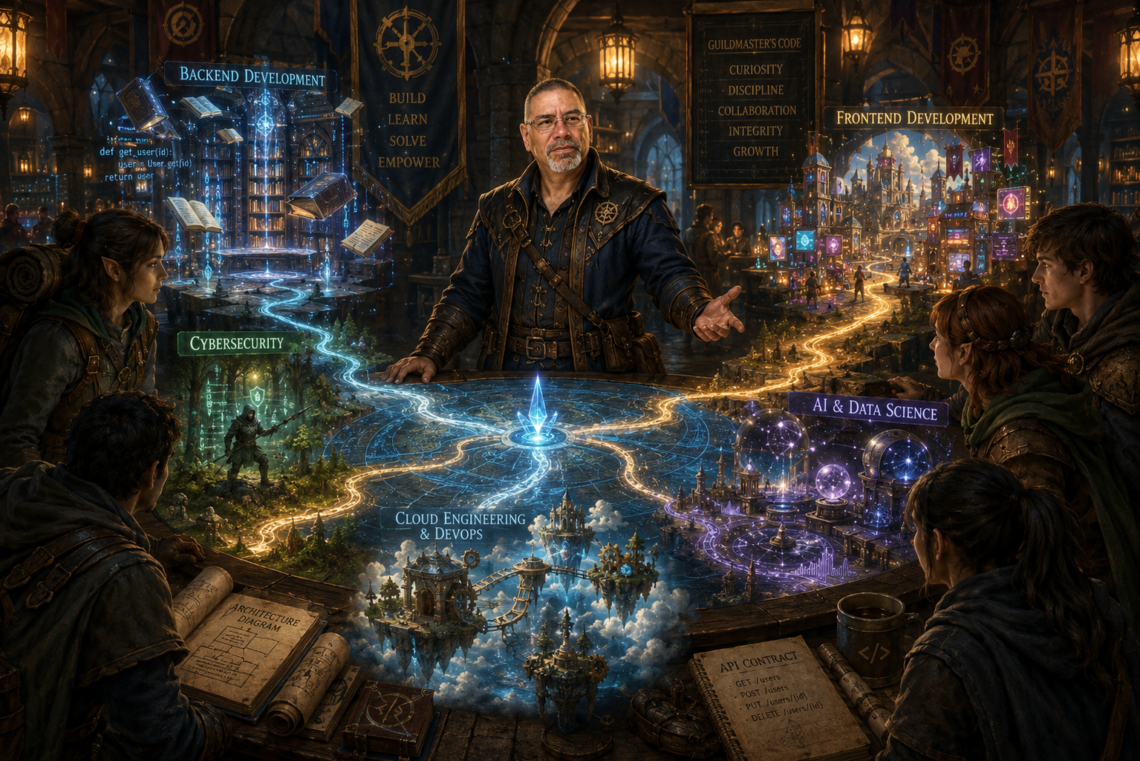
  • Frank Jamison, portrayed as a seasoned guildmaster and veteran engineer, stands at the center of a grand medieval guild hall, guiding a group of young adventurers around a glowing magical map table. Multiple illuminated pathways branch from a central crossroads toward fantasy realms representing technology career paths, including backend development, frontend development, cybersecurity, cloud engineering and DevOps, and AI and data science. Floating books, architectural diagrams, magical runes, code fragments, and enchanted cityscapes surround the table, while warm lantern light and blue magical energy create an atmosphere of mentorship, discovery, and professional growth. The scene blends Dungeons & Dragons-inspired fantasy with modern software engineering concepts, symbolizing the process of choosing a path in technology.
    Career Development

    The Guildmaster’s Handbook: Picking Your Class in Tech

    June 1, 2026 /

    Every adventurer begins with uncertainty. The path matters less than learning why you walk it. When people first enter the technology profession, they often ask a question that reminds me of every new player sitting down at a Dungeons and Dragons table for the first time. They want to know which class they should choose. Should they become a frontend developer, a backend developer, a cybersecurity analyst, a cloud engineer, a data scientist, or an artificial intelligence specialist? They worry that making the wrong decision will send them down a road that is difficult to escape. After many years in technology, I have learned that this concern is understandable, but…

    Read More
    Frank Jamison

    You May Also Like

    Frank Jamison, portrayed as a seasoned guildmaster and veteran engineer, stands in a grand fantasy training hall guiding young adventurers toward foundational skills rather than magical treasures. A towering stone skill tree labeled Communication, Problem Solving, Systems Thinking, Adaptability, Debugging, and Architecture dominates the wall behind him. Apprentices study maps, engineering blueprints, notebooks, drafting tools, and glowing artifacts around a massive wooden training table marked Choose Your Path. Through large arched windows, fantasy landscapes represent different technology career paths including Frontend Development, Backend Engineering, Cybersecurity, and Cloud Architecture. Warm torchlight and subtle blue magical illumination create a wise, instructional atmosphere emphasizing mentorship, learning, and long-term skill development.

    The Guildmaster’s Handbook: Building Skills That Actually Matter

    June 5, 2026
    Frank Jamison, portrayed as a seasoned guildmaster and veteran adventurer, stands at the center of a bustling fantasy guild hall, guiding a diverse group of adventurers around a massive strategy table. The table is covered with detailed architectural diagrams, software-inspired maps, flowcharts, and handwritten guild principles rendered as medieval cartography. Shelves of scrolls, books, and guild records line the walls, while lanterns and warm candlelight illuminate the collaborative scene. Adventurers of multiple races and classes study notes, discuss plans, and learn from Frank's guidance. The image symbolizes code readability, mentorship, onboarding, documentation, and teamwork through visual metaphors of maps, pathways, and shared knowledge within a thriving adventurer's guild.

    The Guildmaster’s Handbook: Writing Code Others Can Read

    June 8, 2026
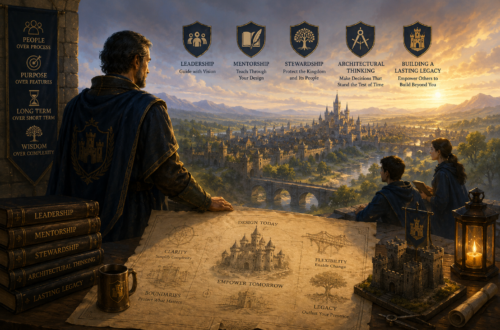
    Frank Jamison, depicted as an experienced fantasy guildmaster, stands inside a warmly lit medieval guild hall and hands a rolled parchment map to a young adventurer preparing for a journey. Wearing practical adventuring gear and guildmaster robes, he appears confident, patient, and encouraging. The hall is filled with maps, books, scrolls, and records of past adventures, with banners emphasizing experience, guidance, and legacy. The scene symbolizes mentorship, knowledge sharing, and helping the next generation of adventurers find their path.

    The Guildmaster’s Handbook: Becoming the Developer You Once Needed

    June 26, 2026
  • Detailed fantasy cross-section illustration titled The Full-Stack Campaign: From Interface to Infrastructure. A sprawling medieval fantasy kingdom filled with castles, towers, bridges, marketplaces, and guild halls sits on the surface beneath a bright sky. The ground beneath the city is cut away to reveal multiple interconnected underground layers extending deep into the earth. Massive stone roads, elevators, tunnels, aqueducts, glowing magical conduits, and engineering works connect hidden chambers, archives, vaults, transit networks, and subterranean fortresses. The deepest levels contain enormous dwarven-style machinery, crystal power systems, and foundational infrastructure supporting the realm above. Informational panels label each layer of the kingdom, visually illustrating how visible systems depend upon increasingly complex hidden foundations. The image conveys themes of architecture, interconnected systems, dependencies, and the journey from user-facing experiences to the infrastructure that supports them.
    Software Architecture

    The Full-Stack Campaign: From Interface to Infrastructure

    April 4, 2026 /

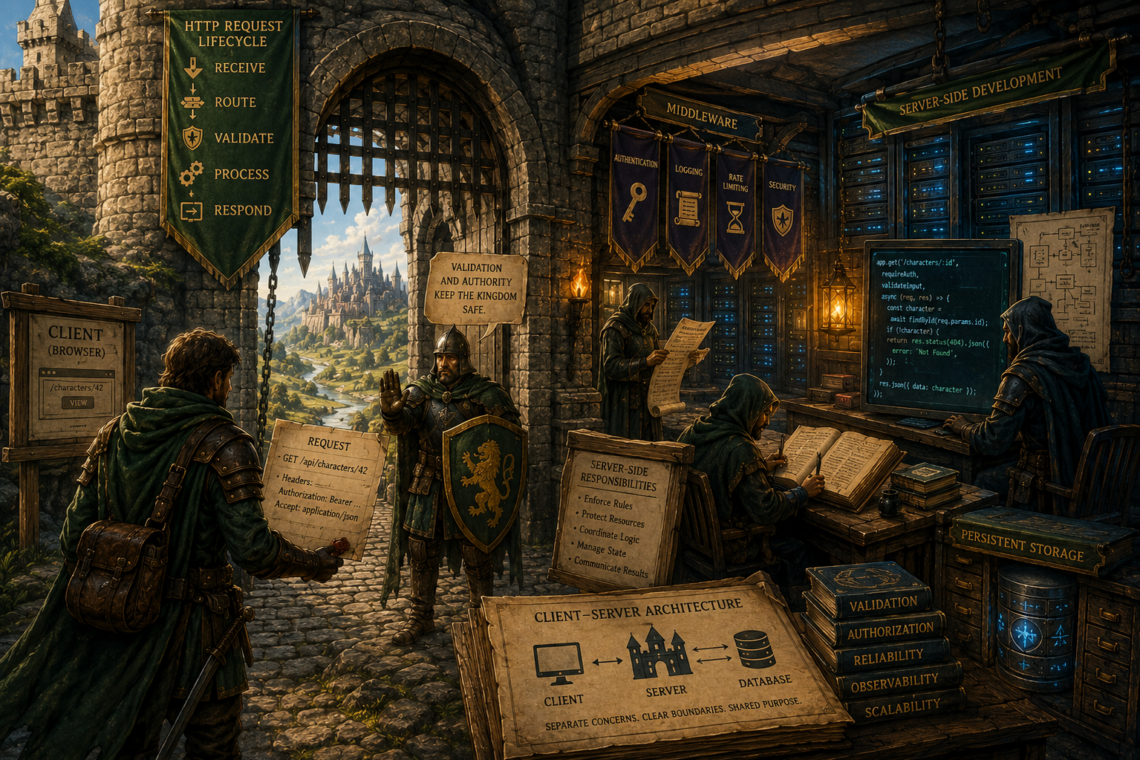
    Before adventurers can explore the world, they must understand the rules that shape it. Editor’s Note Before appearing as the opening chapter of The Full-Stack Campaign: From Interface to Infrastructure, this article first appeared on RandomThoughtsInTraffic.com as an exploration of why developers often struggle when their knowledge remains confined to a single layer of the technology stack. This revised and expanded edition examines how information travels through modern web applications, explores the relationships between browsers, APIs, servers, databases, and infrastructure, and establishes the systems-oriented mindset that guides the remainder of the series. New material includes expanded architectural examples, a deeper discussion of specialization within software development, and a practical examination…

    Read More
    Frank Jamison

    You May Also Like

    An illuminated magical codex rests open atop an ornate stone throne in the center of a vast fantasy library. Streams of blue and gold arcane energy flow from surrounding scrolls, drafting tables, and enchanted tablets toward the glowing book. Above the throne, layered translucent diagrams resembling architectural blueprints, interconnected systems, and cascading structures overlap in the air, with one central design shining brightest. The grand hall is filled with bookshelves, maps, measuring instruments, and research materials beneath vaulted stone arches lit by warm torchlight and magical illumination. The scene evokes order, authority, craftsmanship, and the mastery of complex systems.

    The CSS Codex: The Laws of the Cascade

    March 9, 2026
    An epic fantasy map-style illustration depicts a thriving kingdom viewed from above, with a grand central castle labeled "The Core" connected by glowing roads and magical pathways to surrounding regions. Each district represents a software architecture concept, including Northern Watch (Security and Access Control), Eastern Ports (Integrations and External APIs), The Royal Treasury (Data Storage and Databases), The Observatory (Monitoring and Metrics), The Training Grounds (Testing and Quality Assurance), Market Square (Messaging and Event Streams), Resource Mines (Infrastructure and Servers), The Archives (Documentation and Knowledge Base), and Southern Gate (Clients and Users). In the foreground, an open book titled The Architect's Grimoire rests on a stone table alongside maps, drafting tools, and architectural plans. A banner reads, "A Well Designed Kingdom Endures. A Well Architected System Thrives." The image uses fantasy kingdom imagery to visualize software architecture as an interconnected, carefully planned realm.

    The Architect’s Grimoire: Building Kingdoms That Endure

    June 28, 2026
    A vast medieval fantasy castle dominates the landscape, split into two contrasting halves to illustrate the importance of architectural planning. The left side features a beautifully organized fortress with symmetrical towers, interconnected courtyards, bridges, aqueducts, and orderly roads, overlaid with glowing magical blueprints, surveying grids, compass roses, and geometric construction diagrams. The right side remains impressive but is visibly less organized, with awkward tower placement, inefficient stairways, conflicting roads, and haphazard expansions that suggest growth without an overall plan. Artistic cutaway sections reveal deep stone foundations, underground chambers, drainage tunnels, and structural supports extending into bedrock. Tiny builders and stonemasons emphasize the immense scale of the castle, while warm morning light highlights the contrast between intentional design and organic growth, visually representing the role of software architecture in creating maintainable, long-lasting systems.

    The Architect’s Grimoire: Why Castles Need Architects

    June 29, 2026
  • Career Development (13)
  • CSS Architecture (10)
  • Software Architecture (6)
  • Web Development Fundamentals (5)

Backend Development Browser Rendering Career Development Clean Code Code Quality Code Reviews Continuous Learning CSS CSS Architecture CSS Best Practices CSS Cascade CSS Fundamentals CSS Layout Design Systems Developer Education Developer Growth Dungeons and Dragons Engineering Culture Fantasy Theme Flexbox Front-End Development Frontend Development Full Stack Development Maintainable Code Maintainable CSS Mentorship Professional Growth Refactoring Responsive Design Scalable CSS Software Architecture Software Craftsmanship Software Design Software Development Software Engineering StackNScroll System Design Technical Debt Technical Leadership The CSS Codex The Full-Stack Campaign The Guildmaster's Handbook User Interface Design Web Development Web Development Fundamentals

Stack N' Scroll - 2026 ©