-
The Workshop of Tomorrow: The Future of AI-Assisted Software Engineering
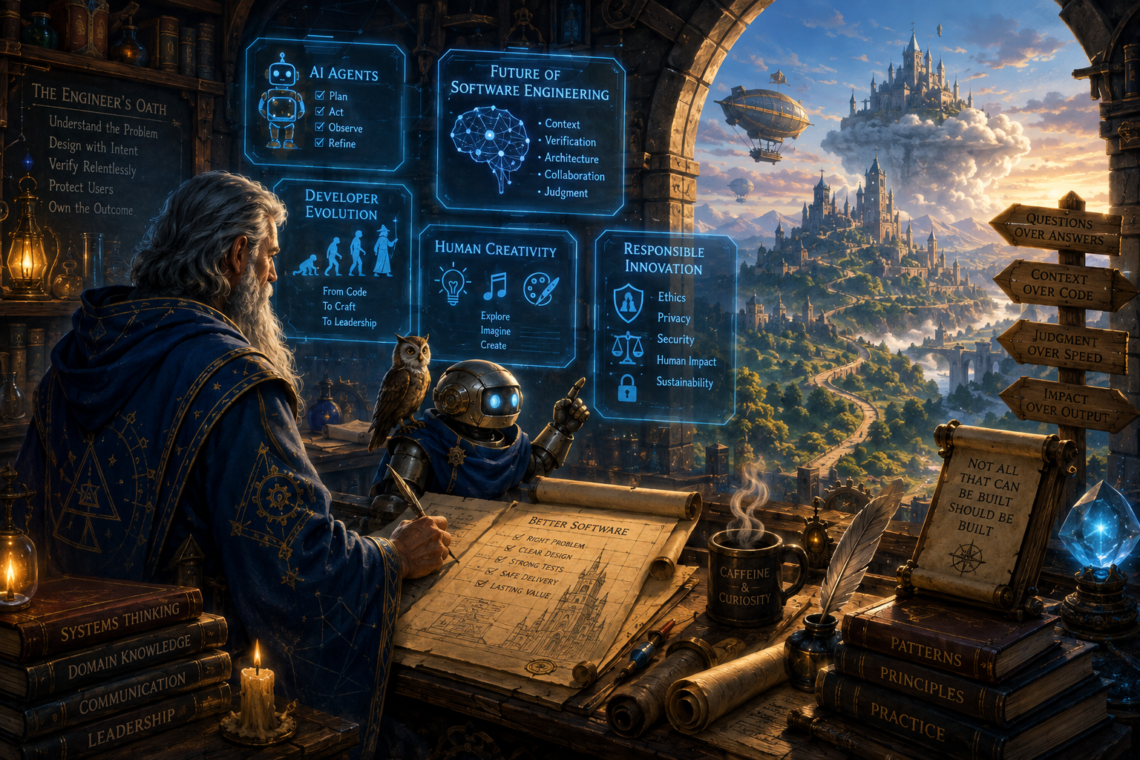
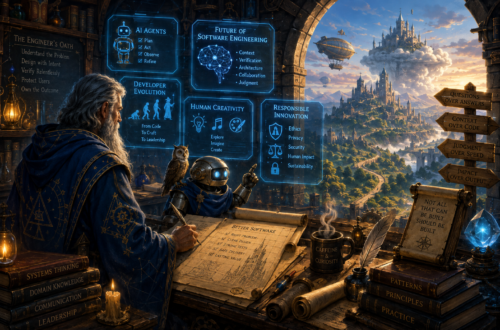
Every generation of wizards inherits greater magic and greater responsibility. There was a time when the most valuable object in a wizard’s workshop was the spellbook. It contained knowledge that had taken generations to discover and preserve, and a young wizard might spend years learning its incantations before being trusted to use them. Then imagine placing an enchanted tome on the workbench that could produce a new spell on demand, explain unfamiliar enchantments, repair damaged runes, and occasionally invent an incantation that sounded perfectly legitimate but summoned absolutely nothing. The workshop would become more productive almost overnight, but it would not become simpler. Software engineering has entered that workshop. AI-assisted…
-
The Mimic in the Library: Trusting AI Without Being Fooled
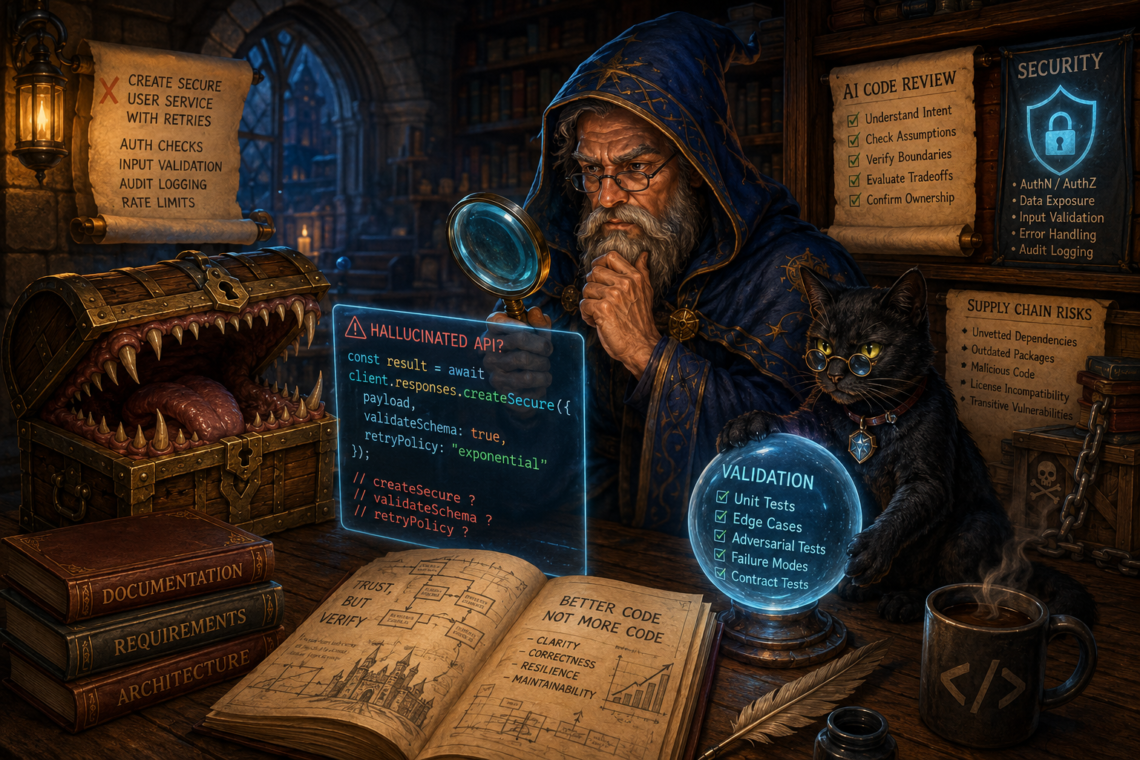
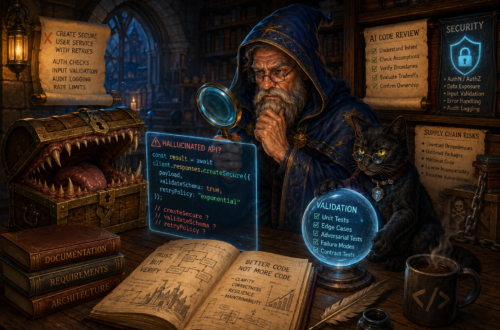
Not every answer wearing the robes of wisdom deserves your trust. There is a particular danger experienced adventurers learn to fear more than an obvious monster. A dragon announces itself with fire, claws, and a considerable disregard for local building codes. A mimic survives by looking useful. AI-generated production code can present the same problem. The function is clean, the naming is sensible, and the explanation sounds authoritative. Nothing immediately signals that somewhere inside it sits an incorrect assumption, a nonexistent API, a security weakness, or an architectural decision that does not belong in production. Modern AI tools are remarkably good at producing plausible code. Given a clear request, they…
-
The Crystal Ball Lies Sometimes: Verifying AI Before You Trust It
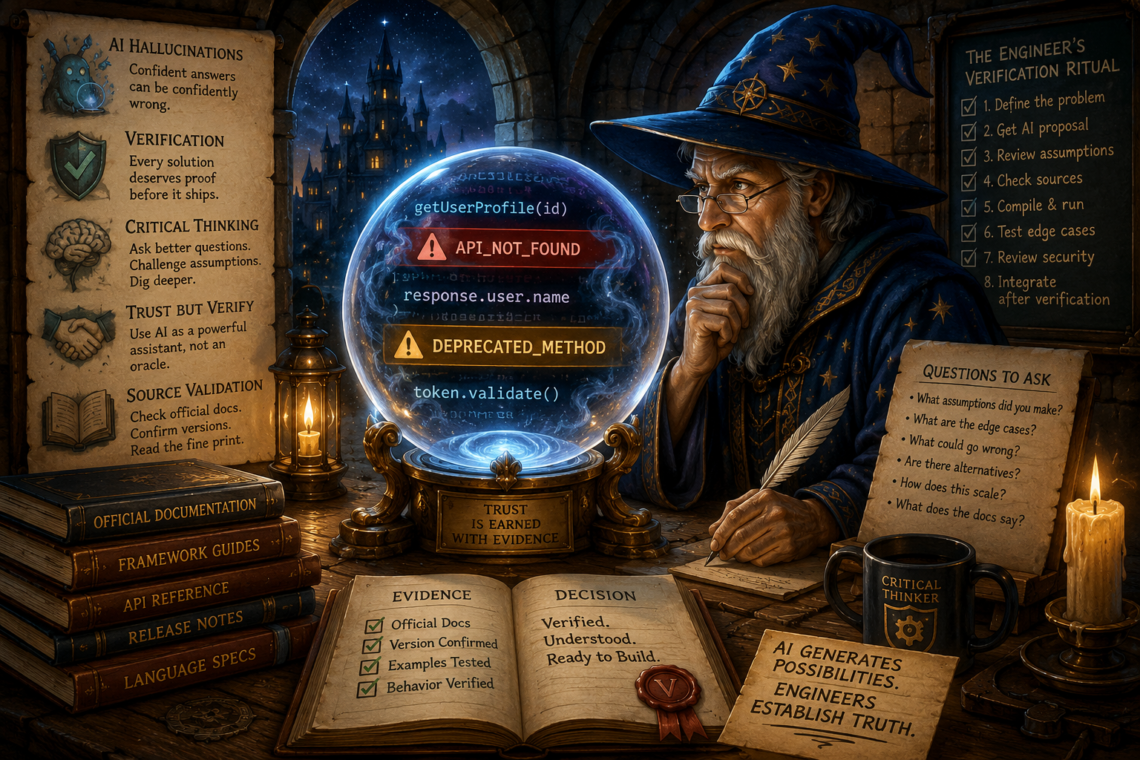
Even enchanted mirrors occasionally reflect impossible futures. Artificial intelligence has rapidly become one of the most productive tools ever placed into the hands of software engineers. It can explain unfamiliar concepts, generate working prototypes, refactor decades-old code, write unit tests, summarize documentation, and even identify subtle defects that would otherwise escape notice. After spending only a few weeks working alongside modern AI systems, it becomes difficult to imagine returning to a workflow that depends entirely on search engines, reference manuals, and trial-and-error. Yet every experienced engineer eventually encounters a moment that changes the relationship. Perhaps the generated code compiles perfectly while quietly introducing a race condition. Perhaps an API appears…
-
The Wizard’s New Apprentice: Working Alongside AI
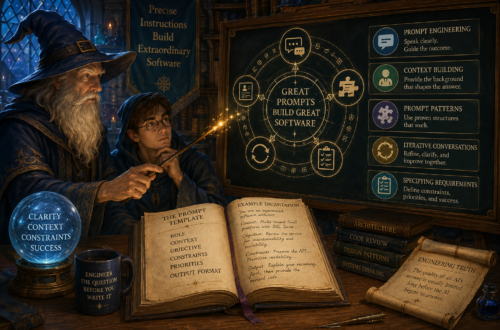
The greatest familiar is still only as wise as the wizard who commands it. Every generation of software engineers encounters a tool that promises to change the profession forever. Assembly language gave way to higher-level languages. Manual deployments yielded to continuous integration and continuous delivery. Virtual machines evolved into cloud platforms. Each innovation made building software faster, but none diminished the importance of sound engineering judgment. Artificial intelligence represents the latest transformation in that long history. It is a remarkable addition to the workshop, but it remains exactly that: an addition. The craft itself has not changed nearly as much as the tools we use to practice it. The excitement…
-
The Enchanted Workshop Begins: An Engineer’s Guide to the Age of AI
Every generation inherits new magic. Only wisdom turns it into craftsmanship. Every Generation Thinks It Is Witnessing the Greatest Revolution Every generation of software engineers believes it is living through the greatest technological shift the profession has ever seen. The names of the technologies change, but the conversation rarely does. Yesterday it was object-oriented programming, the internet, cloud computing, containers, or serverless architecture. Today it is artificial intelligence. Tomorrow it will be something none of us have imagined yet. The tools change far more often than the profession itself. During my own career, I have watched technologies arrive with extraordinary promises. Some genuinely transformed the way we build software. Others…
-
Becoming the Royal Architect: Designing Systems That Outlive You
Every kingdom remembers its architects long after its builders have gone home. Every software system eventually becomes someone else’s responsibility. That single reality has shaped nearly every architectural decision I have made throughout my career. Features are eventually rewritten. Technologies become obsolete. Frameworks rise and fall. Entire engineering teams come and go. Yet long after the original developers have moved on, the software remains, waiting for new engineers to understand it, maintain it, and continue building upon it. Whether those future engineers inherit a thriving kingdom or a crumbling ruin depends far less on the quality of individual features than on the quality of the architecture beneath them. Throughout The…
-
Hidden Traps in the Dungeon: Escaping Technical Debt
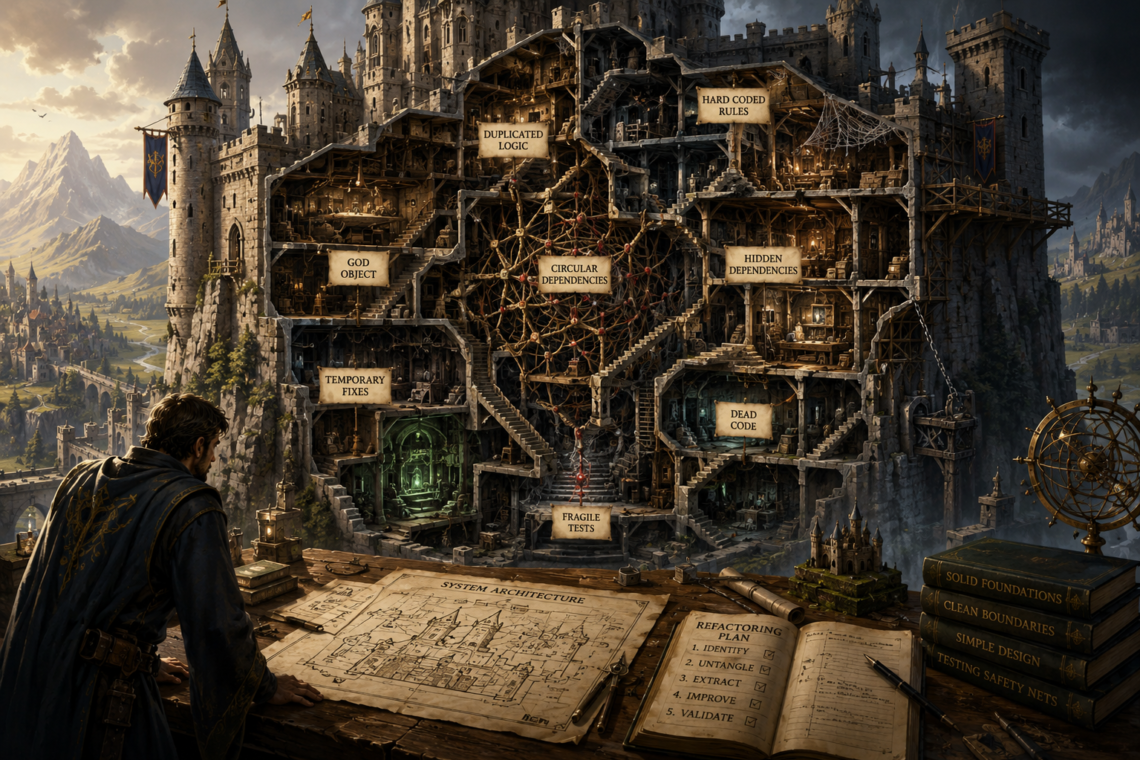
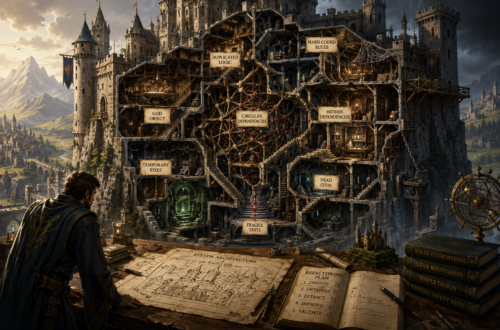
The deadliest dangers are often the ones built into the castle itself. No architect intentionally designs a maze. Every castle begins with a sensible plan. Corridors connect naturally, storerooms serve nearby kitchens, towers overlook vulnerable approaches, and every staircase leads somewhere meaningful. Yet castles that survive for generations rarely retain that original simplicity. New rulers expand old wings. Temporary passageways become permanent corridors. Storage rooms become workshops. Secret tunnels built during one crisis remain long after the danger has passed. Over time, the castle becomes increasingly difficult to navigate, not because its builders lacked skill, but because each generation solved the problems immediately before them. Long-lived software follows the same…
-
Dividing the Kingdom: Finding the Right Boundaries
A realm divided too soon may fall before it ever grows. Software architecture has a way of making every difficult decision appear deceptively simple. A whiteboard fills with neatly drawn boxes connected by clean lines, and suddenly an application that once fit comfortably into a single project has become a collection of independent services. Every box promises greater flexibility, cleaner organization, and limitless room for future growth. Years spent designing, maintaining, and repairing production systems eventually teach every architect the same lesson. Every boundary carries a cost that will be paid long after the diagram has been erased. This week, as we continue Designing the Realm, we are moving beyond…
-
The Curse of Premature Fortification
Not every empty field needs a fortress. Software rarely becomes difficult to maintain because developers lacked technical ability. More often, intelligent engineers create long-term maintenance problems by solving challenges that have not yet appeared. A project begins with a handful of straightforward requirements, but its structure quickly expands to accommodate hypothetical integrations, future scalability, interchangeable components, and extension points that may never become necessary. Before long, the codebase grows steadily larger while the problem it exists to solve remains remarkably small. Long before the application reaches maturity, supporting the design requires nearly as much effort as advancing the product itself. Good design prepares software to evolve as knowledge grows. Premature…
-
Becoming the Developer You Once Needed
The greatest guides are often those who remember what it felt like to walk alone. The Veteran at the Tavern Table One of the most surprising lessons I have learned throughout my career is that software development is not ultimately about software. The code matters. The systems matter. The architecture matters. Yet when I look back on the people who changed my career, I do not remember them primarily because of the software they built. I remember them because of the guidance they provided when I needed it most. Over time, I came to realize that the final stage of becoming a developer is not mastering technology. It is becoming…