-
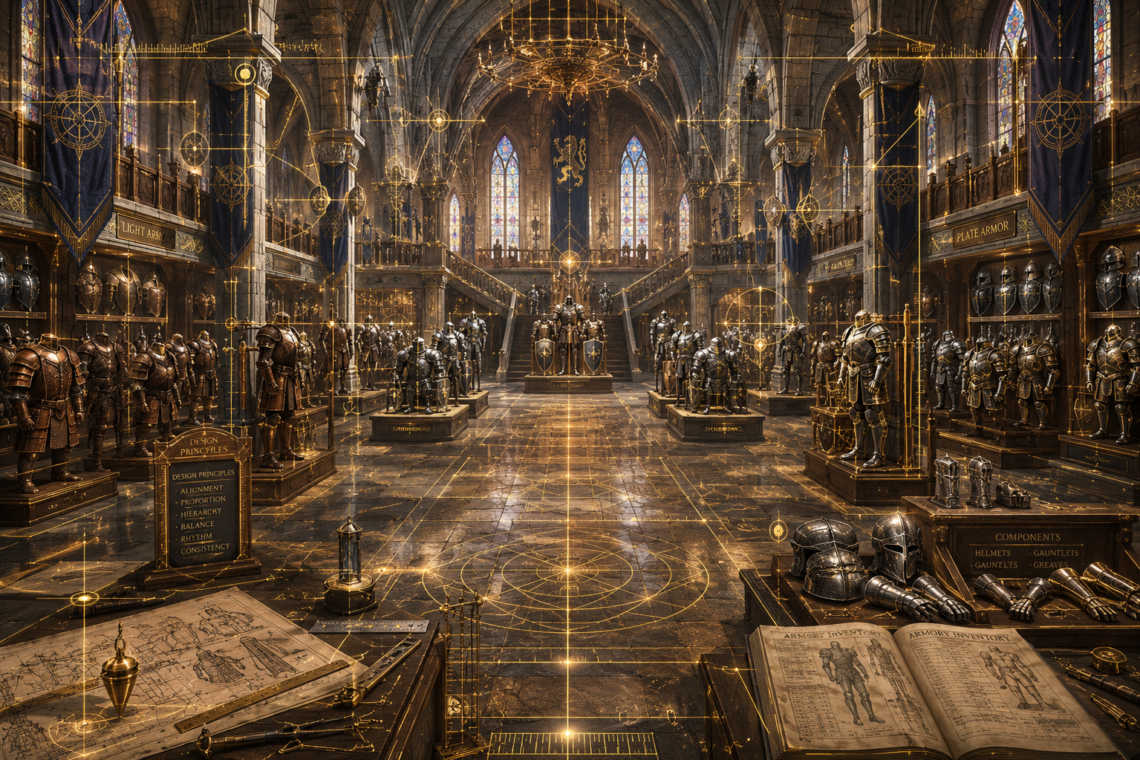
Armor and Appearance: CSS Layout Without Chaos
Editor’s Note This article was originally published on RandomThoughtsInTraffic.com and has been extensively revised and expanded for its inclusion in StackNScroll. While the original introduced CSS layout through a fantasy-inspired perspective, this edition builds on those ideas with a deeper exploration of front-end architecture, examining the relationship among semantic HTML, Flexbox, Grid, responsive design, visual hierarchy, and maintainable styling systems. New material explores the engineering decisions that shape resilient layouts, emphasizing why experienced developers make particular architectural choices rather than simply demonstrating CSS techniques. The goal of this revised edition is to move beyond individual properties and help readers develop the mindset required to build interfaces that remain understandable, adaptable,…
-
Patience Is a Scaling Stat
The greatest guild halls were not built in a single turn of the hourglass. Editor’s Note: Before joining The CSS Codex: Mastering the Rules of the Realm, Patience Is a Scaling Stat first appeared on RandomThoughtsInTraffic.com. This revised and expanded edition explores the relationship between patience, craftsmanship, and long-term CSS maintainability through the lens of sustainable engineering practices. New material examines how small implementation decisions compound over time, how experienced developers approach architectural choices differently than newer practitioners, and why understanding systems often matters more than solving individual problems quickly. While the original article focused primarily on professional growth and mindset, this edition connects those lessons directly to CSS architecture,…
-
Escaping the Specificity Dungeon
Many adventurers descend seeking power. Few emerge with maintainable code. Editor’s Note: Before joining The CSS Codex: Mastering the Rules of the Realm, Escaping the Specificity Dungeon first appeared on RandomThoughtsInTraffic.com. This revised and expanded edition builds upon the original article with deeper exploration of specificity, selector architecture, cascade behavior, and long-term stylesheet maintainability. While the original article focused primarily on avoiding common specificity mistakes, this edition examines the underlying rules that govern selector conflicts and demonstrates how experienced developers design systems that rarely require specificity battles in the first place. Entering the Dungeon As we continue our journey through The CSS Codex, this week’s theme remains The Laws of…
-
The Laws of the Cascade
In every kingdom of styles, only one ruler may claim the throne. Editor’s Note: Before becoming Part I of The CSS Codex, The Laws of the Cascade was originally published on RandomThoughtsInTraffic.com. This updated edition expands on the original article with additional lessons, practical examples, and a deeper exploration of the rules governing how CSS resolves competing styles. The Invisible Throne When developers first begin learning CSS, they usually encounter it as a collection of individual instructions. A selector targets an element. A property changes its appearance. A value produces a visible result in the browser. At first, the relationship seems straightforward because the browser appears to simply follow instructions…
-
Mastering the Rules of the Realm
True mastery begins when the rules cease to feel like restrictions and start revealing the shape of the world beneath them. Author’s Note: This article is an updated and expanded version of an introduction originally published on RandomThoughtsInTraffic.com. As the CSS Codex evolved from a concept into a complete twelve-part series, the original article was revised to better reflect the journey ahead and the lessons readers will encounter throughout the realm. The Reputation of an Unfairly Accused Language CSS has earned a reputation that few technologies in web development can match. It is blamed for broken layouts, mysterious overrides, inconsistent spacing, and hours spent adjusting styles until something finally appears…