-
From Interface to Infrastructure
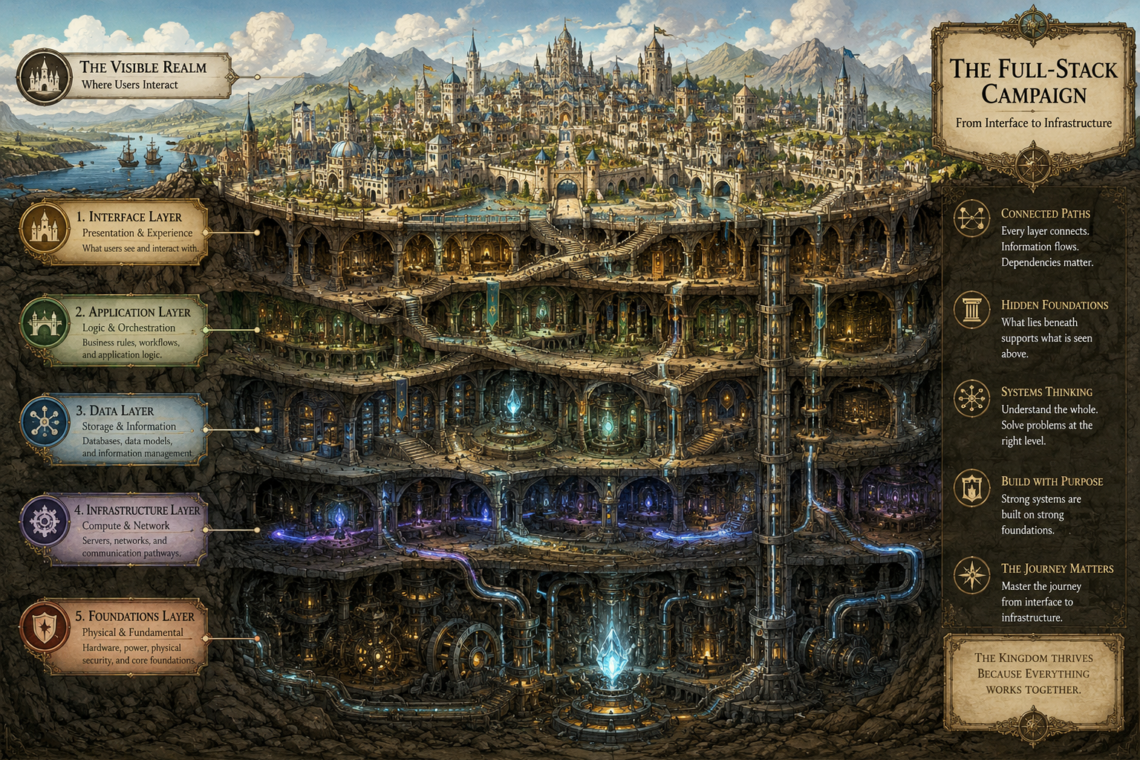
Before adventurers can explore the world, they must understand the rules that shape it. Editor’s Note Before appearing as the opening chapter of The Full-Stack Campaign: From Interface to Infrastructure, this article first appeared on RandomThoughtsInTraffic.com as an exploration of why developers often struggle when their knowledge remains confined to a single layer of the technology stack. This revised and expanded edition examines how information travels through modern web applications, explores the relationships between browsers, APIs, servers, databases, and infrastructure, and establishes the systems-oriented mindset that guides the remainder of the series. New material includes expanded architectural examples, a deeper discussion of specialization within software development, and a practical examination…
-
When the Stylesheet Becomes the Monster
Ignore a growing beast long enough and eventually it guards the dungeon. Editor’s Note: This article originally appeared on RandomThoughtsInTraffic.com and has been revised and expanded for StackNScroll as the closing chapter of The CSS Codex. The original edition explored how CSS codebases gradually become more difficult to maintain as shortcuts, overrides, and exceptions accumulate over time. This updated version expands that discussion with deeper examination of architectural drift, technical debt, component design, specificity management, long-term maintenance practices, and the warning signs that experienced engineers learn to recognize before problems become crises. It also serves as a capstone for the broader lessons explored throughout The CSS Codex, bringing together concepts…
-
Refactoring the Spellbook
Every spellbook gathers clutter until a wizard dares to rewrite it. Editor’s Note: This article is an expanded and revised edition of a piece originally published on RandomThoughtsInTraffic.com. While the original article focused primarily on the practical need to clean up aging stylesheets, this StackNScroll edition explores refactoring as a long-term architectural discipline within CSS systems. New material examines design tokens, specificity management, component ownership, incremental refactoring strategies, dead code removal, and the relationship between technical debt and maintainability during long-lived projects. As part of this week’s theme, The Long Campaign, the article focuses on how experienced developers preserve the health of stylesheets over months and years of continuous development,…
-
Patience Is a Scaling Stat
The greatest guild halls were not built in a single turn of the hourglass. Editor’s Note: Before joining The CSS Codex: Mastering the Rules of the Realm, Patience Is a Scaling Stat first appeared on RandomThoughtsInTraffic.com. This revised and expanded edition explores the relationship between patience, craftsmanship, and long-term CSS maintainability through the lens of sustainable engineering practices. New material examines how small implementation decisions compound over time, how experienced developers approach architectural choices differently than newer practitioners, and why understanding systems often matters more than solving individual problems quickly. While the original article focused primarily on professional growth and mindset, this edition connects those lessons directly to CSS architecture,…
-
The Geometry of Centering
What seems impossible often yields to the proper incantation. Editor’s Note: This article is an expanded and revised edition of an article originally published on RandomThoughtsInTraffic.com. While the original version focused primarily on practical centering techniques and common alignment solutions, this StackNScroll edition examines the deeper spatial relationships that govern centering throughout modern CSS. New material explores formatting contexts, space distribution, Flexbox and Grid alignment models, component architecture, and the relationship between alignment decisions and long-term maintainability. Readers will learn not only how centering techniques work, but why they work, allowing them to reason about layout behavior more effectively across complex interfaces and design systems. The goal is to move…