Stack n' Scroll

Code, Campaigns, and Lessons from the Digital Realm

July 2026
S M T W T F S
 1234
567891011
12131415161718
19202122232425
262728293031  
« Jun    

Meta

  • Register
  • Log in
  • Entries feed
  • Comments feed
  • WordPress.org
Frank Jamison Avatar
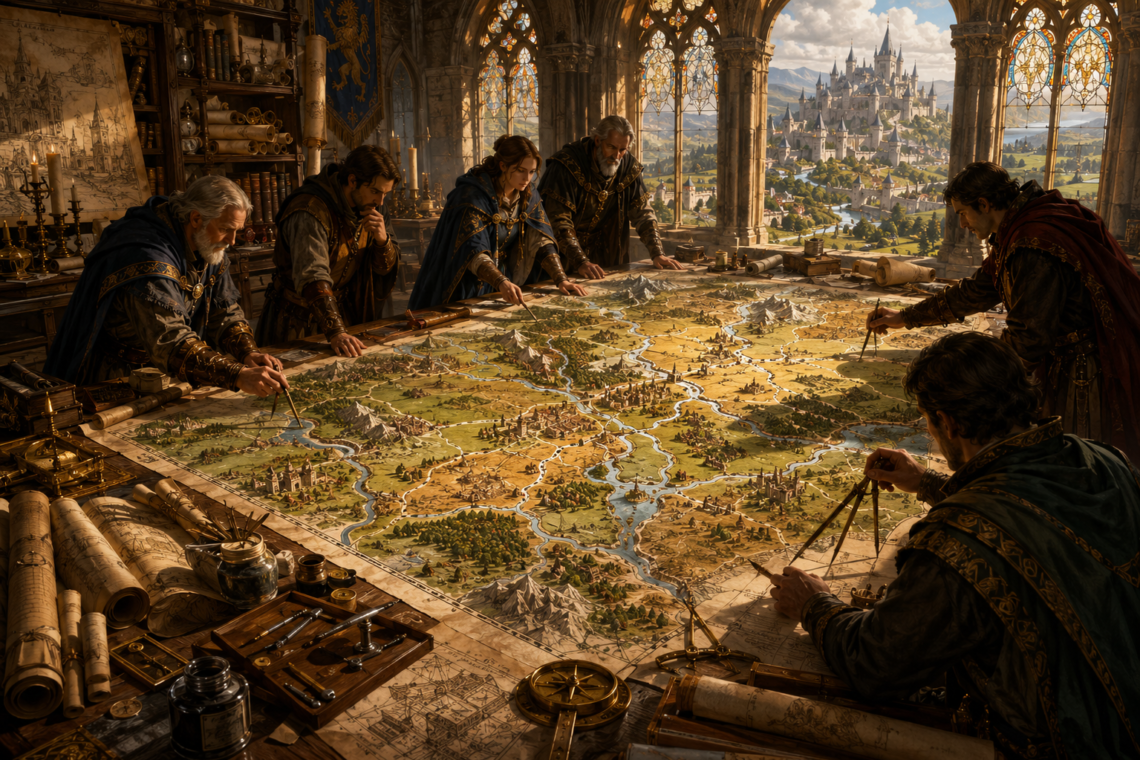
  • A group of royal architects and cartographers gather around a massive illuminated kingdom map inside an ornate medieval planning hall. Using compasses, rulers, and drafting tools, they carefully define provincial boundaries that follow rivers, mountains, and trade routes. Shelves filled with scrolls, blueprints, and surveying instruments surround the room, while stained-glass windows reveal a thriving kingdom beyond. The detailed fantasy scene symbolizes thoughtful software architecture by illustrating the deliberate planning and organization required to establish meaningful boundaries within a growing system.
    The Architect's Grimoire

    Dividing the Kingdom: Finding the Right Boundaries

    July 8, 2026 /

    A realm divided too soon may fall before it ever grows. Software architecture has a way of making every difficult decision appear deceptively simple. A whiteboard fills with neatly drawn boxes connected by clean lines, and suddenly an application that once fit comfortably into a single project has become a collection of independent services. Every box promises greater flexibility, cleaner organization, and limitless room for future growth. Years spent designing, maintaining, and repairing production systems eventually teach every architect the same lesson. Every boundary carries a cost that will be paid long after the diagram has been erased. This week, as we continue Designing the Realm, we are moving beyond…
    Read More
    Frank Jamison

    You May Also Like

    A sprawling medieval fantasy kingdom stretches across a lush valley, with a fortified castle serving as the central hub of an expansive network of roads, bridges, and satellite settlements that symbolize a scalable software architecture. A massive dragon circles above the kingdom, representing the challenges of system growth, while an architect studies detailed plans from a stone overlook in the foreground. Glowing pathways connect infrastructure throughout the realm, illustrating concepts such as load balancing, distributed systems, caching, and scalable services. The scene emphasizes thoughtful planning, resilient infrastructure, and measured expansion through richly detailed architecture and environmental storytelling, using a classic Dungeons & Dragons-inspired aesthetic to visualize modern software engineering principles.

    The Dragon Named Scale: Building Systems That Grow

    July 13, 2026
    A sweeping high-angle fantasy landscape depicts a thriving medieval kingdom interconnected by an extensive network of beautifully engineered stone roads and towering arched bridges. Magnificent walled cities, castles, villages, ports, and mountain fortresses are linked across rivers, cliffs, forests, fertile farmland, and snow-capped peaks, emphasizing the infrastructure that unites the realm. Merchant caravans, mounted couriers, travelers, and supply wagons move peacefully along the highways beneath warm golden morning light, illustrating dependable communication, cooperation, and thoughtful planning. The image symbolizes well-designed software architecture, with the roads representing trusted APIs that seamlessly connect independent systems into a unified, flourishing kingdom.

    The Roads Between Cities: Building APIs Worth Trusting

    July 6, 2026
    A vast medieval fantasy kingdom is enclosed within enormous concentric stone walls, towering gatehouses, fortified keeps, and defensive towers that dominate the landscape. Despite the immense fortifications, the protected interior remains largely undeveloped, with only a few cottages, a small farmhouse, scattered construction sites, unfinished roads, and a partially built marketplace spread across open fields. Glowing blue magical architectural projections overlay the empty city, revealing ambitious plans for future districts, guild halls, towers, canals, and public buildings that have yet to be constructed. In the foreground, drafting tables, blueprints, surveying instruments, and engineering tools reinforce the theme of excessive planning, while a small group of builders focuses on practical structures such as a well and simple homes. The painterly Dungeons & Dragons-inspired scene symbolizes the software engineering concept of premature overengineering by contrasting overwhelming defensive infrastructure with a kingdom that has barely begun to grow.

    The Curse of Premature Fortification

    July 3, 2026
  • The Architect's Grimoire (8)
  • The CSS Codex (13)
  • The Full-Stack Campaign (6)
  • The Guildmaster’s Handbook (13)

Application Architecture Backend Development Career Development Clean Code Code Quality Code Reviews Component Design CSS CSS Architecture CSS Best Practices CSS Cascade CSS Fundamentals CSS Layout Design Systems Developer Education Developer Growth Dungeons and Dragons Engineering Culture Fantasy Theme Flexbox Front-End Development Frontend Development Full Stack Development Maintainable Code Maintainable CSS Mentorship Normal Flow Professional Growth Refactoring Responsive Design Software Architecture Software Craftsmanship Software Design Software Development Software Engineering StackNScroll System Design Technical Debt Technical Leadership The Architect's Grimoire The CSS Codex The Full-Stack Campaign The Guildmaster's Handbook Web Development Web Development Fundamentals

Stack N' Scroll - 2026 ©