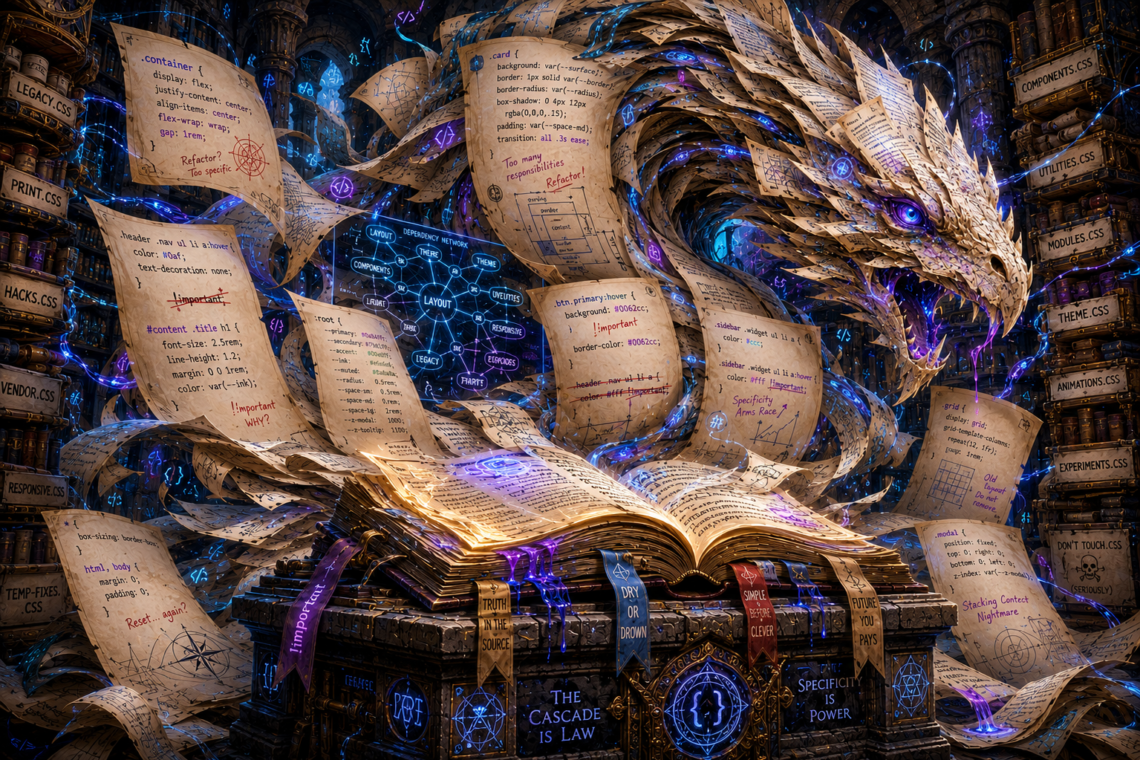
• An enormous ancient spellbook rests on a carved stone pedestal in a vast arcane archive as hundreds of stylesheet-like parchment pages erupt from its open pages and merge into a colossal serpentine creature made entirely of CSS rules, annotations, diagrams, revisions, and glowing magical symbols. The parchment monster coils through towering shelves filled with labeled codices while streams of luminous blue and violet magical energy connect scattered documents into a sprawling network of dependencies. Individual pages display selectors, properties, comments, crossed-out declarations, and specificity notes, emphasizing accumulated technical debt and architectural complexity. The scene is illuminated by glowing runes, magical ink, and dramatic volumetric light, creating the impression of a once-useful body of knowledge that has grown beyond its original purpose and become an intelligent living manifestation of an unmaintainable stylesheet.
    CSS Architecture

    The CSS Codex: When the Stylesheet Becomes the Monster

    Ignore a growing beast long enough and eventually it guards the dungeon. Editor’s Note: This article originally appeared on RandomThoughtsInTraffic.com and has been revised and expanded for StackNScroll as the closing chapter of The CSS Codex. The original edition explored how CSS codebases gradually become more difficult to maintain as shortcuts, overrides, and exceptions accumulate over time. This updated version expands that discussion with deeper examination of architectural drift, technical debt, component design, specificity management, long-term maintenance practices, and the warning signs that experienced engineers learn to recognize before problems become crises. It also serves as a capstone for the broader lessons explored throughout The CSS Codex, bringing together concepts…