-
The Roads Between Cities: Building APIs Worth Trusting
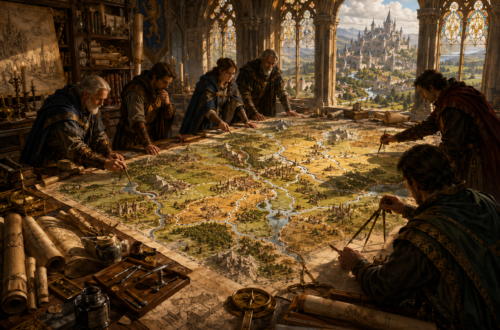
Kingdoms prosper because their roads are trusted as much as their walls. A castle can stand for centuries and still preside over a dying realm. Towering walls may discourage invaders, magnificent keeps may inspire admiration, and disciplined soldiers may protect the capital, but none of those accomplishments guarantee prosperity. A thriving civilization depends upon something far less glamorous. Merchants must reach distant markets, royal couriers must carry news without delay, craftsmen must exchange ideas across provinces, and neighboring cities must cooperate toward common goals. Long before history remembers the greatness of a realm, it first remembers whether its roads could be depended upon. Software architecture follows the same principle. Well-designed…
-
The Curse of Premature Fortification
Not every empty field needs a fortress. Software rarely becomes difficult to maintain because developers lacked technical ability. More often, intelligent engineers create long-term maintenance problems by solving challenges that have not yet appeared. A project begins with a handful of straightforward requirements, but its structure quickly expands to accommodate hypothetical integrations, future scalability, interchangeable components, and extension points that may never become necessary. Before long, the codebase grows steadily larger while the problem it exists to solve remains remarkably small. Long before the application reaches maturity, supporting the design requires nearly as much effort as advancing the product itself. Good design prepares software to evolve as knowledge grows. Premature…
-
Building for Today’s Quest or Tomorrow’s Empire?
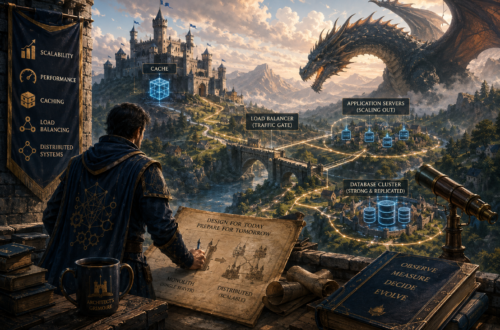
Every shortcut is a promise the future must eventually keep. The First Road Beyond the Castle Gates Long before a kingdom becomes an empire, someone chooses where the first road will be built. Travelers may never remember who laid those stones, but generations will depend upon the decision. Software is built much the same way. Long before users celebrate new features, someone quietly decides how the application will grow, how its parts will work together, and whether future engineers will inherit a thriving kingdom or spend their days repairing crumbling foundations. When I first began writing software, I believed every project had a finish line. Complete the feature, fix the…
-
Why Castles Need Architects
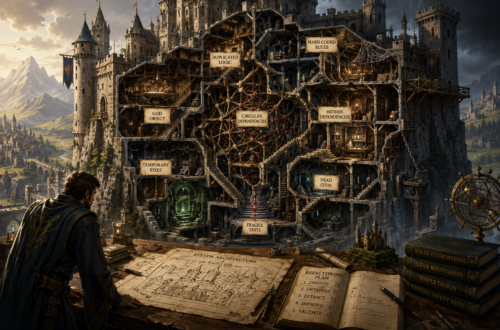
Even the finest builders need someone who can see beyond the next wall. Foundations of the Kingdom Maintaining software taught me lessons that writing software never could. Early in my career, I assumed difficult applications were usually the result of poor programming. Whenever a simple change required hours of investigation, I expected to uncover careless decisions, rushed deadlines, or code that had simply been neglected for too long. The more systems I inherited, however, the less convincing that explanation became. Different companies, different teams, and different programming languages produced remarkably similar maintenance problems. As we begin Foundations of the Kingdom, one lesson rises above all the others: every enduring kingdom…
-
Building Kingdoms That Endure
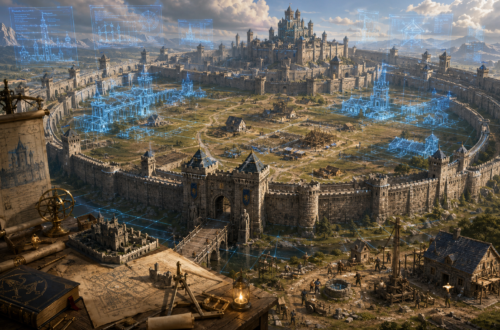
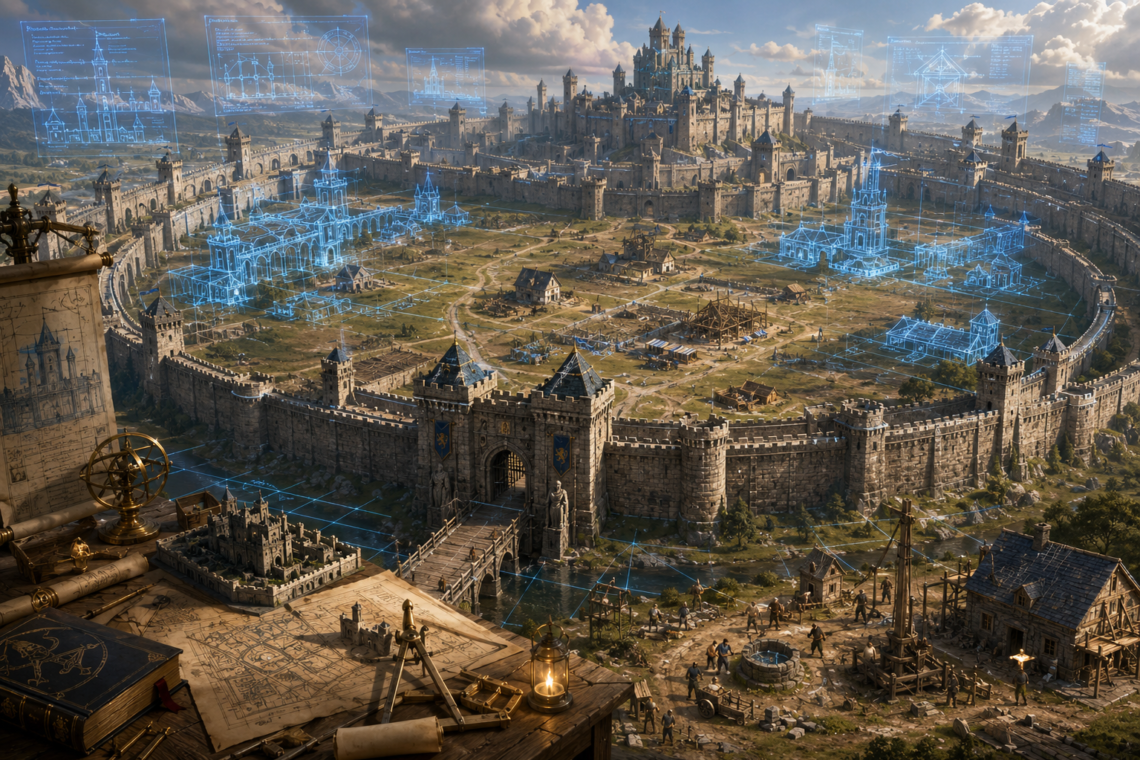
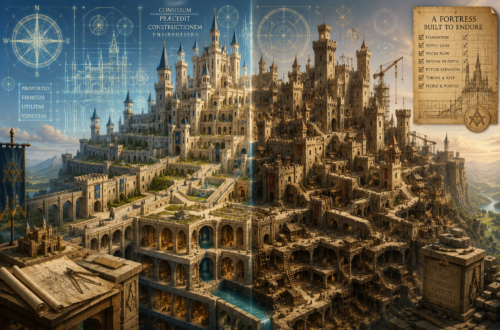
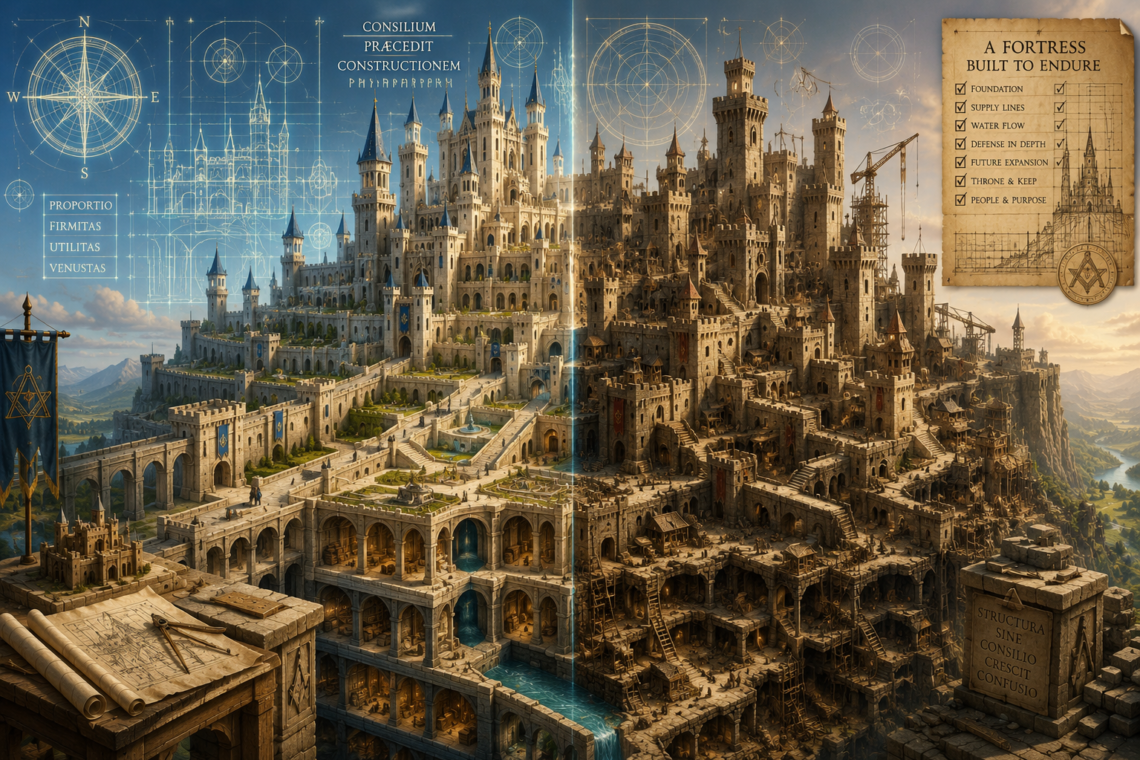
Every enduring kingdom begins with a blueprint. Every developer learns to build. The best developers learn what to build next. No kingdom becomes legendary because its masons laid beautiful stones. No empire survives because its carpenters built magnificent gates or its blacksmiths forged exceptional swords. History remembers kingdoms that endured because someone looked beyond the next building and imagined how an entire realm would one day function. Roads connected cities before merchants ever traveled them. Walls protected districts that had not yet been built. Aqueducts carried water to neighborhoods that existed only on parchment. Long before the first stone was laid, someone had already begun designing the future. Software follows…
-
Becoming the Developer You Once Needed
The greatest guides are often those who remember what it felt like to walk alone. The Veteran at the Tavern Table One of the most surprising lessons I have learned throughout my career is that software development is not ultimately about software. The code matters. The systems matter. The architecture matters. Yet when I look back on the people who changed my career, I do not remember them primarily because of the software they built. I remember them because of the guidance they provided when I needed it most. Over time, I came to realize that the final stage of becoming a developer is not mastering technology. It is becoming…
-
Interviews Without Panic Damage
Confidence is not knowing every answer. It is learning to stand steady when questions come. The Interview Hall Awaits I have seen more developers wounded by interview anxiety than by technical difficulty. Throughout my career, I have watched capable developers walk into interviews carrying more fear than the encounter deserved. They had built projects, solved real problems, learned difficult tools, and survived the long grind of becoming employable in a field that rarely hands out easy victories. Yet the moment the interview began, they treated the conversation like the final chamber of a cursed dungeon. Every question sounded like a trap, every pause felt like judgment, and every imperfect answer…
-
Building a Portfolio Worth Showing
Good work deserves witnesses. Build proof of the journey, not merely trophies. Every Adventurer Needs a Record of Their Journey One of the most common mistakes I see newer developers make is treating a portfolio as something they will build someday. They imagine a future version of themselves who has completed enough projects, learned enough technologies, and accumulated enough experience to finally deserve a public showcase. Until that day arrives, they keep their work hidden inside repositories, forgotten folders, abandoned cloud accounts, and unfinished side projects. Unfortunately, that approach creates a serious problem. By the time they decide they need a portfolio, much of the journey that would have made…
-
When Impostor Syndrome Rolls a Critical Hit
Even seasoned adventurers sometimes mistake uncertainty for failure. The Trial Hidden Behind the Character Sheet During this week’s theme, The Trials of the Realm, it would be easy to focus exclusively on technical challenges. We could discuss production outages, difficult debugging sessions, complex architectures, or impossible deadlines. Those are certainly trials every engineer encounters. Yet one of the most persistent challenges I have faced throughout my career never appeared in a ticketing system, generated an error message, or triggered an alert. It appeared quietly in my own thinking and attempted to convince me that I did not belong where I had already earned the right to stand. Impostor syndrome is…
-
Scope Creep and Other Predators
Beware the quest that quietly grows teeth while nobody is paying attention. The Monster Nobody Notices Throughout my career in software development, I have learned that some of the most dangerous project threats are not technical in nature. Bugs can be identified, analyzed, and fixed. Performance bottlenecks can be measured and optimized. Infrastructure failures can usually be diagnosed through careful investigation and experience. Scope creep is different because it rarely presents itself as a problem at the beginning. Instead, it often arrives disguised as a helpful suggestion, a reasonable enhancement, or an opportunity to improve the final product. Left unmanaged, those small additions accumulate until the original project becomes something…