-
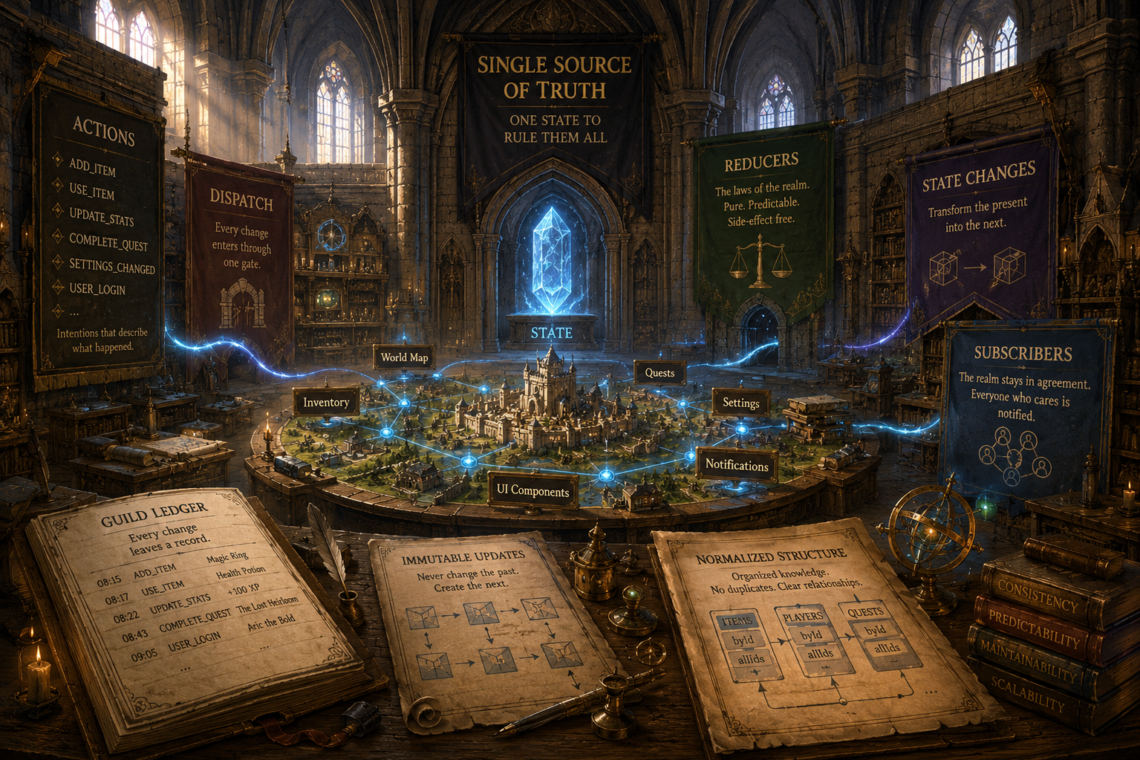
The Inventory System: Managing State Without Losing Control
Editor’s Note This article is an updated and expanded edition of a lesson originally published on RandomThoughtsInTraffic.com. For this StackNScroll edition, I have substantially revised both the technical discussion and the engineering guidance to move beyond introducing JavaScript state and toward understanding the architectural decisions that allow interactive applications to grow without becoming fragile. New material explores immutable updates, centralized state transitions, shared application data, and engineering tradeoffs that emerge as software matures, all while reinforcing this week’s theme, The Spark of Adventure. My objective is not simply to explain state management, but to demonstrate why experienced engineers organize application state long before complexity demands it. The Spark of Adventure:…
-
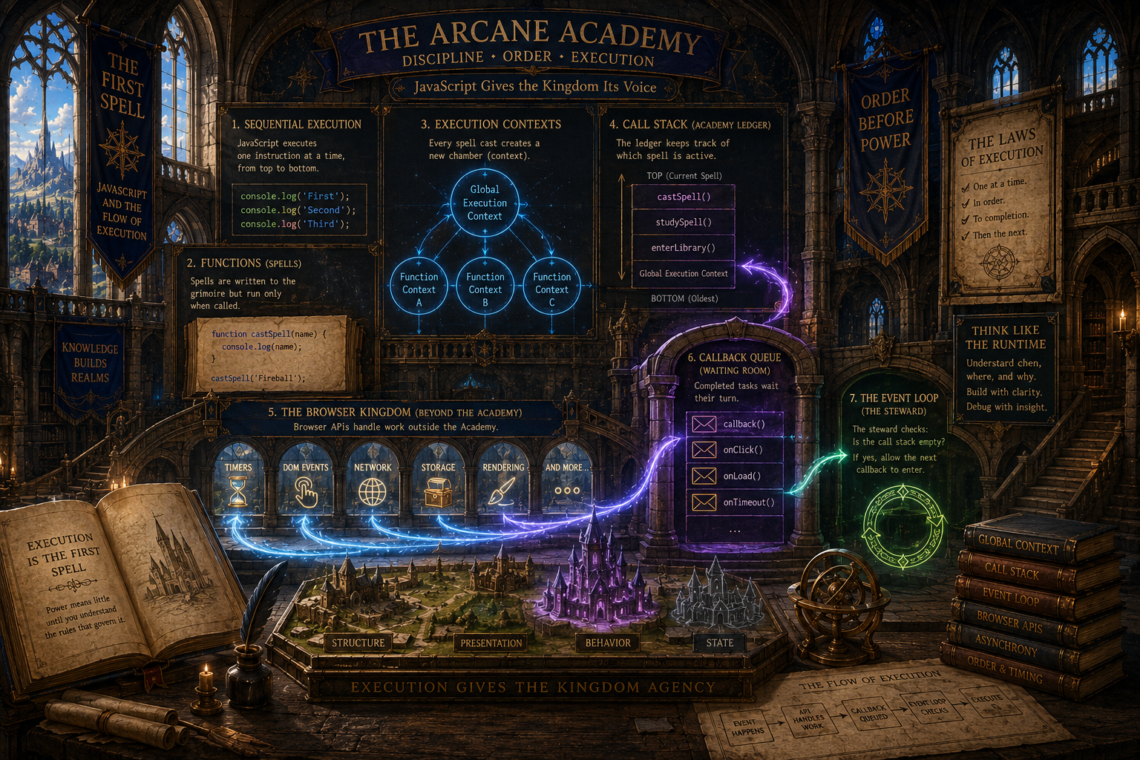
The First Spell: JavaScript and the Flow of Execution
The realm is built. Now it must respond to its heroes’ actions. Editor’s Note This article is an updated edition of an article originally published on RandomThoughtsInTraffic.com. For its StackNScroll.com edition, it has been substantially revised and expanded to shift the discussion from introductory JavaScript syntax toward the engineering principles that govern execution inside the browser. New material explores execution contexts, the Global Execution Context, the call stack, browser APIs, callback queues, and the event loop, and connects these concepts to the architecture of modern front-end applications. The objective of this edition is to help developing engineers build an accurate mental model of how JavaScript executes so that every framework,…
-
Armor and Appearance: CSS Layout Without Chaos
Editor’s Note This article was originally published on RandomThoughtsInTraffic.com and has been extensively revised and expanded for its inclusion in StackNScroll. While the original introduced CSS layout through a fantasy-inspired perspective, this edition builds on those ideas with a deeper exploration of front-end architecture, examining the relationship among semantic HTML, Flexbox, Grid, responsive design, visual hierarchy, and maintainable styling systems. New material explores the engineering decisions that shape resilient layouts, emphasizing why experienced developers make particular architectural choices rather than simply demonstrating CSS techniques. The goal of this revised edition is to move beyond individual properties and help readers develop the mindset required to build interfaces that remain understandable, adaptable,…
-
The Bones of the Realm: Writing Semantic HTML That Holds
Strong kingdoms are built on structure long before they are decorated. Editor’s Note: This article is an expanded and substantially revised edition of an article originally published on RandomThoughtsInTraffic.com. While the original introduced semantic HTML as an important front-end development practice, this StackNScroll edition explores the subject through the broader disciplines of software architecture, browser interpretation, accessibility, maintainability, and long-term engineering thinking. New material examines how browsers parse documents before rendering interfaces, why semantic HTML influences every layer of the modern web stack, and how experienced engineers gradually learn to think differently about markup after years of maintaining production software. As part of this week’s Foundations of the Realm theme,…
-
The First Map: How the Browser Shapes the World
Every adventure begins with understanding the terrain beneath your feet. Editor’s Note: This article is an expanded and revised edition of a piece originally published on RandomThoughtsInTraffic.com. For its StackNScroll release, the material has been substantially updated with deeper coverage of browser architecture, rendering behavior, document parsing, resource loading, and the relationship between structure, presentation, and interactivity. New sections have been added to explain the browser’s rendering pipeline, introduce foundational performance concepts, and establish the technical groundwork for future articles in The Full-Stack Campaign. As part of this week’s Foundations of the Realm theme, the goal is to help readers develop accurate mental models of how browsers transform source code…
-
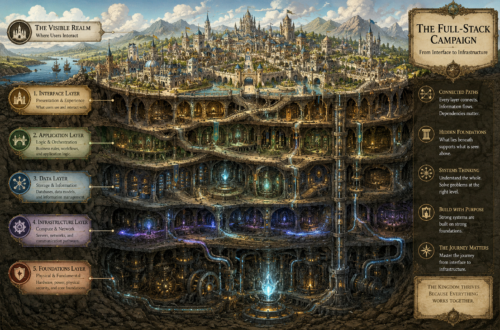
From Interface to Infrastructure
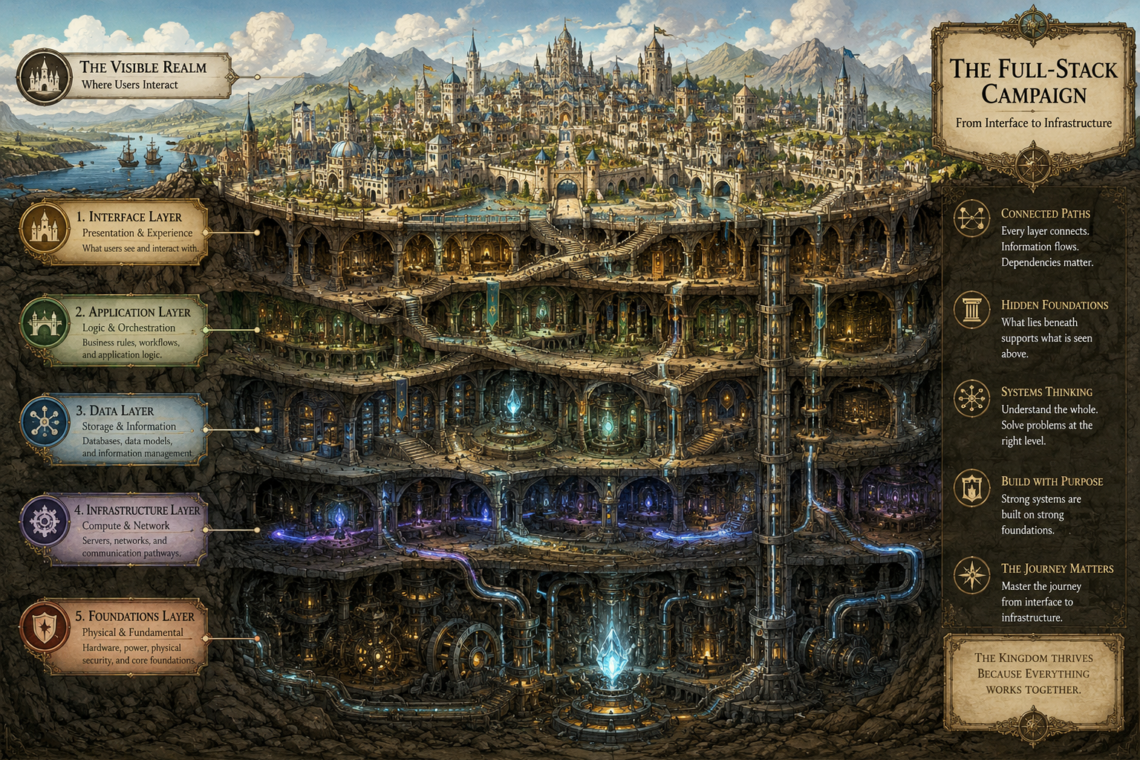
Before adventurers can explore the world, they must understand the rules that shape it. Editor’s Note Before appearing as the opening chapter of The Full-Stack Campaign: From Interface to Infrastructure, this article first appeared on RandomThoughtsInTraffic.com as an exploration of why developers often struggle when their knowledge remains confined to a single layer of the technology stack. This revised and expanded edition examines how information travels through modern web applications, explores the relationships between browsers, APIs, servers, databases, and infrastructure, and establishes the systems-oriented mindset that guides the remainder of the series. New material includes expanded architectural examples, a deeper discussion of specialization within software development, and a practical examination…
-
When the Stylesheet Becomes the Monster
Ignore a growing beast long enough and eventually it guards the dungeon. Editor’s Note: This article originally appeared on RandomThoughtsInTraffic.com and has been revised and expanded for StackNScroll as the closing chapter of The CSS Codex. The original edition explored how CSS codebases gradually become more difficult to maintain as shortcuts, overrides, and exceptions accumulate over time. This updated version expands that discussion with deeper examination of architectural drift, technical debt, component design, specificity management, long-term maintenance practices, and the warning signs that experienced engineers learn to recognize before problems become crises. It also serves as a capstone for the broader lessons explored throughout The CSS Codex, bringing together concepts…
-
Refactoring the Spellbook
Every spellbook gathers clutter until a wizard dares to rewrite it. Editor’s Note: This article is an expanded and revised edition of a piece originally published on RandomThoughtsInTraffic.com. While the original article focused primarily on the practical need to clean up aging stylesheets, this StackNScroll edition explores refactoring as a long-term architectural discipline within CSS systems. New material examines design tokens, specificity management, component ownership, incremental refactoring strategies, dead code removal, and the relationship between technical debt and maintainability during long-lived projects. As part of this week’s theme, The Long Campaign, the article focuses on how experienced developers preserve the health of stylesheets over months and years of continuous development,…
-
Variables as Binding Contracts
Strong kingdoms endure because their laws are written, not remembered. Editor’s Note: This article was originally published on RandomThoughtsInTraffic.com and has been revised and expanded for StackNScroll as part of The CSS Codex series. The original edition introduced CSS variables primarily as a practical mechanism for reducing duplication within stylesheets. This revised version expands that discussion considerably, examining variables as architectural agreements that govern design systems, component behavior, and long-term maintainability. New material explores naming conventions, design token strategies, component contracts, variable inheritance, theming, and how experienced engineers use variables to build systems that remain understandable years after their original implementation. As part of this week’s theme, The Long Campaign,…
-
Patience Is a Scaling Stat
The greatest guild halls were not built in a single turn of the hourglass. Editor’s Note: Before joining The CSS Codex: Mastering the Rules of the Realm, Patience Is a Scaling Stat first appeared on RandomThoughtsInTraffic.com. This revised and expanded edition explores the relationship between patience, craftsmanship, and long-term CSS maintainability through the lens of sustainable engineering practices. New material examines how small implementation decisions compound over time, how experienced developers approach architectural choices differently than newer practitioners, and why understanding systems often matters more than solving individual problems quickly. While the original article focused primarily on professional growth and mindset, this edition connects those lessons directly to CSS architecture,…