-
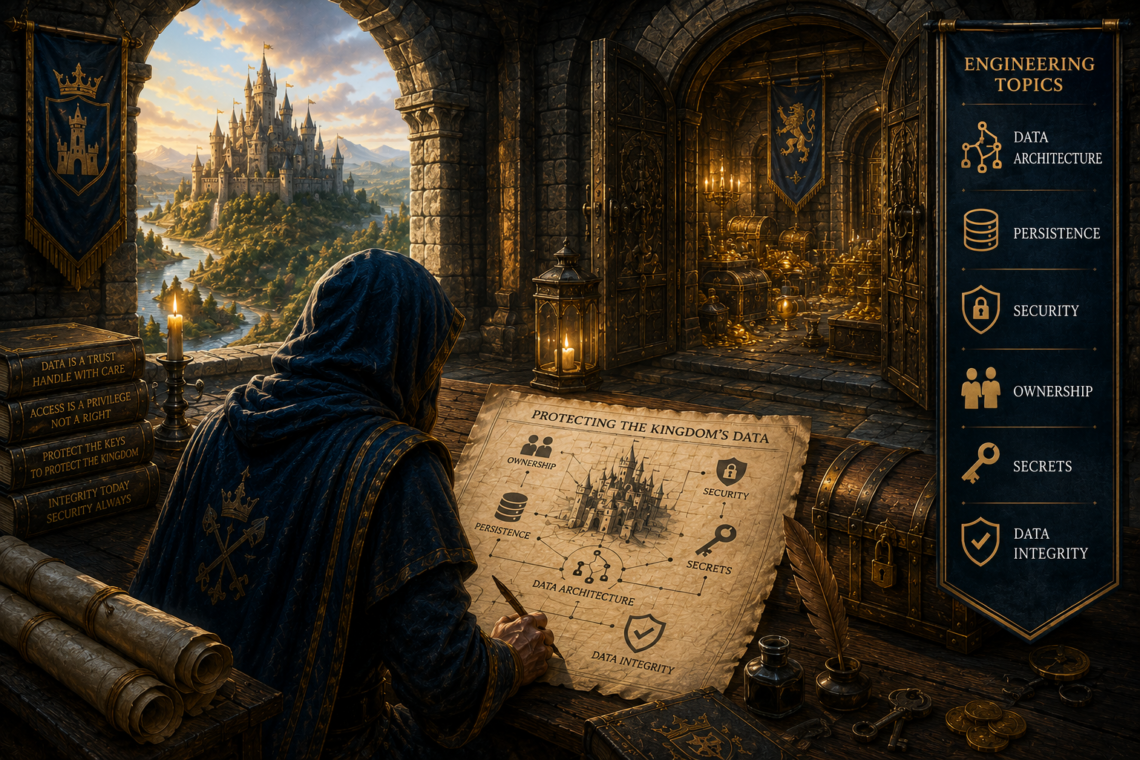
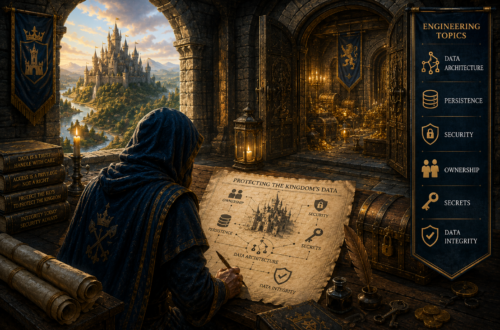
The Royal Treasury: Protecting the Kingdom’s Data
The kingdom’s greatest treasure is not its gold, but who guards it. Every successful software system eventually becomes responsible for something far more valuable than the application itself. During its earliest days, a project may consist of little more than a handful of pages, a modest database, and enough business logic to solve a single problem. As the software matures, however, customers begin entrusting it with personal information, financial transactions, authentication credentials, business records, intellectual property, and years of institutional knowledge. Without anyone announcing the moment it happens, the application becomes the keeper of a treasury whose value far exceeds the cost of constructing the software. Many developers begin their…
-
Dividing the Kingdom: Finding the Right Boundaries
A realm divided too soon may fall before it ever grows. Software architecture has a way of making every difficult decision appear deceptively simple. A whiteboard fills with neatly drawn boxes connected by clean lines, and suddenly an application that once fit comfortably into a single project has become a collection of independent services. Every box promises greater flexibility, cleaner organization, and limitless room for future growth. Years spent designing, maintaining, and repairing production systems eventually teach every architect the same lesson. Every boundary carries a cost that will be paid long after the diagram has been erased. This week, as we continue Designing the Realm, we are moving beyond…
-
The Roads Between Cities: Building APIs Worth Trusting
Kingdoms prosper because their roads are trusted as much as their walls. A castle can stand for centuries and still preside over a dying realm. Towering walls may discourage invaders, magnificent keeps may inspire admiration, and disciplined soldiers may protect the capital, but none of those accomplishments guarantee prosperity. A thriving civilization depends upon something far less glamorous. Merchants must reach distant markets, royal couriers must carry news without delay, craftsmen must exchange ideas across provinces, and neighboring cities must cooperate toward common goals. Long before history remembers the greatness of a realm, it first remembers whether its roads could be depended upon. Software architecture follows the same principle. Well-designed…
-
The Curse of Premature Fortification
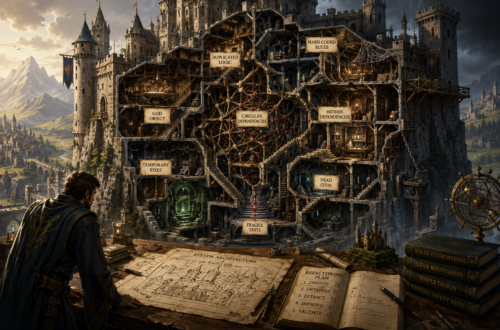
Not every empty field needs a fortress. Software rarely becomes difficult to maintain because developers lacked technical ability. More often, intelligent engineers create long-term maintenance problems by solving challenges that have not yet appeared. A project begins with a handful of straightforward requirements, but its structure quickly expands to accommodate hypothetical integrations, future scalability, interchangeable components, and extension points that may never become necessary. Before long, the codebase grows steadily larger while the problem it exists to solve remains remarkably small. Long before the application reaches maturity, supporting the design requires nearly as much effort as advancing the product itself. Good design prepares software to evolve as knowledge grows. Premature…
-
Building for Today’s Quest or Tomorrow’s Empire?
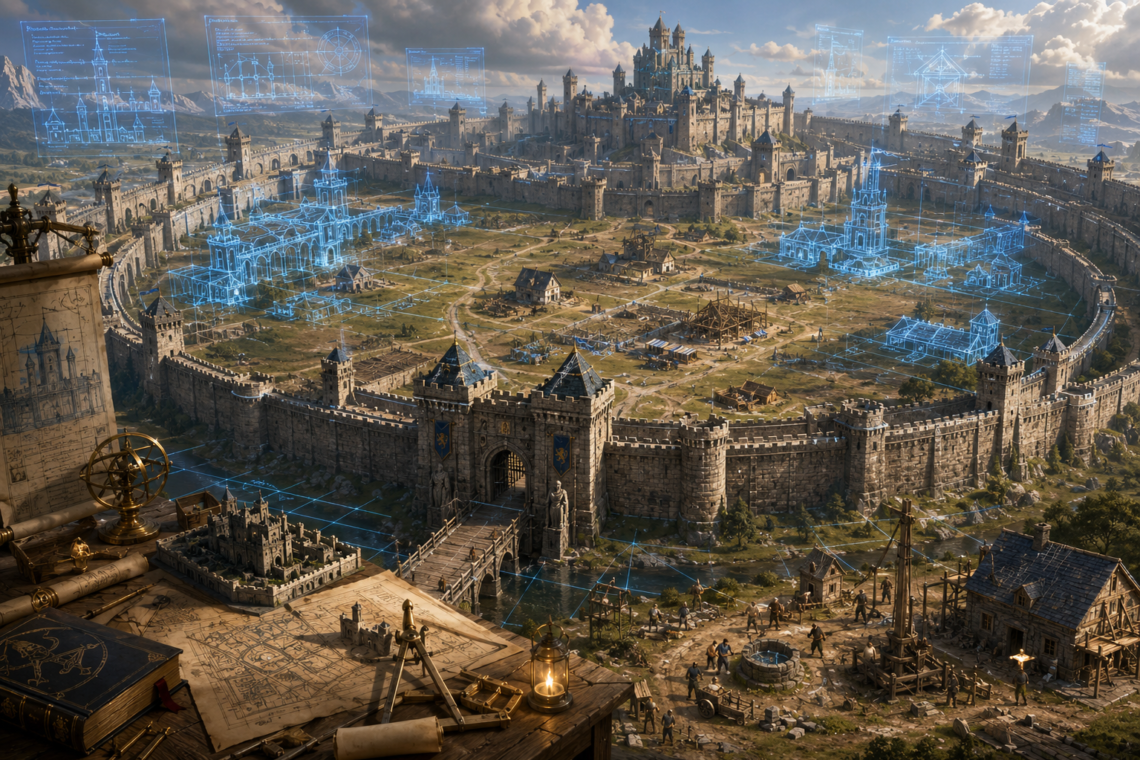
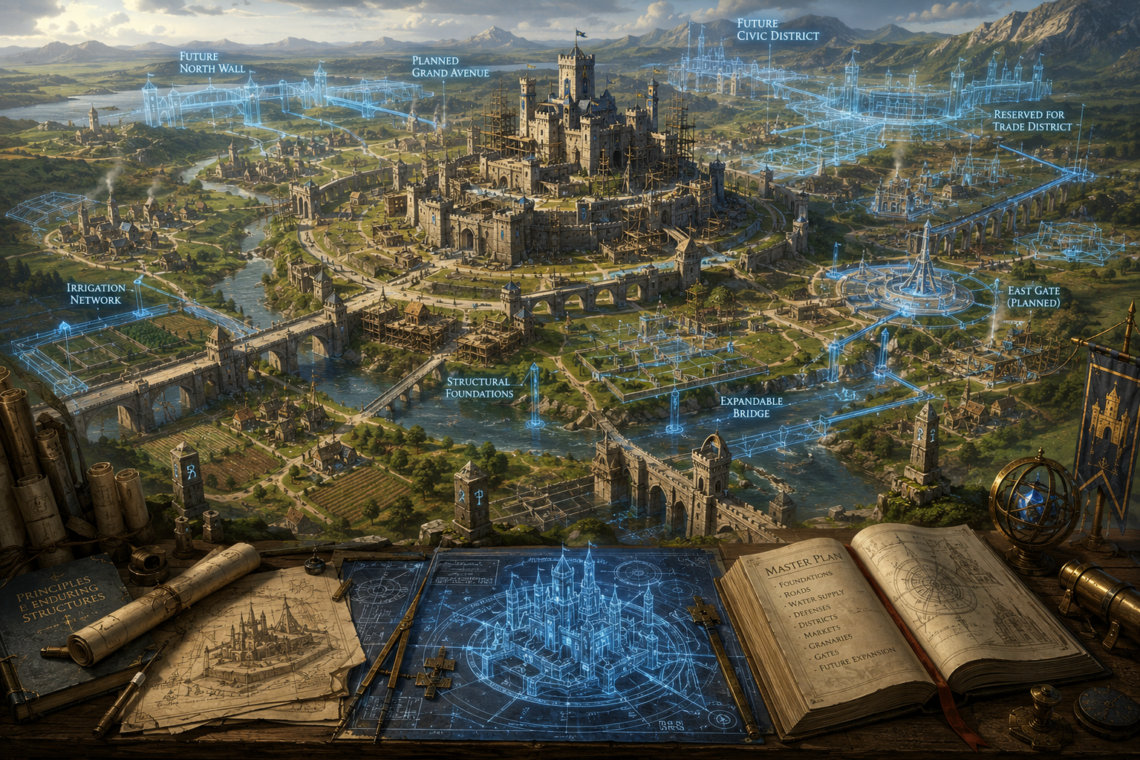
Every shortcut is a promise the future must eventually keep. The First Road Beyond the Castle Gates Long before a kingdom becomes an empire, someone chooses where the first road will be built. Travelers may never remember who laid those stones, but generations will depend upon the decision. Software is built much the same way. Long before users celebrate new features, someone quietly decides how the application will grow, how its parts will work together, and whether future engineers will inherit a thriving kingdom or spend their days repairing crumbling foundations. When I first began writing software, I believed every project had a finish line. Complete the feature, fix the…