-
Renting the Wizard’s Tower: Understanding Cloud Infrastructure
Owning every stone is not the same as controlling the kingdom. In the previous chapter of The Kingdom in the Clouds, Kubernetes provided a way to coordinate workloads across multiple machines. Pods could be replaced, deployments could maintain the desired state, and services could provide changing workloads with stable ways to communicate. That solved an important orchestration problem, but it left a deeper question unanswered: where do those machines come from, who maintains them, and how much responsibility should belong to the team running the application? Every container eventually consumes real processor time, memory, storage, and network capacity somewhere. Cloud infrastructure begins with the recognition that those resources have not…
-
The Keeper of a Thousand Castles: Understanding Kubernetes
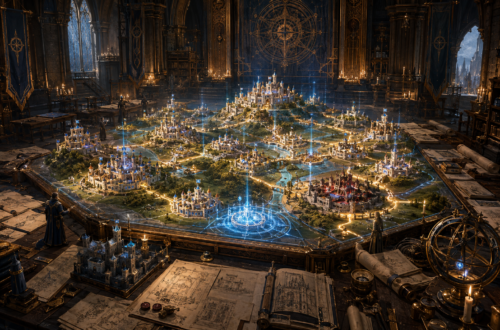
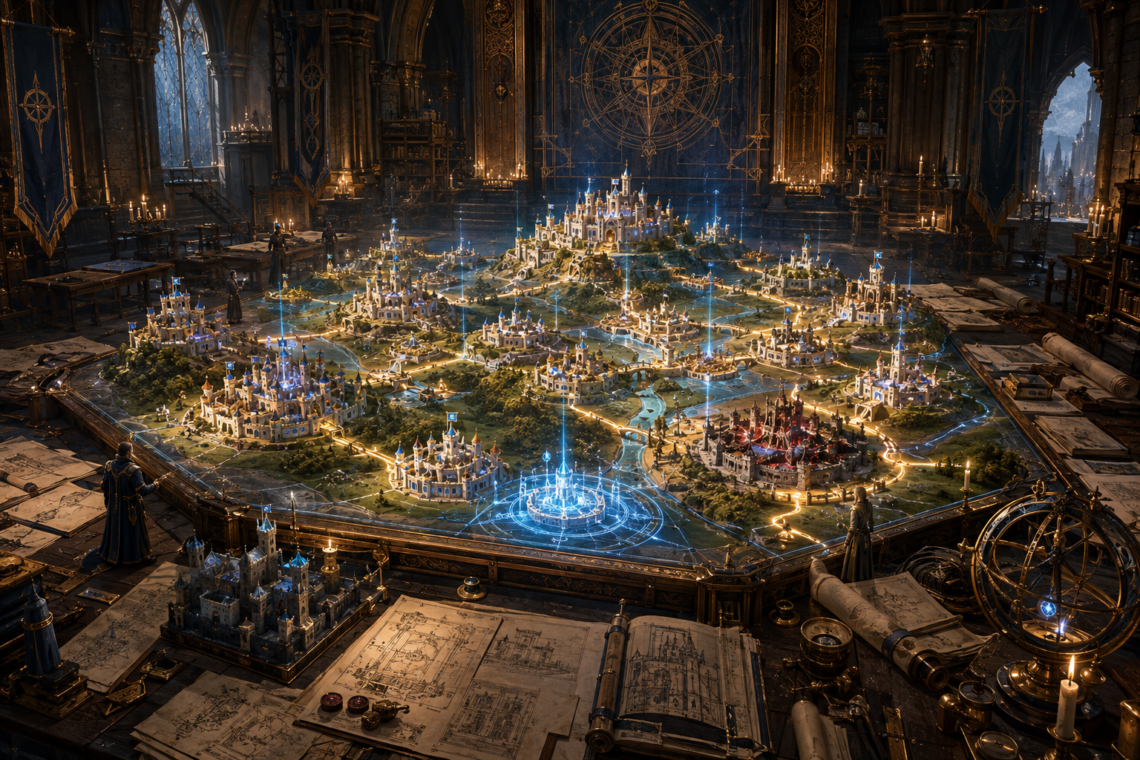
When the kingdom grows beyond a few castles, someone must decide where every banner flies. A single container is easy to understand. You package an application, start it, expose a port, and watch it run. Add a database, cache, and supporting service, and Docker Compose can organize the small caravan well enough for development and modest deployments. The trouble begins when that caravan becomes a kingdom. Once dozens or hundreds of containers must remain available across multiple machines, the difficult question is no longer how to start them. The difficult question becomes who keeps track of everything after you stop watching. Imagine a kingdom dotted with castles. Each needs guards,…
-
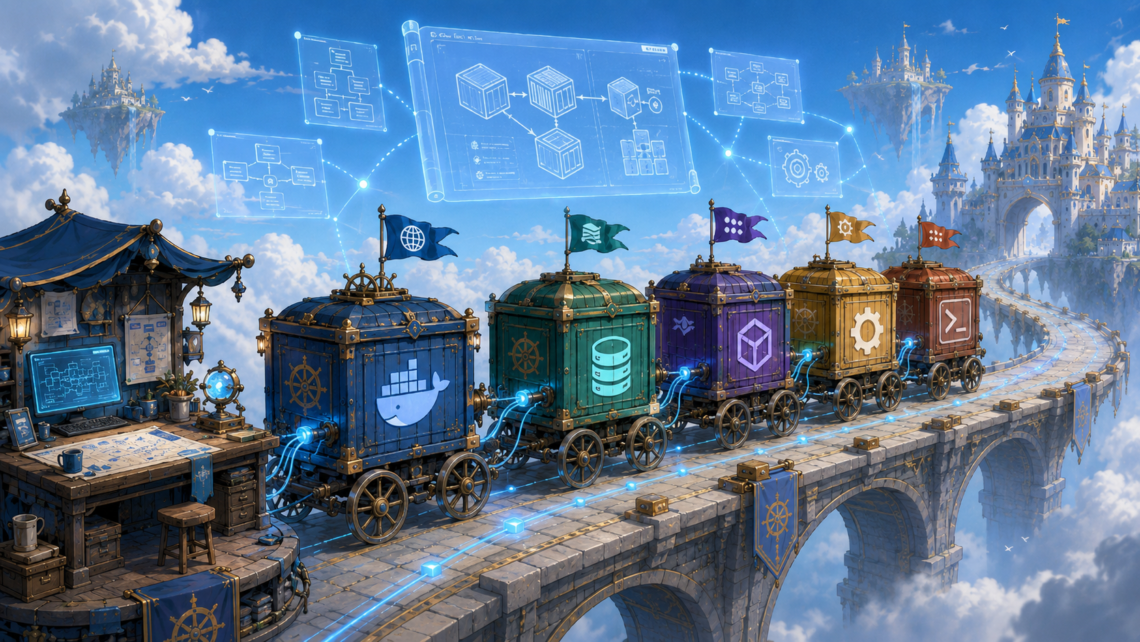
The Caravan of Services: Composing Containerized Applications
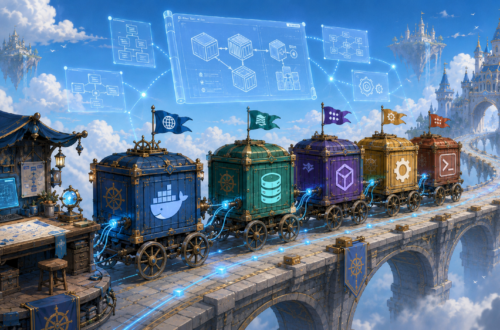
One wagon may travel alone, but a kingdom moves as a caravan. Beyond the Castle Gate: From Containers to Applications Packing a workshop into a container solves an important problem, but it does not solve the entire journey. In the previous chapter of The Kingdom in the Clouds, we explored how containers package an application together with the runtime, libraries, and dependencies it needs to operate consistently. That gives engineers a portable unit that can travel from a development machine to a test environment and eventually into production with far fewer surprises. Yet most modern applications are not single workshops sealed inside single wagons. They are collections of services, databases,…
-
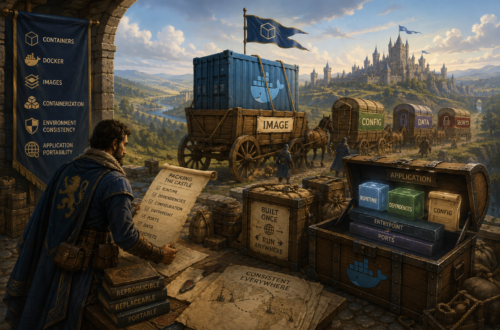
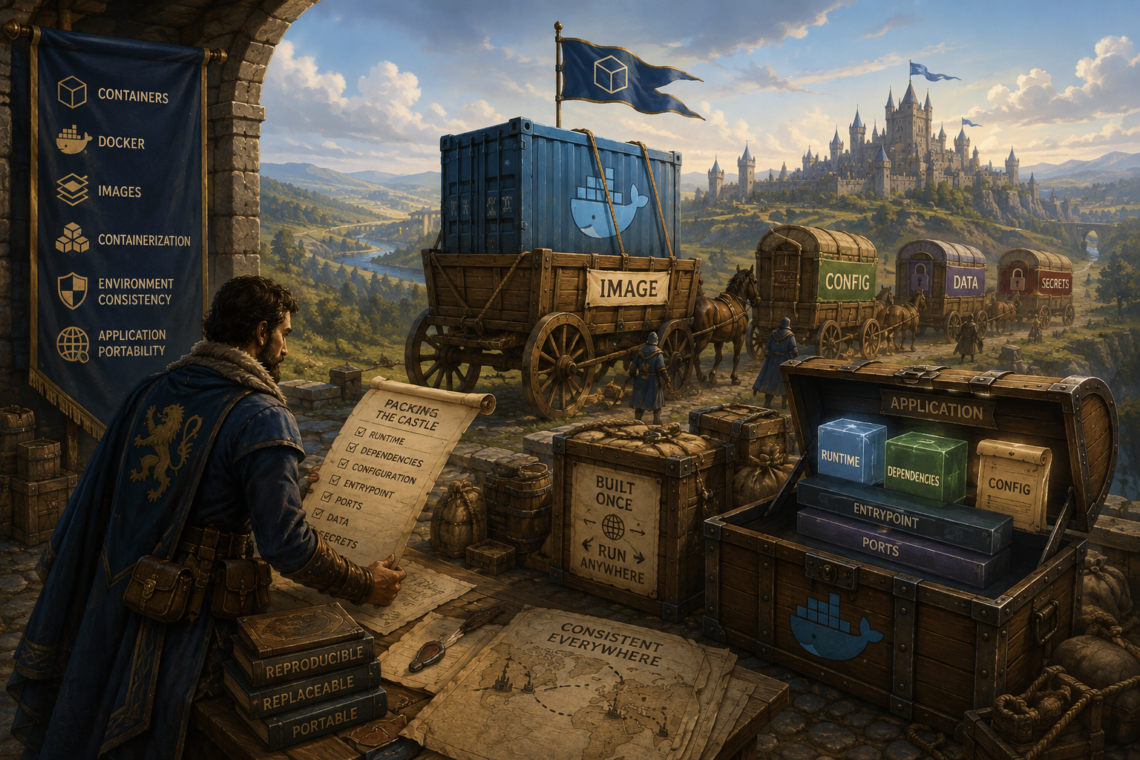
Packing the Castle: Understanding Containers
A well-packed workshop should work the same no matter where the road carries it. There is a particular kind of software failure that becomes almost funny after you have encountered it enough times. An application works perfectly on one developer’s machine, refuses to cooperate on another, behaves differently in testing, and then develops an entirely new personality after deployment. The code is the same, the database is supposedly the same, and everyone involved is reasonably certain that the necessary dependencies were installed. Yet somewhere between one machine and another, the application crossed an invisible border and discovered that the laws of physics had changed. For years, software teams fought these…
-
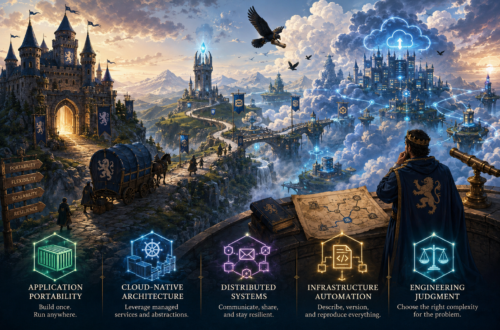
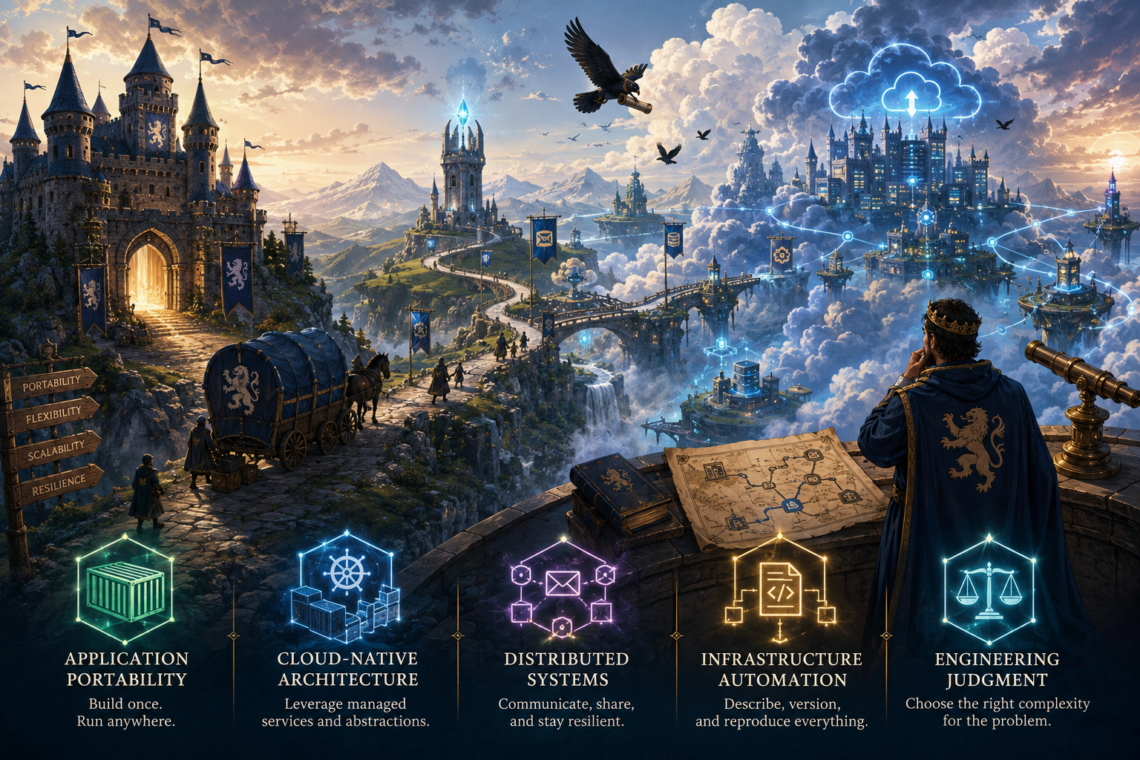
The Kingdom in the Clouds: When Software Leaves the Castle
The strongest kingdoms are not bound to a single castle, but built to endure wherever their people must go. For much of software history, we built applications as though we were building castles. The walls gave us boundaries. We knew where the application lived, where its data lived, and which machines carried the work. Even complicated systems offered a comforting sense of geography because their important pieces occupied places engineers could identify and understand. When something failed, there was usually a server, process, database, or network connection somewhere that could be examined. Modern software has been steadily dismantling that certainty. Applications move between environments, workloads appear and disappear, and infrastructure…
-
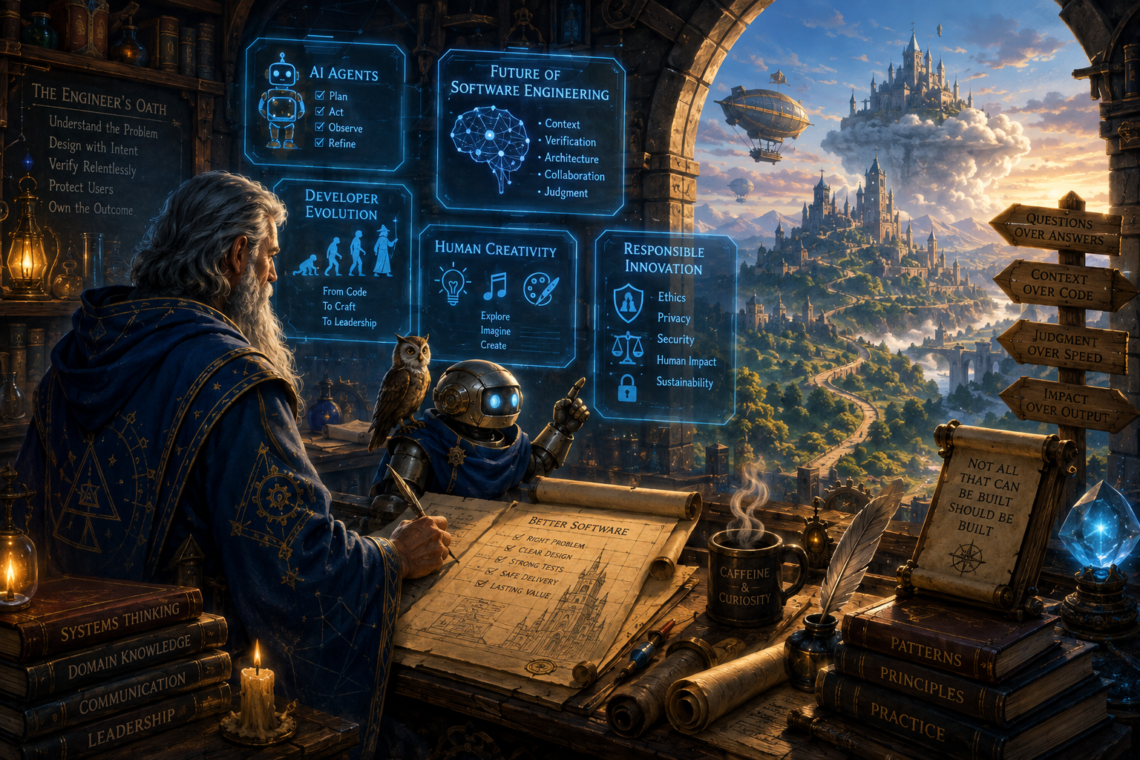
The Workshop of Tomorrow: The Future of AI-Assisted Software Engineering
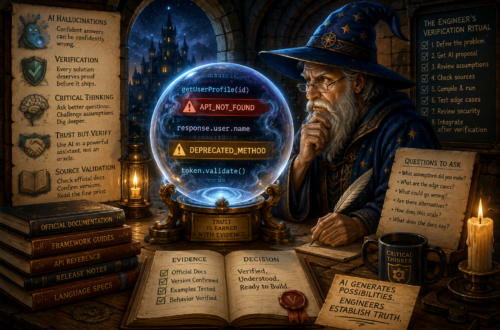
Every generation of wizards inherits greater magic and greater responsibility. There was a time when the most valuable object in a wizard’s workshop was the spellbook. It contained knowledge that had taken generations to discover and preserve, and a young wizard might spend years learning its incantations before being trusted to use them. Then imagine placing an enchanted tome on the workbench that could produce a new spell on demand, explain unfamiliar enchantments, repair damaged runes, and occasionally invent an incantation that sounded perfectly legitimate but summoned absolutely nothing. The workshop would become more productive almost overnight, but it would not become simpler. Software engineering has entered that workshop. AI-assisted…
-
Building New Kingdoms Overnight: Rapid Prototyping with AI
True magic does not eliminate the work. It allows impossible journeys to begin before sunrise. There is a particular kind of engineering work that becomes expensive long before anyone has written much code. A team spends weeks debating architecture, defining abstractions, estimating implementation effort, and defending assumptions about users who have not yet touched the product. By the time the first working version appears, the original question has often been buried beneath the machinery built to answer it. Rapid prototyping exists to reverse that sequence, not by eliminating engineering discipline, but by moving learning earlier in the process. Instead of investing heavily before discovering whether an assumption is true, engineers…
-
The Guild of Many Minds: Collaborative Engineering in the Age of AI
The strongest enchantments emerge only after every wizard has challenged the spell. There is a peculiar temptation that arrives with powerful tools. When an engineer can describe a problem to an AI system and receive working code seconds later, software development begins to feel increasingly individual. A developer can explore an unfamiliar library, draft an implementation, generate tests, inspect an error, and revise the solution without asking another person to leave whatever they are doing. The enchanted workshop suddenly contains a tireless apprentice who is always available and remarkably quick with a quill. Yet the more capable that apprentice becomes, the easier it is to forget one of the oldest…
-
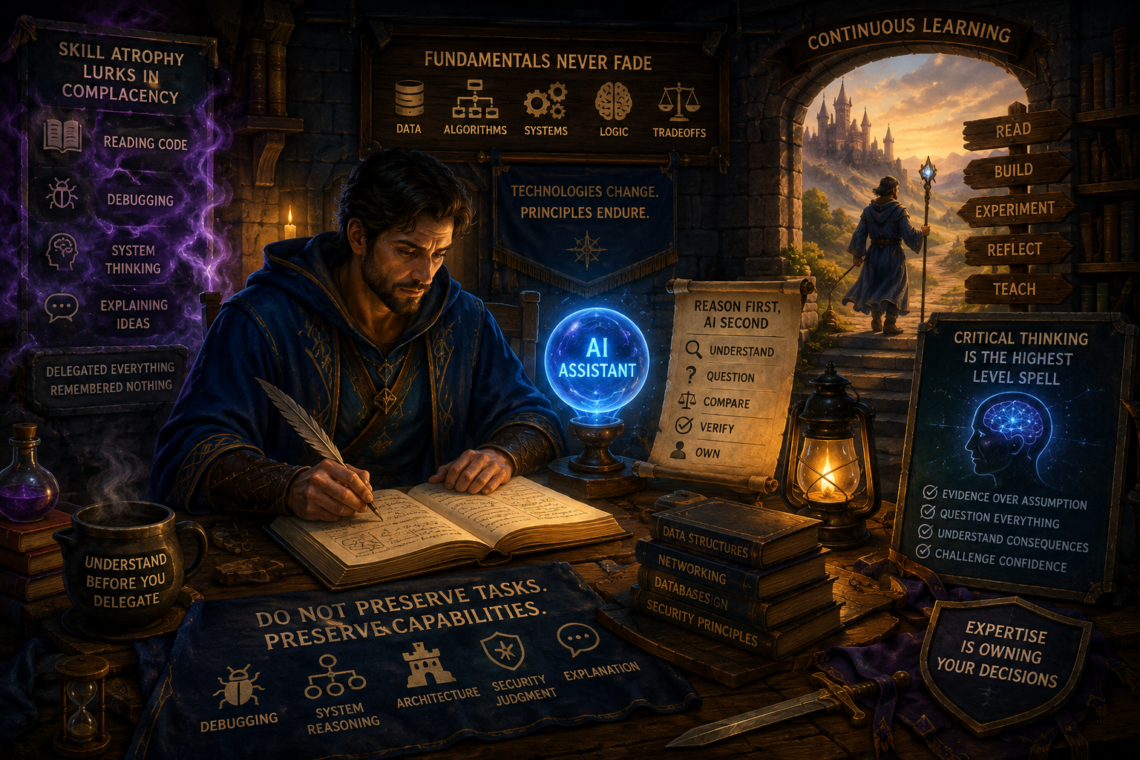
The Wizard Who Forgot Magic: Keeping Your Engineering Skills Sharp
A wand should extend the wizard’s reach, never replace the wizard’s mind. There is an uncomfortable possibility hiding inside every tool that makes us faster: eventually, we may become less capable without it. Software engineers have lived with versions of this problem for decades. Integrated development environments remember syntax, frameworks abstract away infrastructure, libraries package difficult algorithms, and search engines place decades of accumulated knowledge within seconds of our keyboards. Artificial intelligence simply pushes that progression much further. It can now write functions, explain unfamiliar code, generate tests, propose architectures, diagnose errors, and transform a vague requirement into something that looks remarkably close to finished software. That capability is enormously…
-
Forbidden Tomes: AI, Security, and Responsible Engineering
Some spells are dangerous not because they fail, but because they succeed too easily. Every workshop eventually acquires a locked cabinet. The books inside are not necessarily evil, and the spells written across their pages may be extraordinarily useful. They are locked away because their power changes the consequences of carelessness. Artificial intelligence has reached a similar place in software engineering. The same tools that can explain unfamiliar code, generate tests, draft documentation, analyze failures, and accelerate development can also expose confidential information, introduce vulnerabilities, recommend questionable dependencies, or quietly move protected intellectual property beyond boundaries an engineer never intended to cross. Responsible AI engineering is therefore more complicated than…