-
The Workshop of Tomorrow: The Future of AI-Assisted Software Engineering
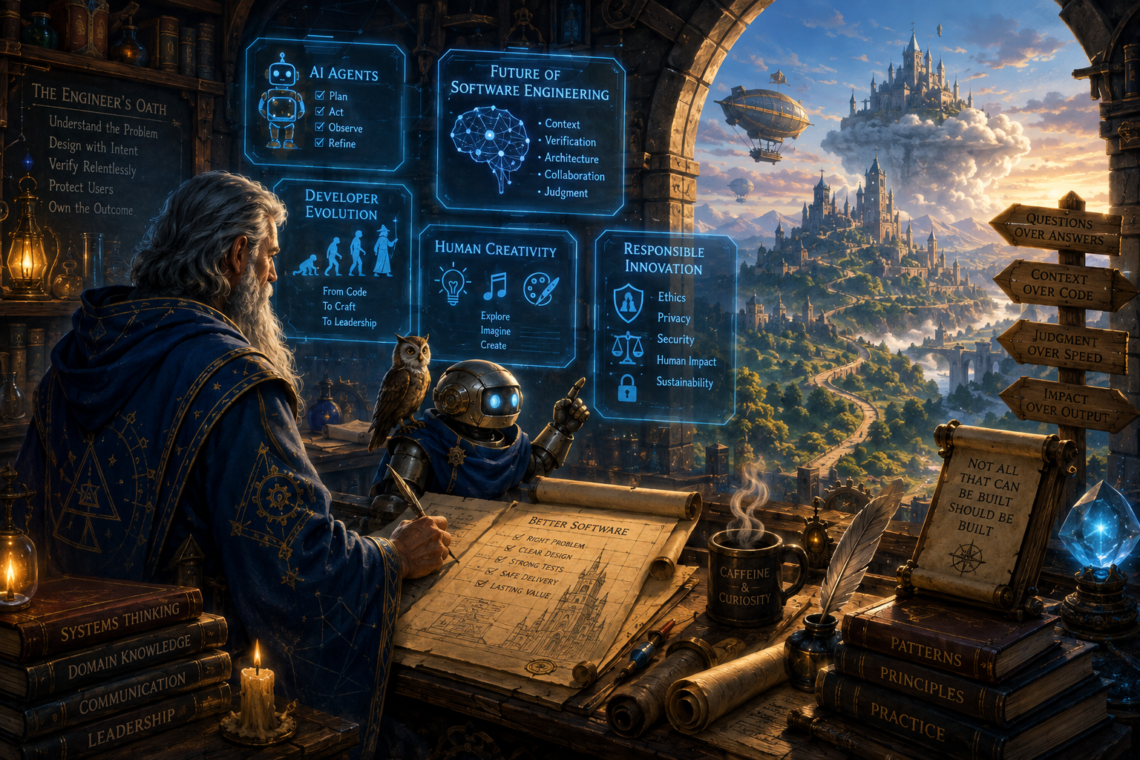
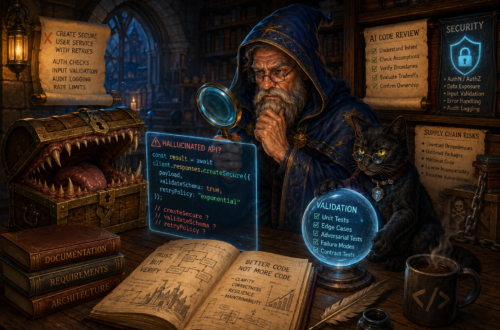
Every generation of wizards inherits greater magic and greater responsibility. There was a time when the most valuable object in a wizard’s workshop was the spellbook. It contained knowledge that had taken generations to discover and preserve, and a young wizard might spend years learning its incantations before being trusted to use them. Then imagine placing an enchanted tome on the workbench that could produce a new spell on demand, explain unfamiliar enchantments, repair damaged runes, and occasionally invent an incantation that sounded perfectly legitimate but summoned absolutely nothing. The workshop would become more productive almost overnight, but it would not become simpler. Software engineering has entered that workshop. AI-assisted…
-
Speaking the Language of Spells: Prompt Engineering That Works
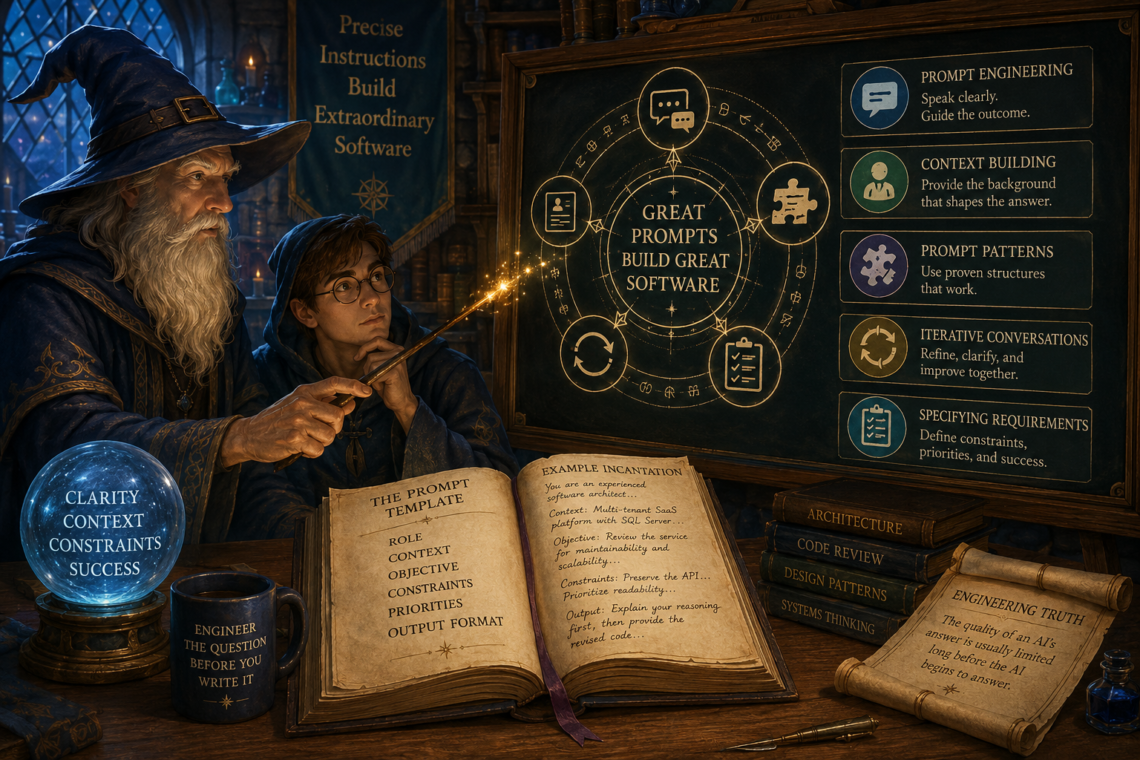
Magic obeys precision far more faithfully than intention. Artificial intelligence has changed the way software engineers approach daily work, but it has not changed the fundamentals of engineering itself. Every successful project still depends upon communicating requirements clearly, defining constraints carefully, and evaluating results critically. AI simply introduces a new participant into that familiar conversation. Instead of translating business requirements directly into code, we now spend part of our time translating engineering intent into language that another intelligent system can understand. The quality of that translation often determines whether AI becomes a valuable collaborator or an expensive distraction. As in every other engineering discipline, success depends less on discovering secret…
-
Building Skills That Actually Matter
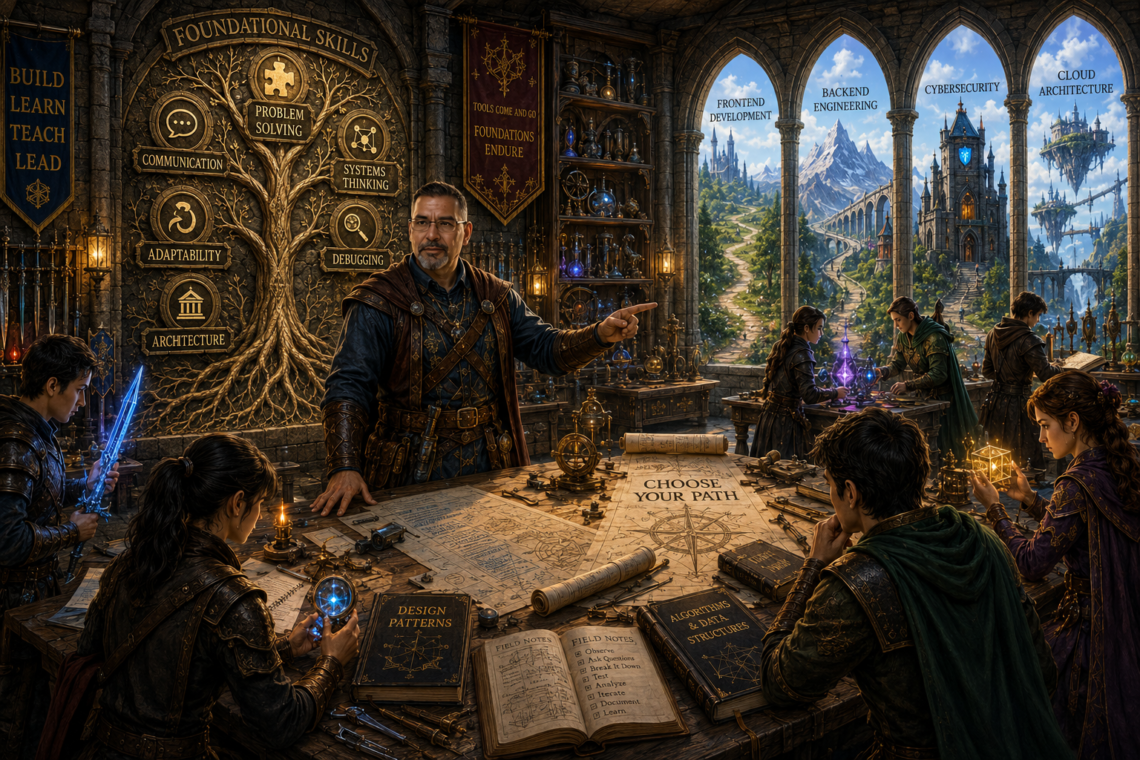
The realm rewards more than talent. Learn the skills that survive beyond tutorials and trends. When new adventurers first enter a guild hall, they tend to focus on the same question. Which class should I choose? Some are drawn to warriors because they appear dependable and powerful. Others are fascinated by wizards because of the possibilities that magic provides. Rangers, rogues, clerics, and bards all offer their own attractions. New developers often approach technology in exactly the same way. They ask whether they should become frontend developers, backend engineers, cybersecurity specialists, cloud architects, or data professionals. While the question is understandable, I have learned over the years that it is…
-
From Interface to Infrastructure
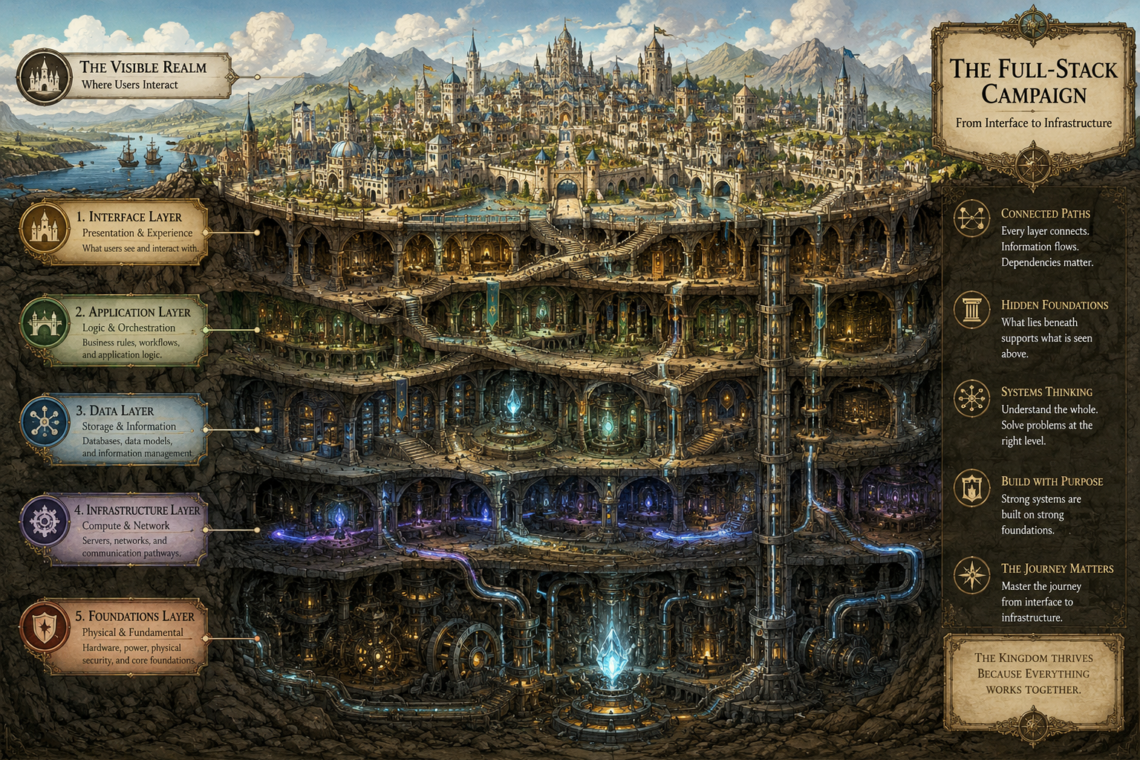
Before adventurers can explore the world, they must understand the rules that shape it. Editor’s Note Before appearing as the opening chapter of The Full-Stack Campaign: From Interface to Infrastructure, this article first appeared on RandomThoughtsInTraffic.com as an exploration of why developers often struggle when their knowledge remains confined to a single layer of the technology stack. This revised and expanded edition examines how information travels through modern web applications, explores the relationships between browsers, APIs, servers, databases, and infrastructure, and establishes the systems-oriented mindset that guides the remainder of the series. New material includes expanded architectural examples, a deeper discussion of specialization within software development, and a practical examination…
-
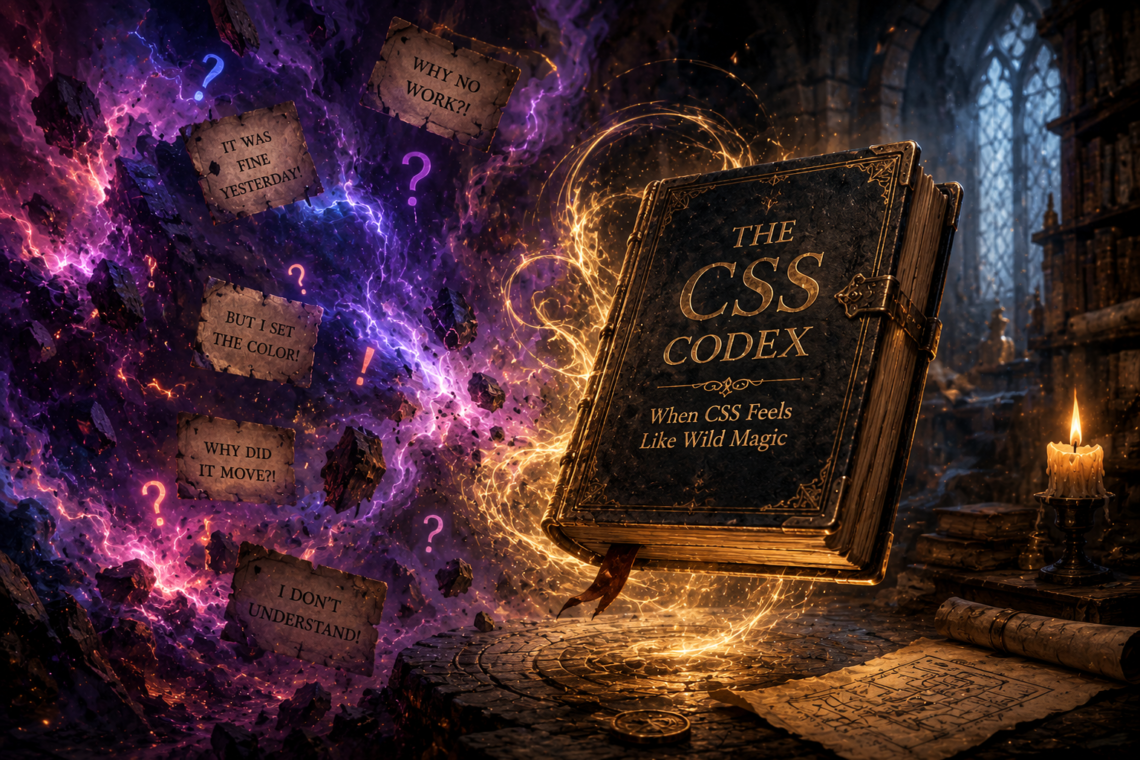
When CSS Feels Like Wild Magic
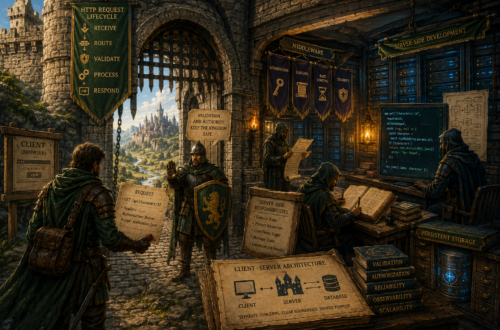
What appears to be chaos is often a spell whose rules remain unseen. Editor’s Note: Before joining The CSS Codex: Mastering the Rules of the Realm, When CSS Feels Like Wild Magic first appeared on RandomThoughtsInTraffic.com. This revised and expanded StackNScroll edition revisits one of the most persistent misconceptions in web development: the belief that CSS behaves unpredictably. New material connects the cascade, specificity, inheritance, layout calculations, positioning systems, rendering behavior, and architectural decision-making into a unified model that treats CSS as a deterministic system rather than a collection of disconnected techniques. The goal of this updated edition is not simply to explain why CSS can feel confusing, but to…