-
Forbidden Tomes: AI, Security, and Responsible Engineering
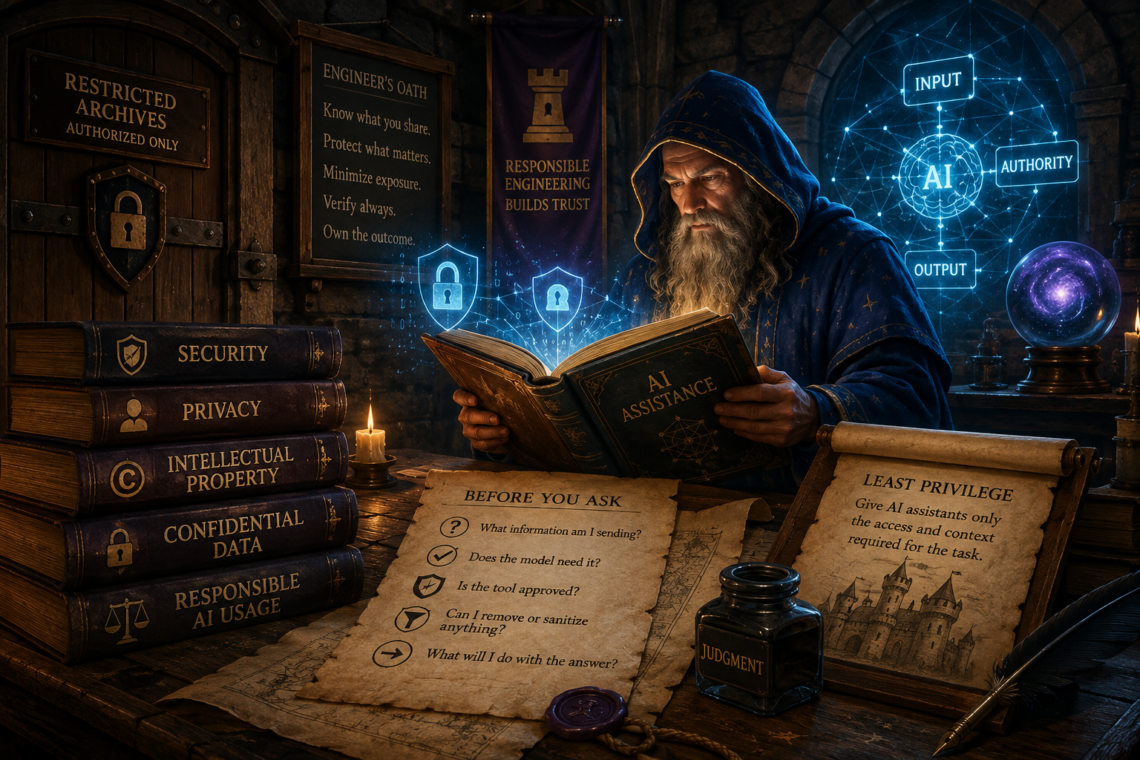
Some spells are dangerous not because they fail, but because they succeed too easily. Every workshop eventually acquires a locked cabinet. The books inside are not necessarily evil, and the spells written across their pages may be extraordinarily useful. They are locked away because their power changes the consequences of carelessness. Artificial intelligence has reached a similar place in software engineering. The same tools that can explain unfamiliar code, generate tests, draft documentation, analyze failures, and accelerate development can also expose confidential information, introduce vulnerabilities, recommend questionable dependencies, or quietly move protected intellectual property beyond boundaries an engineer never intended to cross. Responsible AI engineering is therefore more complicated than…
-
The Mimic in the Library: Trusting AI Without Being Fooled
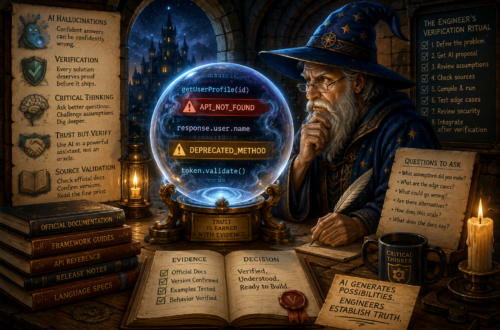
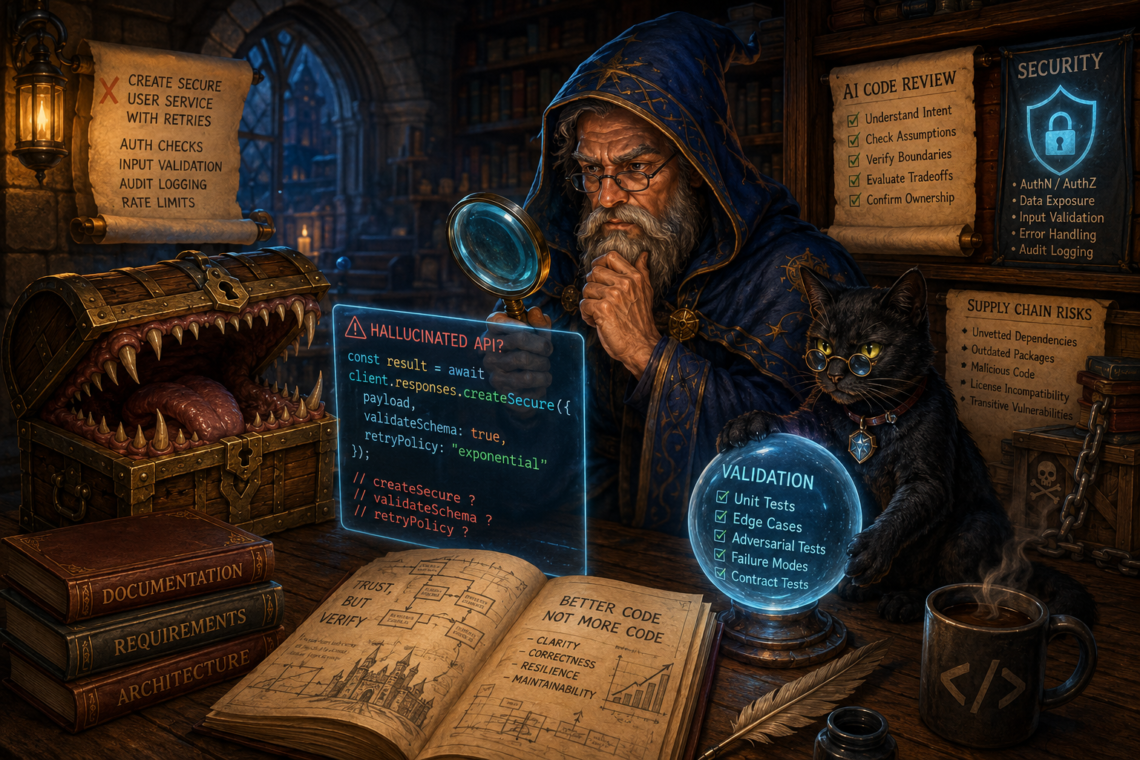
Not every answer wearing the robes of wisdom deserves your trust. There is a particular danger experienced adventurers learn to fear more than an obvious monster. A dragon announces itself with fire, claws, and a considerable disregard for local building codes. A mimic survives by looking useful. AI-generated production code can present the same problem. The function is clean, the naming is sensible, and the explanation sounds authoritative. Nothing immediately signals that somewhere inside it sits an incorrect assumption, a nonexistent API, a security weakness, or an architectural decision that does not belong in production. Modern AI tools are remarkably good at producing plausible code. Given a clear request, they…