-
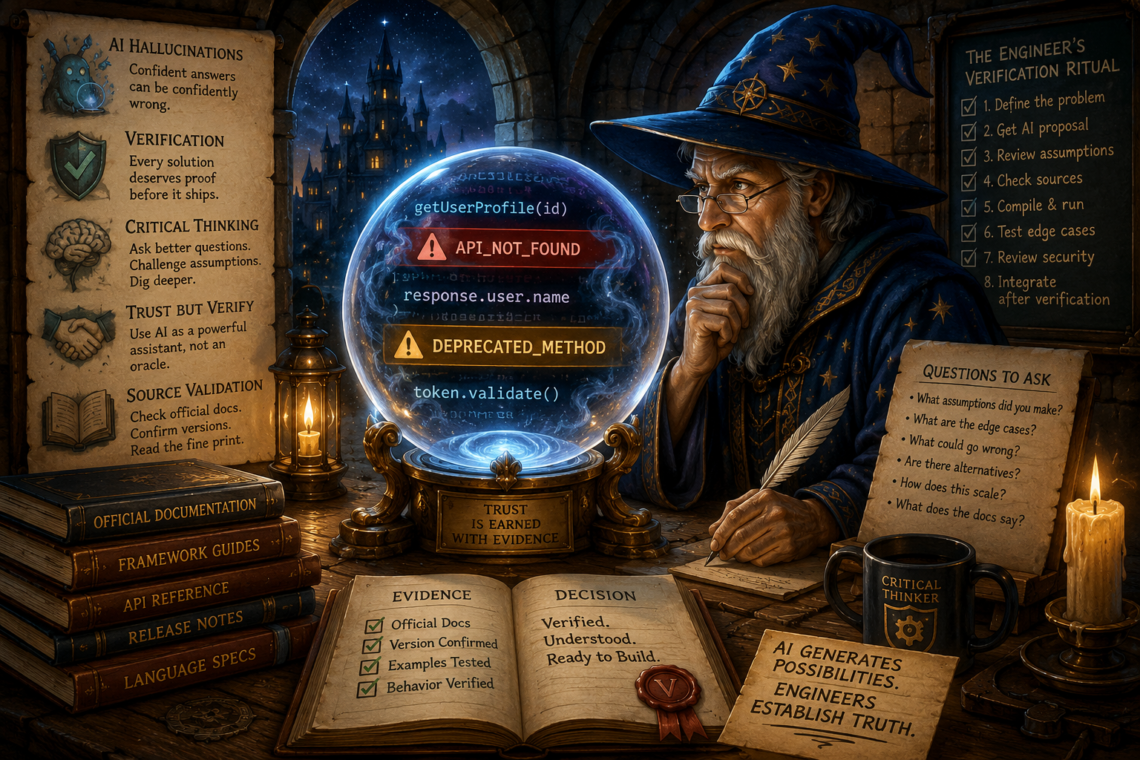
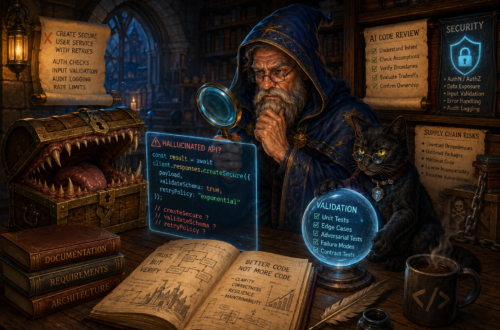
The Crystal Ball Lies Sometimes: Verifying AI Before You Trust It
Even enchanted mirrors occasionally reflect impossible futures. Artificial intelligence has rapidly become one of the most productive tools ever placed into the hands of software engineers. It can explain unfamiliar concepts, generate working prototypes, refactor decades-old code, write unit tests, summarize documentation, and even identify subtle defects that would otherwise escape notice. After spending only a few weeks working alongside modern AI systems, it becomes difficult to imagine returning to a workflow that depends entirely on search engines, reference manuals, and trial-and-error. Yet every experienced engineer eventually encounters a moment that changes the relationship. Perhaps the generated code compiles perfectly while quietly introducing a race condition. Perhaps an API appears…
-
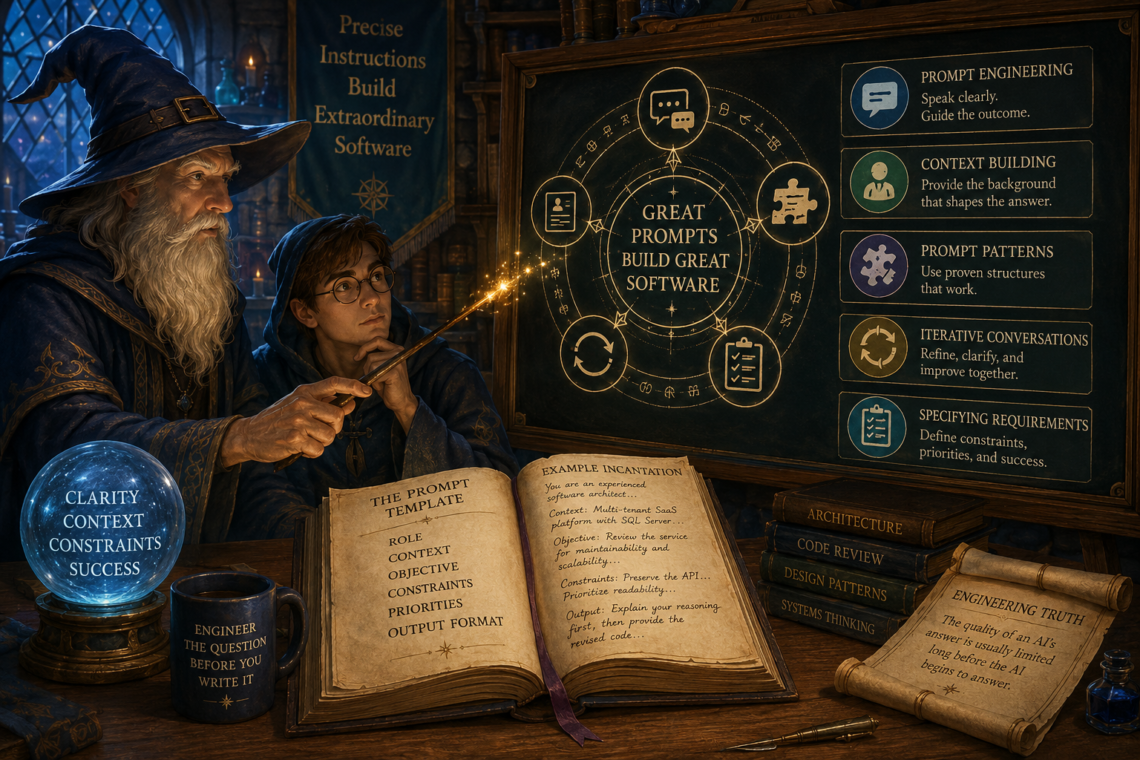
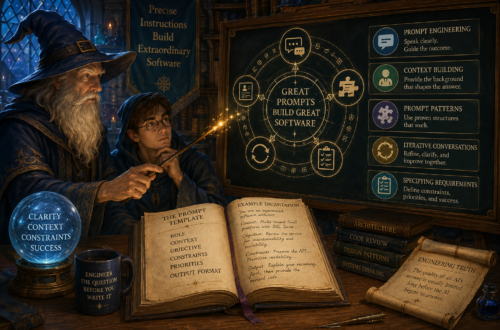
Speaking the Language of Spells: Prompt Engineering That Works
Magic obeys precision far more faithfully than intention. Artificial intelligence has changed the way software engineers approach daily work, but it has not changed the fundamentals of engineering itself. Every successful project still depends upon communicating requirements clearly, defining constraints carefully, and evaluating results critically. AI simply introduces a new participant into that familiar conversation. Instead of translating business requirements directly into code, we now spend part of our time translating engineering intent into language that another intelligent system can understand. The quality of that translation often determines whether AI becomes a valuable collaborator or an expensive distraction. As in every other engineering discipline, success depends less on discovering secret…
-
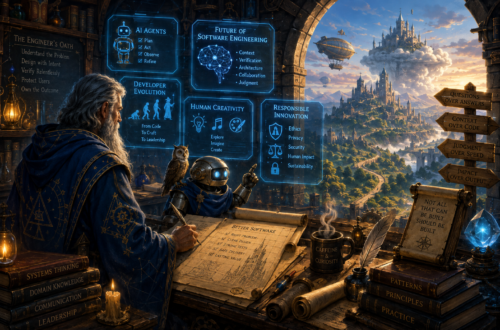
The Wizard’s New Apprentice: Working Alongside AI
The greatest familiar is still only as wise as the wizard who commands it. Every generation of software engineers encounters a tool that promises to change the profession forever. Assembly language gave way to higher-level languages. Manual deployments yielded to continuous integration and continuous delivery. Virtual machines evolved into cloud platforms. Each innovation made building software faster, but none diminished the importance of sound engineering judgment. Artificial intelligence represents the latest transformation in that long history. It is a remarkable addition to the workshop, but it remains exactly that: an addition. The craft itself has not changed nearly as much as the tools we use to practice it. The excitement…