-
Building New Kingdoms Overnight: Rapid Prototyping with AI
True magic does not eliminate the work. It allows impossible journeys to begin before sunrise. There is a particular kind of engineering work that becomes expensive long before anyone has written much code. A team spends weeks debating architecture, defining abstractions, estimating implementation effort, and defending assumptions about users who have not yet touched the product. By the time the first working version appears, the original question has often been buried beneath the machinery built to answer it. Rapid prototyping exists to reverse that sequence, not by eliminating engineering discipline, but by moving learning earlier in the process. Instead of investing heavily before discovering whether an assumption is true, engineers…
-
The Guild of Many Minds: Collaborative Engineering in the Age of AI
The strongest enchantments emerge only after every wizard has challenged the spell. There is a peculiar temptation that arrives with powerful tools. When an engineer can describe a problem to an AI system and receive working code seconds later, software development begins to feel increasingly individual. A developer can explore an unfamiliar library, draft an implementation, generate tests, inspect an error, and revise the solution without asking another person to leave whatever they are doing. The enchanted workshop suddenly contains a tireless apprentice who is always available and remarkably quick with a quill. Yet the more capable that apprentice becomes, the easier it is to forget one of the oldest…
-
The Wizard Who Forgot Magic: Keeping Your Engineering Skills Sharp
A wand should extend the wizard’s reach, never replace the wizard’s mind. There is an uncomfortable possibility hiding inside every tool that makes us faster: eventually, we may become less capable without it. Software engineers have lived with versions of this problem for decades. Integrated development environments remember syntax, frameworks abstract away infrastructure, libraries package difficult algorithms, and search engines place decades of accumulated knowledge within seconds of our keyboards. Artificial intelligence simply pushes that progression much further. It can now write functions, explain unfamiliar code, generate tests, propose architectures, diagnose errors, and transform a vague requirement into something that looks remarkably close to finished software. That capability is enormously…
-
Forbidden Tomes: AI, Security, and Responsible Engineering
Some spells are dangerous not because they fail, but because they succeed too easily. Every workshop eventually acquires a locked cabinet. The books inside are not necessarily evil, and the spells written across their pages may be extraordinarily useful. They are locked away because their power changes the consequences of carelessness. Artificial intelligence has reached a similar place in software engineering. The same tools that can explain unfamiliar code, generate tests, draft documentation, analyze failures, and accelerate development can also expose confidential information, introduce vulnerabilities, recommend questionable dependencies, or quietly move protected intellectual property beyond boundaries an engineer never intended to cross. Responsible AI engineering is therefore more complicated than…
-
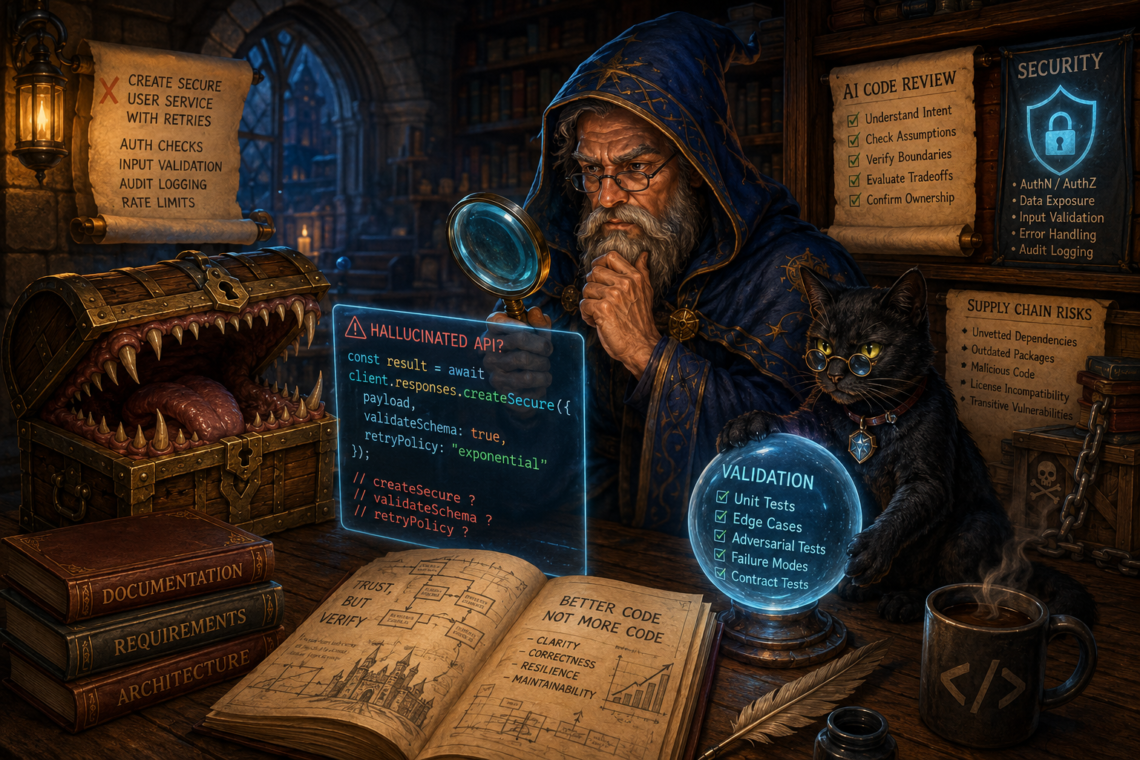
The Mimic in the Library: Trusting AI Without Being Fooled
Not every answer wearing the robes of wisdom deserves your trust. There is a particular danger experienced adventurers learn to fear more than an obvious monster. A dragon announces itself with fire, claws, and a considerable disregard for local building codes. A mimic survives by looking useful. AI-generated production code can present the same problem. The function is clean, the naming is sensible, and the explanation sounds authoritative. Nothing immediately signals that somewhere inside it sits an incorrect assumption, a nonexistent API, a security weakness, or an architectural decision that does not belong in production. Modern AI tools are remarkably good at producing plausible code. Given a clear request, they…
-
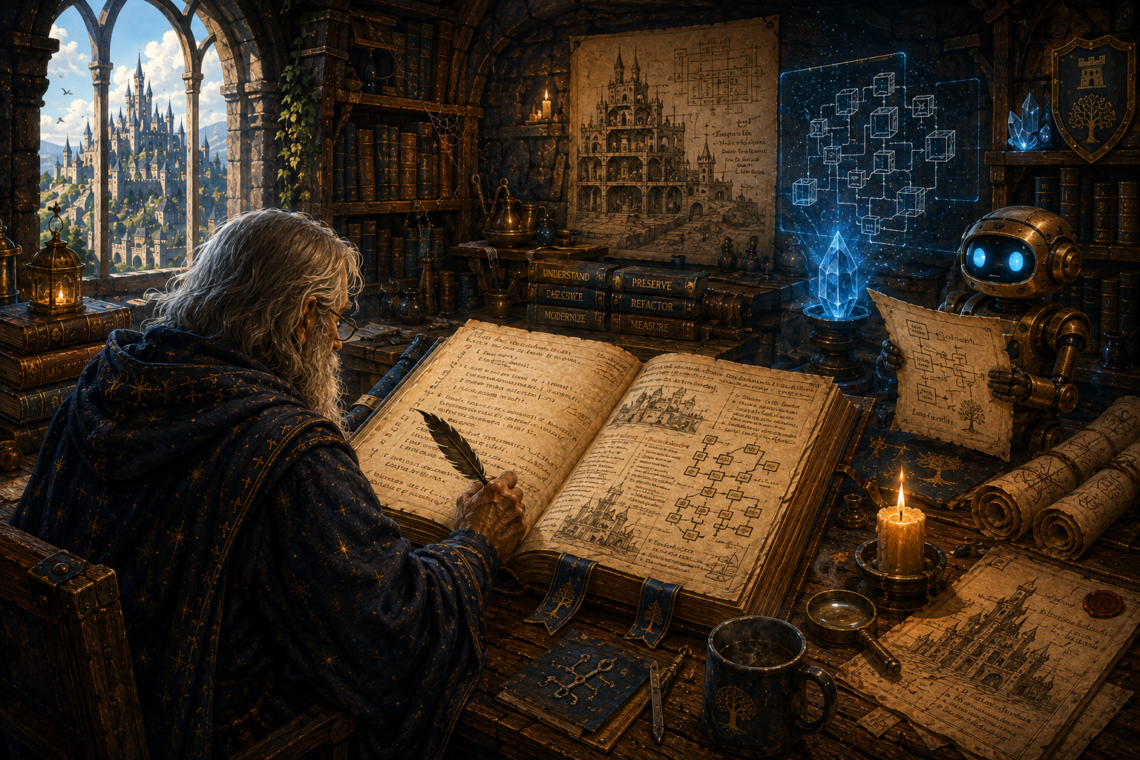
Restoring Ancient Spellbooks: Modernizing Legacy Code
Some of the greatest magic lies hidden beneath centuries of dust. There is a particular kind of software that almost every experienced engineer eventually encounters. It has been running for years, perhaps decades, quietly processing orders, generating reports, moving money, coordinating inventory, or supporting some other function the business cannot simply abandon. Its architecture reflects decisions made by developers who may have left long ago. Its dependencies have aged, its conventions belong to another era, and certain portions of the codebase are approached with the same caution a wizard might use when opening an ancient spellbook whose margins contain several generations of increasingly nervous annotations. The temptation is to look…
-
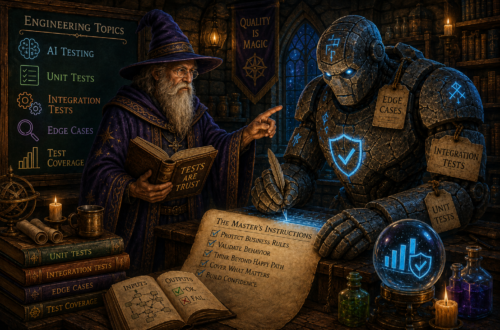
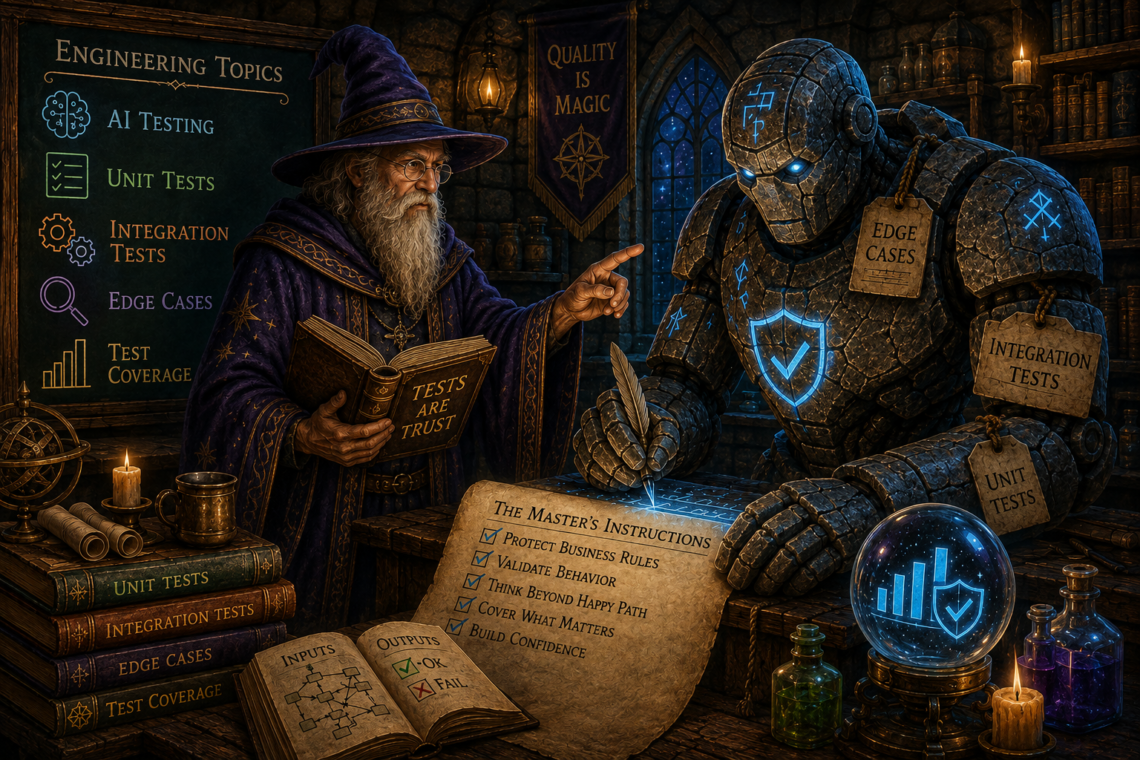
The Tireless Golem: Building Better Tests with AI
A servant who never sleeps must still be taught what success looks like. Software engineers have always searched for ways to reduce repetitive work without sacrificing quality. Compilers eliminated many manual mistakes. Continuous integration ensured that code could be validated automatically after every change. Static analysis exposed entire categories of defects before applications ever reached production. Each advancement freed engineers to spend more time solving meaningful problems instead of repeating mechanical tasks. Artificial intelligence represents another step along that path, but it introduces a subtle temptation. Because AI can generate code remarkably quickly, it is easy to assume it can generate equally effective tests with little oversight. Many developers discover…
-
The Endless Scribe: Writing Documentation with AI
The fastest quill is worthless if no one can read what it writes. Software has a remarkable ability to outlive the people who create it. A feature completed during a single sprint may continue serving customers for a decade. Entire engineering organizations evolve around systems whose original architects have long since moved on. New developers inherit the code, extend it, modernize it, and occasionally struggle against it without ever hearing the conversations that shaped its design. By the time software reaches maturity, its greatest challenge is rarely understanding what it does. The real challenge is understanding why thoughtful engineers decided it should behave that way. The software itself may remain…
-
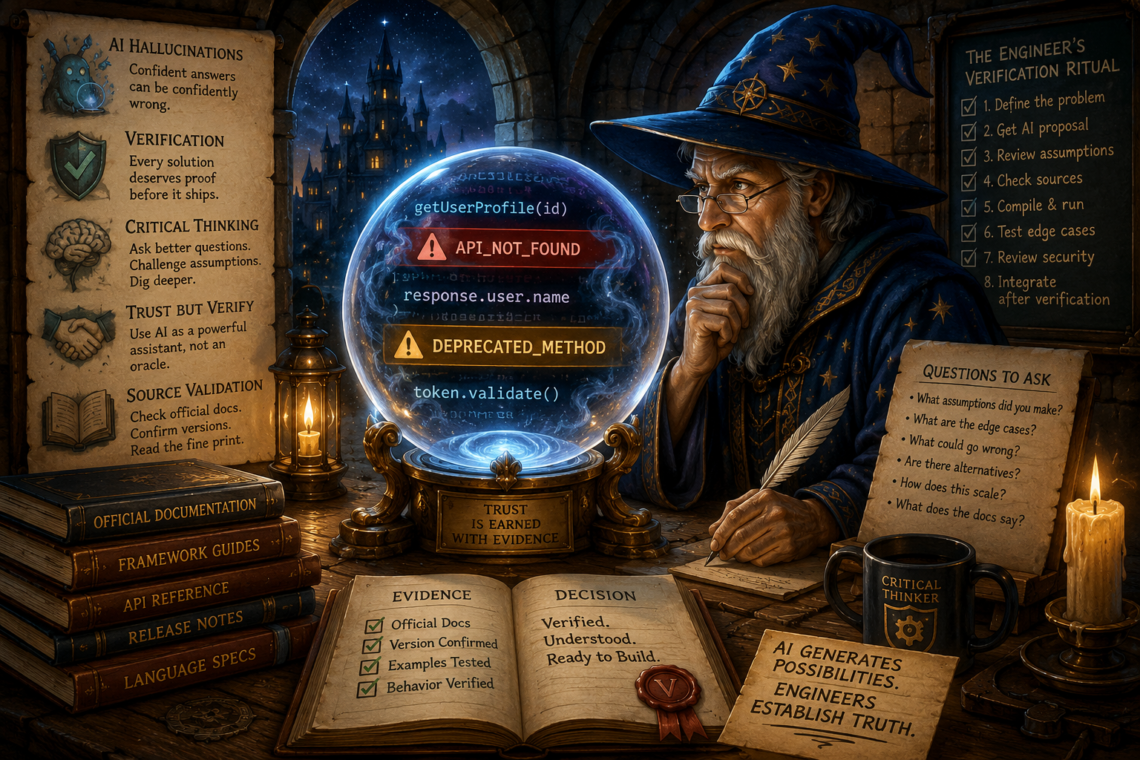
The Crystal Ball Lies Sometimes: Verifying AI Before You Trust It
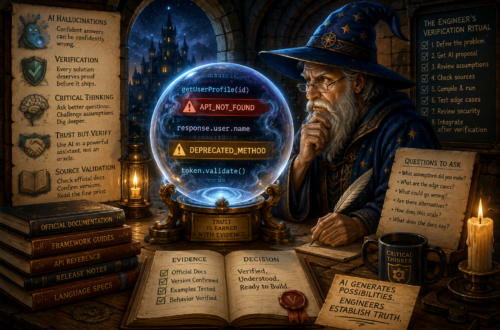
Even enchanted mirrors occasionally reflect impossible futures. Artificial intelligence has rapidly become one of the most productive tools ever placed into the hands of software engineers. It can explain unfamiliar concepts, generate working prototypes, refactor decades-old code, write unit tests, summarize documentation, and even identify subtle defects that would otherwise escape notice. After spending only a few weeks working alongside modern AI systems, it becomes difficult to imagine returning to a workflow that depends entirely on search engines, reference manuals, and trial-and-error. Yet every experienced engineer eventually encounters a moment that changes the relationship. Perhaps the generated code compiles perfectly while quietly introducing a race condition. Perhaps an API appears…
-
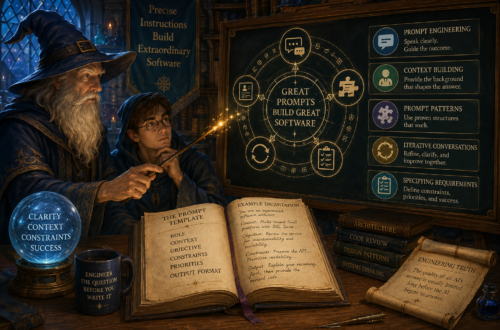
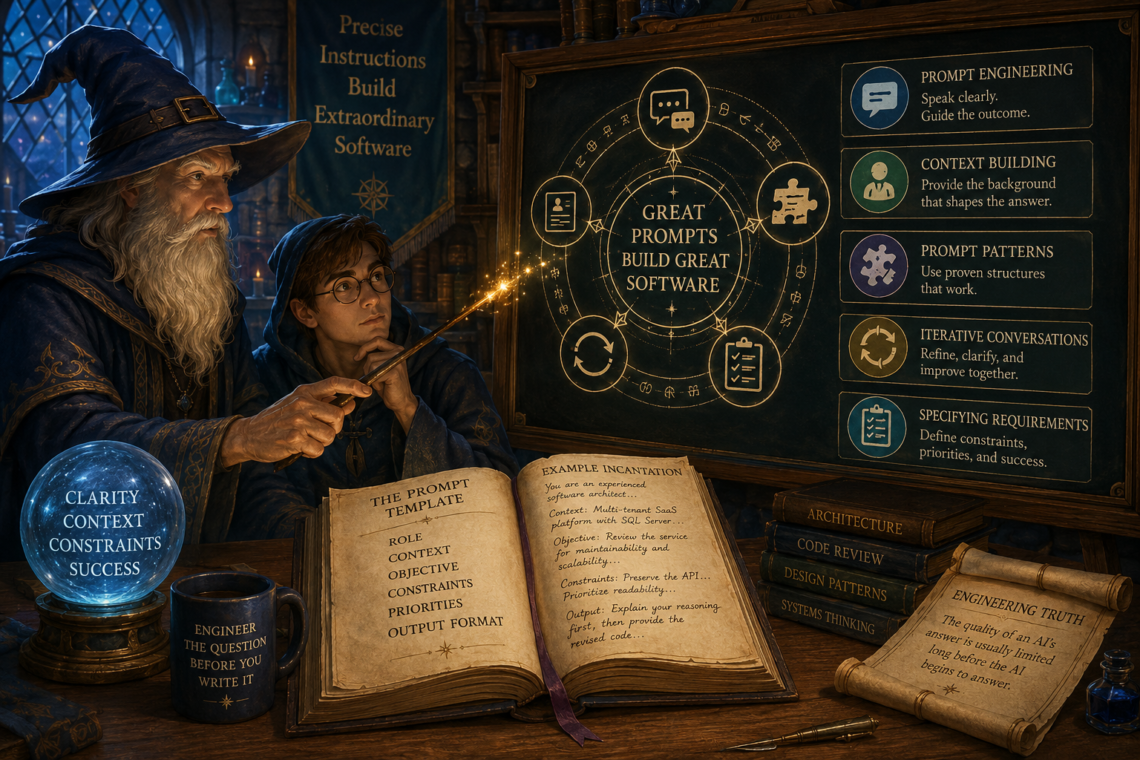
Speaking the Language of Spells: Prompt Engineering That Works
Magic obeys precision far more faithfully than intention. Artificial intelligence has changed the way software engineers approach daily work, but it has not changed the fundamentals of engineering itself. Every successful project still depends upon communicating requirements clearly, defining constraints carefully, and evaluating results critically. AI simply introduces a new participant into that familiar conversation. Instead of translating business requirements directly into code, we now spend part of our time translating engineering intent into language that another intelligent system can understand. The quality of that translation often determines whether AI becomes a valuable collaborator or an expensive distraction. As in every other engineering discipline, success depends less on discovering secret…