-
Restoring Ancient Spellbooks: Modernizing Legacy Code
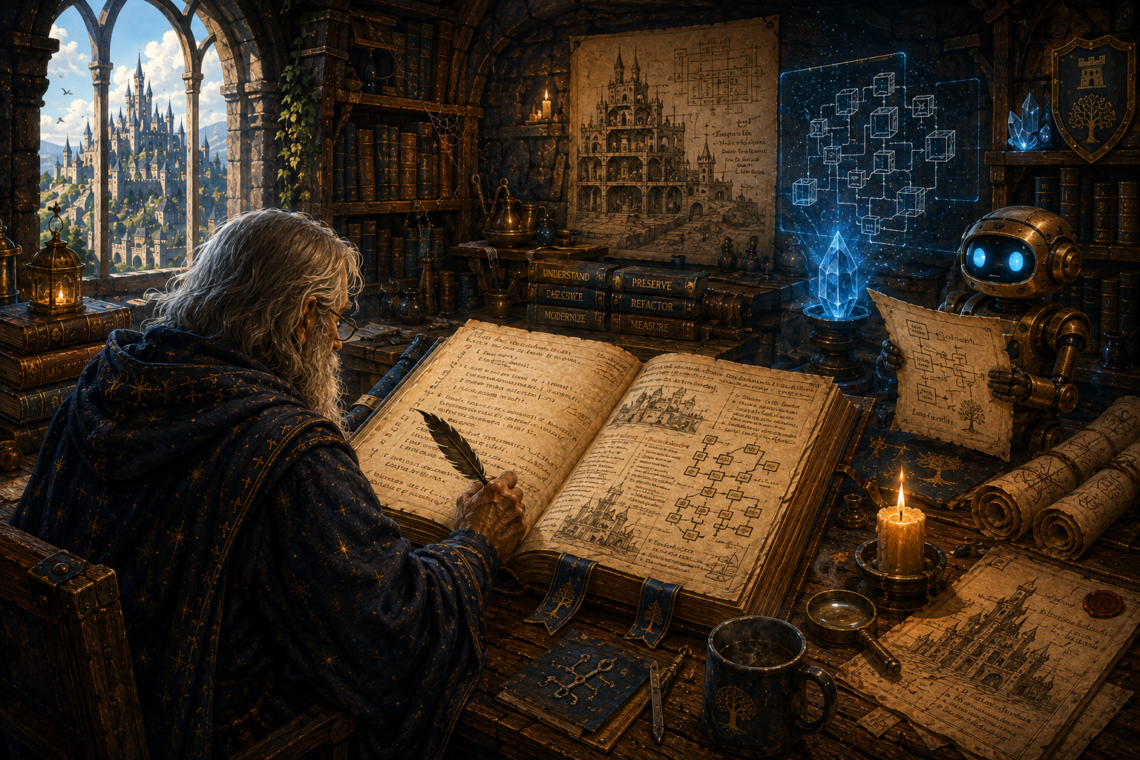
Some of the greatest magic lies hidden beneath centuries of dust. There is a particular kind of software that almost every experienced engineer eventually encounters. It has been running for years, perhaps decades, quietly processing orders, generating reports, moving money, coordinating inventory, or supporting some other function the business cannot simply abandon. Its architecture reflects decisions made by developers who may have left long ago. Its dependencies have aged, its conventions belong to another era, and certain portions of the codebase are approached with the same caution a wizard might use when opening an ancient spellbook whose margins contain several generations of increasingly nervous annotations. The temptation is to look…
-
The Tireless Golem: Building Better Tests with AI
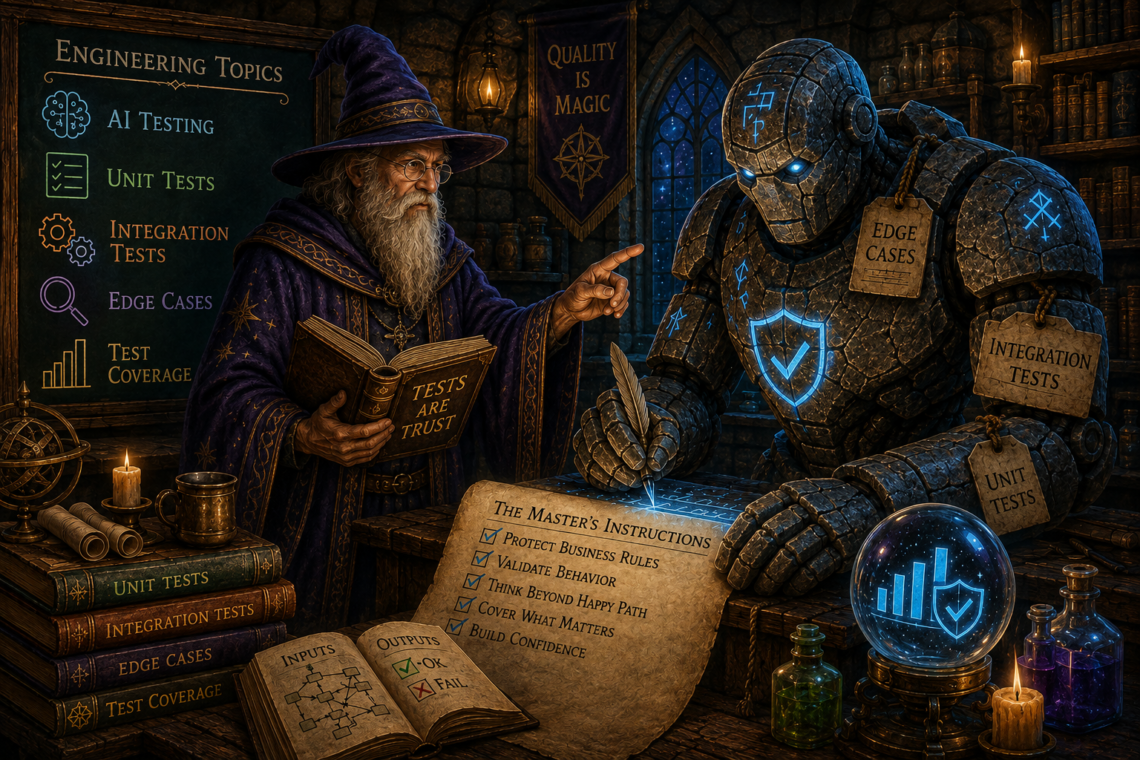
A servant who never sleeps must still be taught what success looks like. Software engineers have always searched for ways to reduce repetitive work without sacrificing quality. Compilers eliminated many manual mistakes. Continuous integration ensured that code could be validated automatically after every change. Static analysis exposed entire categories of defects before applications ever reached production. Each advancement freed engineers to spend more time solving meaningful problems instead of repeating mechanical tasks. Artificial intelligence represents another step along that path, but it introduces a subtle temptation. Because AI can generate code remarkably quickly, it is easy to assume it can generate equally effective tests with little oversight. Many developers discover…
-
Speaking the Language of Spells: Prompt Engineering That Works
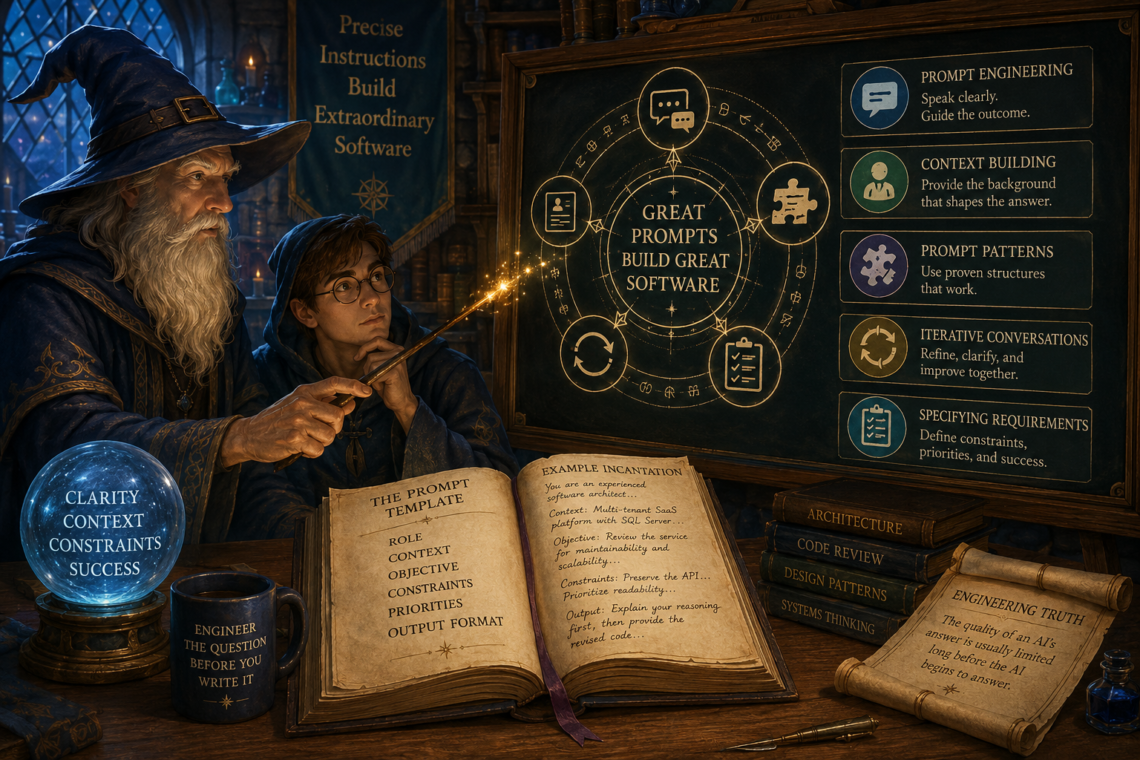
Magic obeys precision far more faithfully than intention. Artificial intelligence has changed the way software engineers approach daily work, but it has not changed the fundamentals of engineering itself. Every successful project still depends upon communicating requirements clearly, defining constraints carefully, and evaluating results critically. AI simply introduces a new participant into that familiar conversation. Instead of translating business requirements directly into code, we now spend part of our time translating engineering intent into language that another intelligent system can understand. The quality of that translation often determines whether AI becomes a valuable collaborator or an expensive distraction. As in every other engineering discipline, success depends less on discovering secret…
-
The Wizard’s New Apprentice: Working Alongside AI
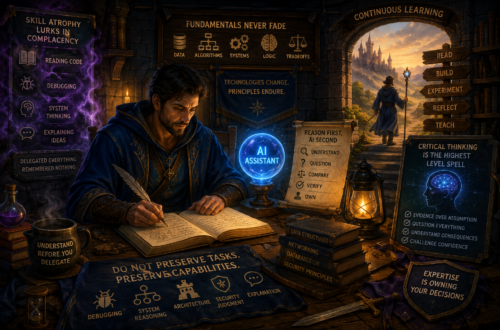
The greatest familiar is still only as wise as the wizard who commands it. Every generation of software engineers encounters a tool that promises to change the profession forever. Assembly language gave way to higher-level languages. Manual deployments yielded to continuous integration and continuous delivery. Virtual machines evolved into cloud platforms. Each innovation made building software faster, but none diminished the importance of sound engineering judgment. Artificial intelligence represents the latest transformation in that long history. It is a remarkable addition to the workshop, but it remains exactly that: an addition. The craft itself has not changed nearly as much as the tools we use to practice it. The excitement…
-
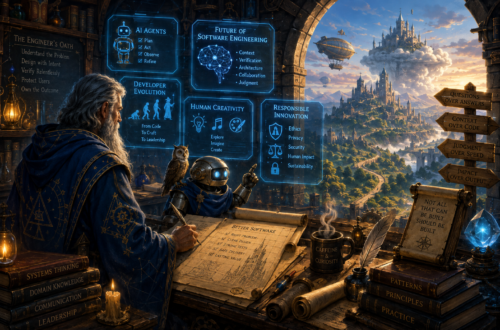
The Enchanted Workshop Begins: An Engineer’s Guide to the Age of AI
Every generation inherits new magic. Only wisdom turns it into craftsmanship. Every Generation Thinks It Is Witnessing the Greatest Revolution Every generation of software engineers believes it is living through the greatest technological shift the profession has ever seen. The names of the technologies change, but the conversation rarely does. Yesterday it was object-oriented programming, the internet, cloud computing, containers, or serverless architecture. Today it is artificial intelligence. Tomorrow it will be something none of us have imagined yet. The tools change far more often than the profession itself. During my own career, I have watched technologies arrive with extraordinary promises. Some genuinely transformed the way we build software. Others…
-
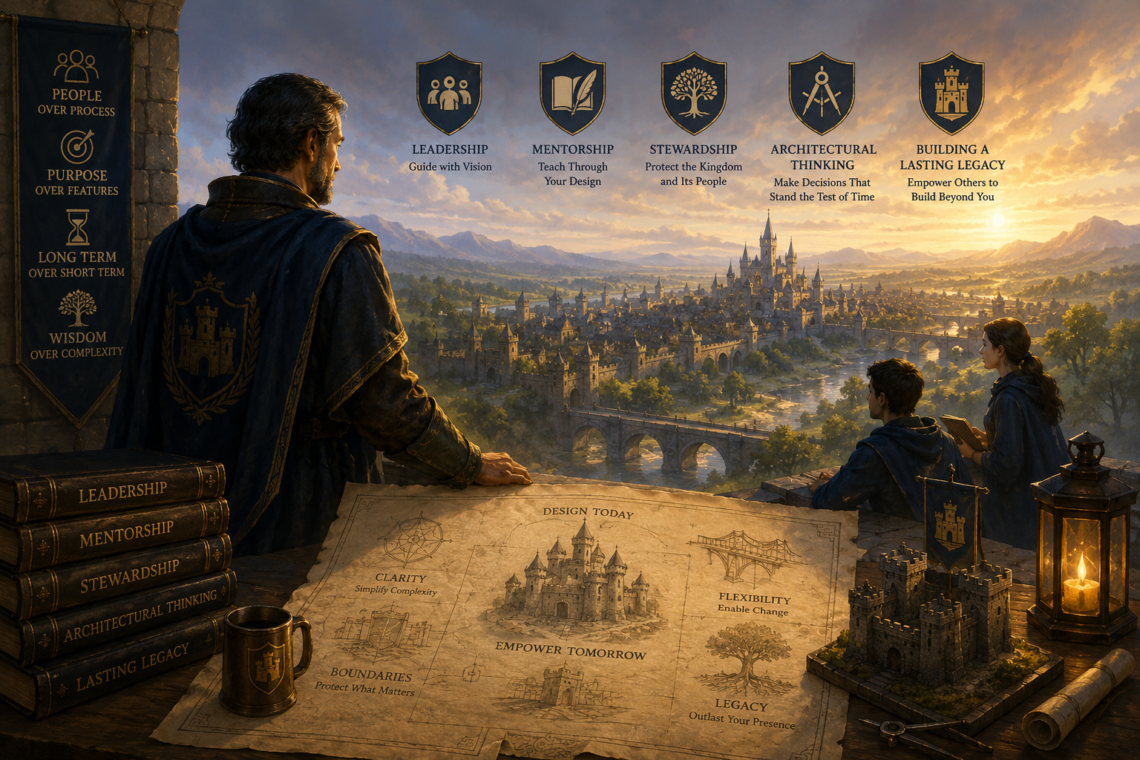
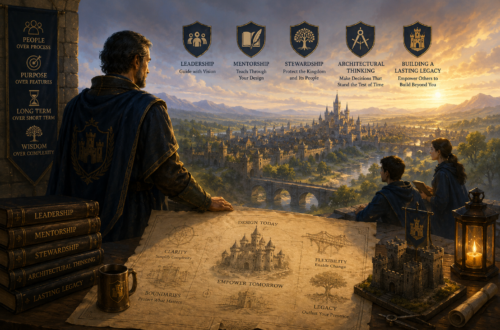
Becoming the Royal Architect: Designing Systems That Outlive You
Every kingdom remembers its architects long after its builders have gone home. Every software system eventually becomes someone else’s responsibility. That single reality has shaped nearly every architectural decision I have made throughout my career. Features are eventually rewritten. Technologies become obsolete. Frameworks rise and fall. Entire engineering teams come and go. Yet long after the original developers have moved on, the software remains, waiting for new engineers to understand it, maintain it, and continue building upon it. Whether those future engineers inherit a thriving kingdom or a crumbling ruin depends far less on the quality of individual features than on the quality of the architecture beneath them. Throughout The…
-
The Automated Kingdom: When Excellence Becomes Routine
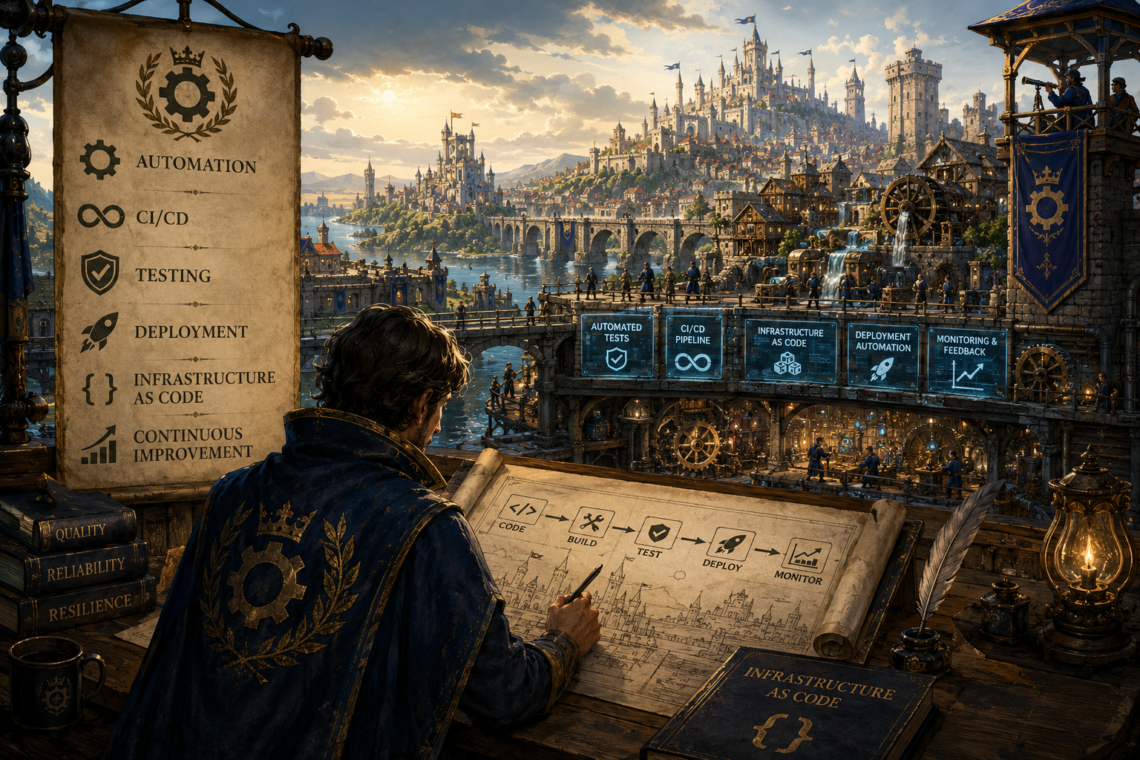
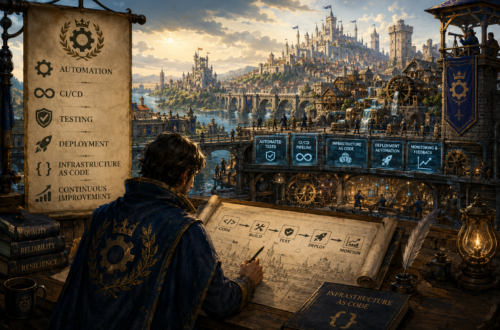
The greatest kingdoms flourish because excellence becomes routine. The most reliable software systems are often the least impressive. Their deployments happen without ceremony. Their monitoring catches problems before customers notice them. Their infrastructure quietly provisions itself, and their operational routines become so dependable that engineers gradually stop thinking about them. The greatest compliment those systems receive is that nobody considers them remarkable anymore. Like the finest kingdoms, their success has become ordinary because excellence has become routine. Travelers rarely praise the aqueducts that deliver clean water every day or the roads that quietly connect every village to the capital. They admire the thriving markets, magnificent libraries, and prosperous cities made…
-
Seeing Through the Crystal Ball: Observability Beyond Monitoring
A wise ruler never governs a kingdom they cannot see. Software architecture reaches an interesting stage after the obvious problems have been solved. The application survives deployments without drama, customers depend upon it every day, and the engineering team gradually shifts its attention from building features to operating a growing platform. Confidence naturally follows that maturity because the system appears stable, the infrastructure scales predictably, and production incidents become increasingly uncommon. Then, almost without warning, engineers begin encountering problems that refuse to fit neatly into familiar patterns. A handful of users report intermittent failures that nobody can reproduce. Response times drift upward despite healthy infrastructure metrics. A background process occasionally…
-
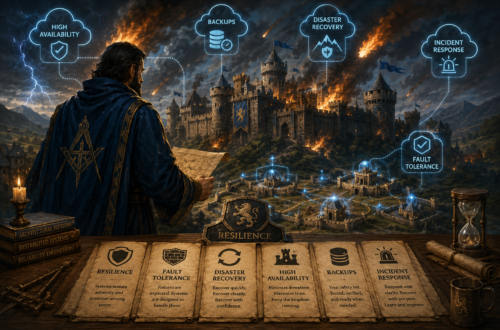
When the Kingdom Burns: Designing for Failure Before Disaster Strikes
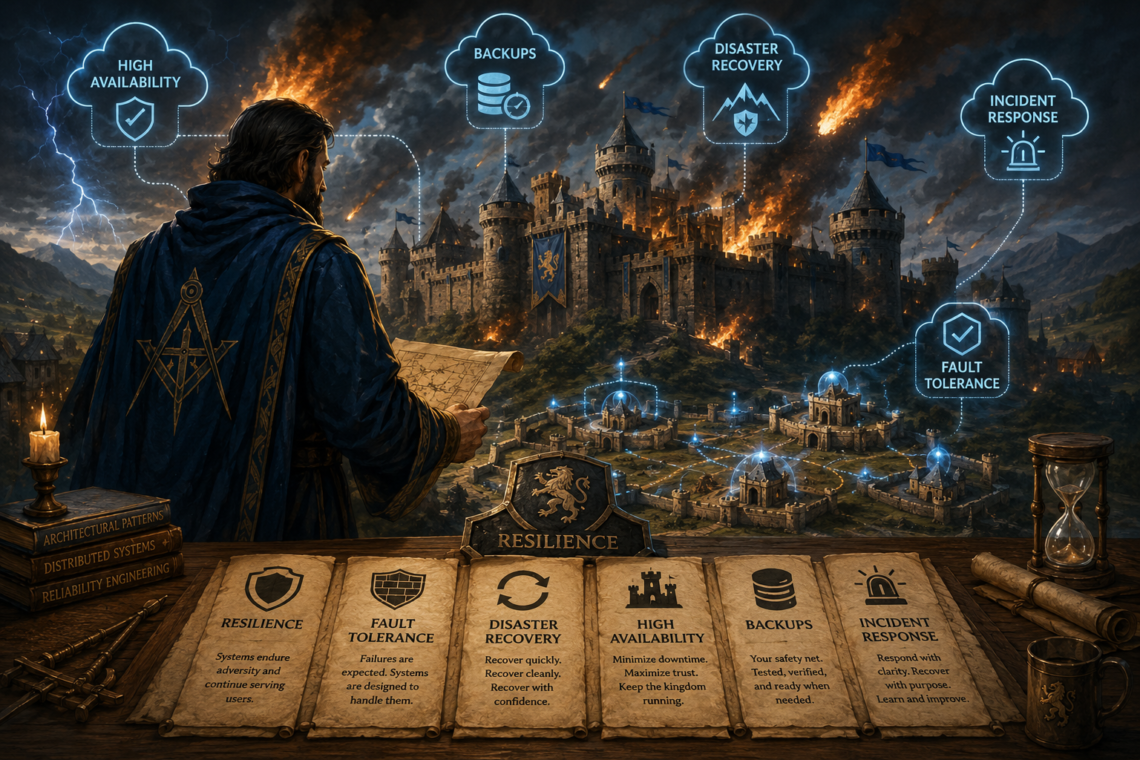
Hope is a poor evacuation plan. There is a quiet confidence that settles over every engineering team after enough successful deployments. Systems remain stable for months. Monitoring dashboards glow green. Customers continue using the software without incident, and the last major outage slowly fades into memory. Over time, it becomes easy to mistake reliability for a permanent characteristic of the software instead of recognizing it as the product of thousands of careful engineering decisions. That confidence is understandable, but it is also one of the greatest risks a software organization can face. Software rarely fails because developers expect it to fail. More often, it fails because teams gradually stop imagining…
-
Hidden Traps in the Dungeon: Escaping Technical Debt
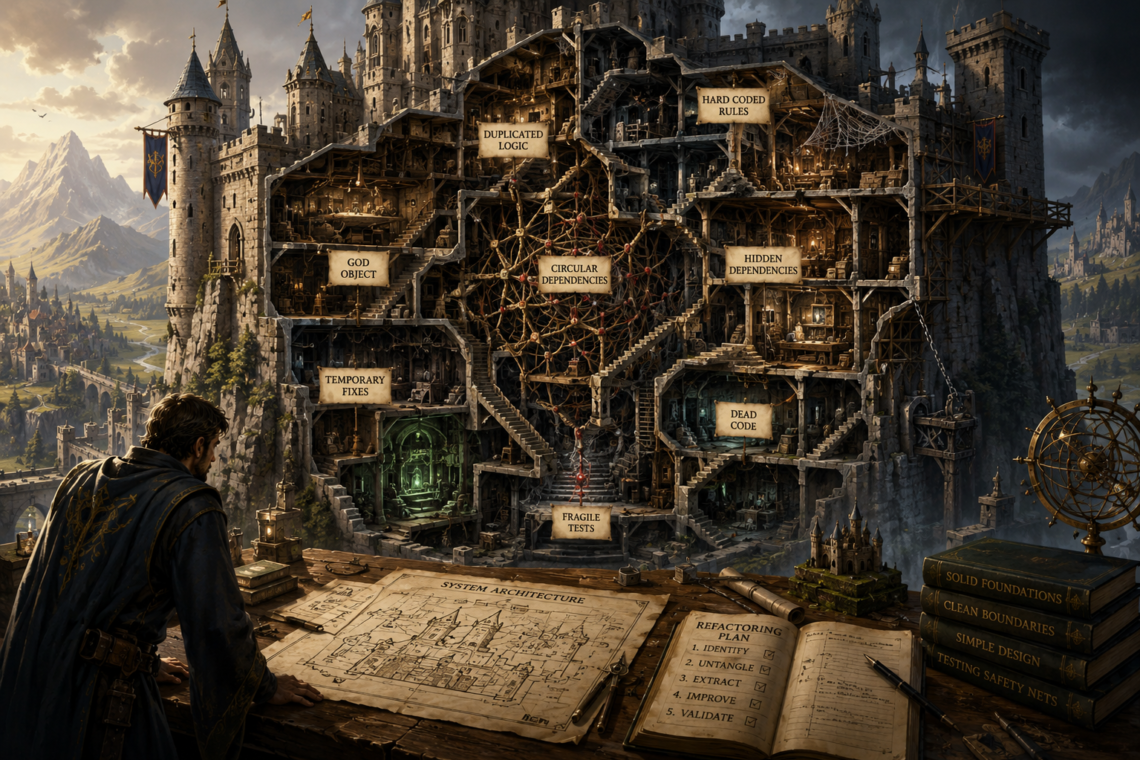
The deadliest dangers are often the ones built into the castle itself. No architect intentionally designs a maze. Every castle begins with a sensible plan. Corridors connect naturally, storerooms serve nearby kitchens, towers overlook vulnerable approaches, and every staircase leads somewhere meaningful. Yet castles that survive for generations rarely retain that original simplicity. New rulers expand old wings. Temporary passageways become permanent corridors. Storage rooms become workshops. Secret tunnels built during one crisis remain long after the danger has passed. Over time, the castle becomes increasingly difficult to navigate, not because its builders lacked skill, but because each generation solved the problems immediately before them. Long-lived software follows the same…